Songkran, Thailand’s annual Water Festival, is a spectacle unlike any other. As the country welcomes its New Year with a splash, tourists and locals alike join in the revelry, but it’s essential to do so safely and respectfully. The festival’s origins date back to ancient times when water was used for cleansing and purification rituals, marking the beginning of the traditional Thai New Year. Today, Songkran is a vibrant celebration that combines family gatherings, cultural performances, and – of course – epic water fights. With its rich history and exciting activities, it’s no wonder Songkran has become one of Thailand’s most iconic festivals. This article will explore the traditions, customs, and tips for celebrating Songkran like a local, ensuring you make the most of this unforgettable experience while also respecting the country’s heritage.
History and Significance
Songkran is a celebration deeply rooted in Thai culture, with its origins dating back centuries to the ancient traditions of water purification and renewal. In this next part, we’ll explore its rich history and significance.
Origins and Evolution
Songkran’s origins date back to ancient times when it was a traditional Thai New Year celebration. The festival marked the beginning of the hot season and was seen as a time for spiritual renewal and cleansing. In its early form, Songkran involved the washing of Buddha images with water as an act of respect and purification. This tradition, known as “Mahawangsa,” is still observed in some parts of Thailand today.
Over time, Songkran evolved into a three-day festival that incorporates elements of traditional Thai culture, such as the throwing of water to symbolize cleansing and renewal. In 1960, the Thai government declared April 13th a national holiday, officially recognizing Songkran as an integral part of Thai society. Today, the festival is celebrated throughout Thailand with water fights, parades, and other festivities that bring communities together. As the festival continues to evolve, its significance extends beyond its origins, representing a celebration of Thai culture, tradition, and community spirit.
Importance in Thai Culture
Songkran is deeply rooted in Thai culture and Buddhist tradition. It marks the beginning of the traditional Thai New Year, known as Songkran, which typically falls between April 13th and April 15th. During this time, people pay respects to their elders by pouring water over their hands, a gesture that signifies washing away sins and bad luck from the past year.
The festival’s origins are also tied to Hinduism, with the word “Songkran” derived from the Sanskrit term for “astrological passage.” However, its significance has evolved over time to become an integral part of Thai identity. In many communities, families come together to honor their ancestors and cleanse their homes with water. This practice is a meaningful way to connect with one’s heritage and participate in this sacred ritual.
When attending Songkran festivities, you can see the importance of tradition firsthand. Water splashing and pouring are not just playful gestures; they carry deep symbolic meaning. Pay attention to how locals respectfully pour water over monks or elderly individuals – it’s an act that requires genuine intent and devotion.
Preparations and Traditions
Before the water splashes begin, you’ll want to understand the local customs and preparations that make Songkran such a special experience for visitors. From cleansing rituals to temple visits, we’ll explore the traditions that underlie this joyous festival.
Water-Themed Decorations
Thais often create elaborate displays of water-themed decorations, reflecting the festival’s aquatic spirit. Homes and temples are adorned with vibrant streamers in shades of blue and green, evoking the colors of the ocean and tropical waters. Fresh flowers, especially jasmine and frangipani, are used to create intricate patterns and designs that symbolize purity and renewal.
In some areas, giant replicas of mythical sea creatures like makaras (half-human, half-fish) and naga snakes are erected as focal points for decoration. These symbols hold significance in Thai culture, representing the connection between humans and aquatic life. In smaller settings, families might use floating candles or paper lanterns to create a whimsical atmosphere.
Temples play a central role in Songkran preparations, with monks and devotees working together to design elaborate floats and decorations. The most striking displays often incorporate LED lights and water features, creating an immersive experience that draws visitors into the festival’s spirit. Whether on a grand scale or intimate setting, the use of water-themed decorations serves as a reminder of Songkran’s core theme: cleansing and rejuvenation through water.
Traditional Attire and Accessories
During Songkran, traditional attire and accessories play a significant role in honoring the occasion. For men, a white shirt or collarless dress is typically worn, while women often don a pha sin (a long-sleeved tunic) or a sabai (a lightweight t-shirt). These simple yet elegant outfits are meant to reflect the humility and modesty of the Buddhist faith.
In addition to traditional clothing, accessories like prayer beads and sacred thread (called sain) are also worn by some as a sign of devotion. In some regions, you may even see participants carrying parasols or umbrellas, which serve not only as a practical means of protection from the sun but also as a symbol of respect for elders.
Monks often play an integral part in distributing blessed water during Songkran. These revered spiritual leaders are usually adorned in traditional robes and will typically carry a container of holy water to bless participants. You can expect to see them walking through the streets, offering blessings and sprinkling water on the faithful. When receiving this sacred water, it’s customary to bow your head as a sign of gratitude and respect.
The Festival’s Core Activities
At the heart of Songkran celebrations are a range of exciting activities that showcase Thai culture and tradition, from stunning processions to lively water fights. These core events are not to be missed!
Water Fights and Splashing
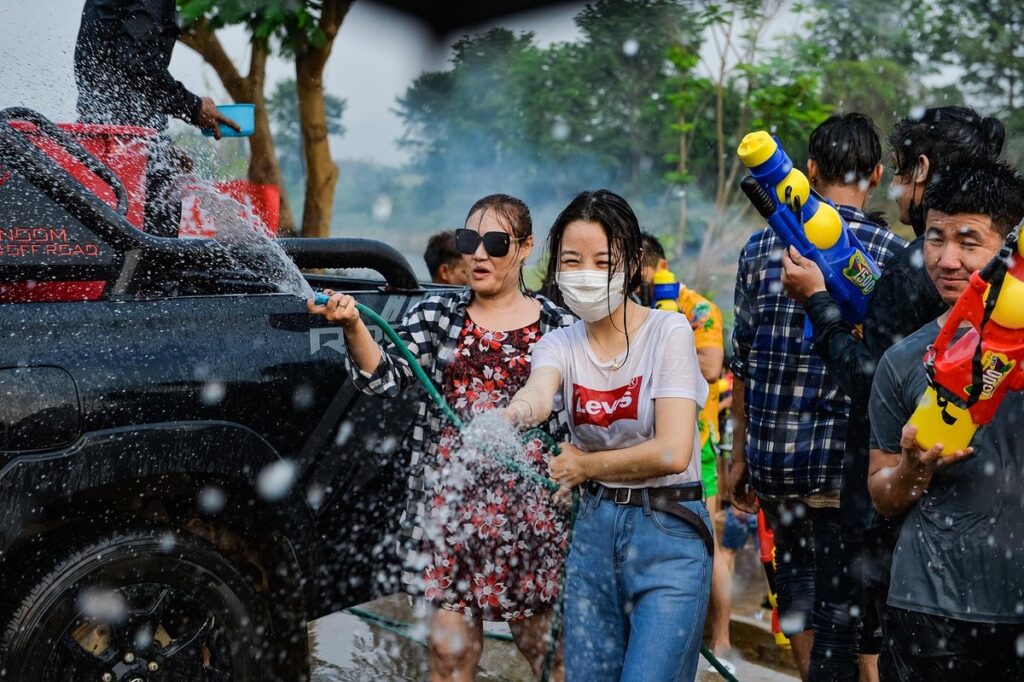
Water fights and splashing are an integral part of the Songkran celebration. When engaging in water battles with locals, it’s essential to be mindful of certain etiquette guidelines. For instance, avoid aiming water at people who are clearly not participating or seem uncomfortable. Instead, focus on playing with fellow revelers.
It’s also customary to respect temples and other sacred areas by refraining from splashing water near these sites. Additionally, be cautious when using high-pressure hoses or large buckets of water, as they can cause accidental slips and falls. To avoid getting into trouble, it’s a good idea to observe how locals engage in water fights and mimic their behavior.
Some travelers have reported that being invited to join a water fight by a group of Thais is considered an honor. When this happens, it’s essential to follow the lead of your new friends and engage in playfully splashing each other. Remember, Songkran is about cleansing and renewal, so keep the spirit light-hearted and fun. By respecting local customs and being considerate of others, you can fully immerse yourself in the playful atmosphere of this vibrant festival.
Visiting Temples and Participating in Ceremonies
Visiting temples is a significant part of the Songkran experience. Many temples stay open late during the festival, allowing visitors to take advantage of the cooler evening temperatures and participate in ceremonies.
Some popular temple destinations for Songkran include Wat Phra Si Mahathat in Ayutthaya, where locals gather to wash the statue of the reclining Buddha, and Wat Arun in Bangkok, which hosts a stunning candlelit procession. At these temples, you’ll typically find monks performing traditional rituals, such as chanting and sprinkling holy water.
If you’re interested in receiving blessings from monks, plan to arrive early at a temple and respectfully approach the priests. They may use flowers or holy water to cleanse your mind and body, or offer prayers for good fortune. Be prepared for these ceremonies by dressing modestly, removing your shoes before entering the main hall, and refraining from photography.
Regional Variations and Adaptations
As you experience Songkran festivals across Thailand, you’ll discover that each region has its own unique twists on traditional celebrations. From north to south, these regional variations add depth and richness to this vibrant water festival.
Unique Celebrations Across Thailand
In Chiang Mai, the northernmost region of Thailand, Songkran celebrations are particularly lively. The city’s cultural center hosts a massive water fight every year, attracting thousands of visitors from across the country. This event is not to be missed, but if you’re looking for a more low-key experience, consider visiting the nearby Doi Suthep temple, where monks and locals alike splash each other with blessings.
In contrast, Songkran in Bangkok tends to focus on its rich cultural heritage. The city’s many temples are adorned with elaborate parades, where performers reenact ancient stories of water’s purifying power. Meanwhile, the riverside is transformed into a massive party scene, complete with live music and street food stalls.
In southern Thailand, particularly in Phuket, Songkran has taken on a more relaxed tone. The island’s beaches are still buzzing with activity, but the focus shifts from intense water battles to friendly games of volleyball and other beach activities. If you’re visiting Phuket during Songkran, be sure to join in on these casual festivities for a truly local experience.
Modern Twists and Innovations
In recent years, modern elements have infused traditional Songkran celebrations with new energy. One notable innovation is the use of music and live performances to kick off the festivities. Many cities now host large-scale concerts featuring local artists and DJs, drawing huge crowds and adding a dynamic twist to the traditional water-throwing ceremonies. Additionally, social media has played a significant role in modernizing Songkran, with many participants using platforms like Instagram and Facebook to share their experiences and connect with others.
Technology has also made its mark on the festival, with some venues incorporating interactive displays and light shows into their celebrations. For instance, the famous Lumphini Park in Bangkok now features a stunning LED display that synchronizes with the music, creating an immersive experience for attendees. Furthermore, mobile apps have become increasingly popular among locals and tourists alike, providing real-time updates on festival schedules, locations, and safety tips.
These modern adaptations not only enhance the celebratory atmosphere but also make it easier for people to participate and engage with the festivities. As you plan your Songkran itinerary, consider taking advantage of these innovative elements to create an unforgettable experience.
Safety Precautions and Tips
While celebrating Songkran, it’s essential to prioritize your safety amidst the splashing fun. To ensure a memorable experience, follow these practical tips for navigating the festival’s water-filled streets safely.
Staying Safe During Water Fights
When engaging in water fights during Songkran, be mindful of your surroundings and avoid accidents by staying on designated splash zones. These areas are typically marked with signs and cones to prevent overcrowding and ensure safe access to water sources.
During the festivities, it’s common for water cannons and hoses to be used to soak both participants and bystanders. Be aware that these can reach high pressure and may cause injury if not handled properly. To minimize risks, keep a safe distance from high-pressure sprayers and avoid aiming at people who are not participating in the water fight.
Additionally, always prioritize electrical safety by avoiding immersion in water while using electronic devices or standing near outlets. Many Songkran celebrations take place in urban areas with power lines and other electrical infrastructure nearby.
Remember to respect local rules and instructions from event organizers, which may include designated times for water fights, restrictions on certain types of water toys, or specific areas where splashing is prohibited.
Respecting Local Customs and Environment
Songkran is a celebration deeply rooted in Thai culture and traditions. As you participate in the festivities, it’s essential to be mindful of local customs and respect the environment. During Songkran, it’s customary for locals to pour water as a blessing or to help cool down others. When receiving water from monks or elderly people, it’s polite to use your hands together in a prayer-like gesture, known as “wai.” Be cautious not to splash water at temples or sacred sites, and avoid throwing water near food stalls or vendors.
You can also contribute to reducing waste during Songkran by bringing your own refillable water bottles and containers for water-soaked treats like sticky rice. Many temples now offer biodegradable soap and shampoo alternatives to traditional soap, so consider opting for these instead. Lastly, remember that many areas may have specific rules against loud music or drinking in public spaces, especially near temples. Familiarizing yourself with local regulations can help you avoid unintentionally disrespecting the community.
Conclusion: The Timeless Spirit of Songkran
As the water festival comes to an end, it’s clear that Songkran has left an indelible mark on all who participated. The spirit of renewal and cleansing that defines this celebration is a testament to Thailand’s rich cultural heritage. Despite the passing of time, Songkran remains a vibrant and essential part of Thai identity, with its traditions and customs continuing to evolve yet remain deeply rooted in history. Visitors can’t help but be swept up by the infectious energy and joy that permeates every corner of this celebration.
In fact, it’s not uncommon for visitors to find themselves returning year after year, eager to experience the thrill of Songkran once more. Whether you’re a seasoned traveler or new to Thailand, Songkran offers something truly special – an opportunity to immerse yourself in the sights, sounds, and emotions of this incredible festival.
Frequently Asked Questions
Can I participate in Songkran activities as a tourist without offending locals?
Yes. Tourists are welcome to join in the fun, but be respectful of local customs and traditions. Follow any instructions given by locals or authorities, and avoid splashing monks or disrupting temple ceremonies.
What if it’s raining during Songkran? Should I still participate in water fights?
If you’re visiting a region with heavy rainfall during Songkran, consider alternative activities like attending temple ceremonies or participating in cultural events. However, if the rain stops, and the celebrations continue, feel free to join in the water fights.
How can I stay safe while splashing water on others during Songkran?
When engaging in water fights, be mindful of your surroundings, avoid aiming at people’s faces, and never splash cars or electrical equipment. Also, keep an eye out for loose debris or sharp objects that might cause accidents.
Are there any cultural norms or taboos I should be aware of when receiving blessed water from monks during Songkran?
Yes. When receiving blessed water from monks, make sure to follow proper etiquette by placing your hands together in a prayer-like gesture and bowing your head slightly as you accept the water. This shows respect for the monk and the tradition.
Can I participate in Songkran’s unique regional celebrations if I’m only visiting one city?
While it’s possible to experience the local traditions in each region, some unique celebrations might require travel or special arrangements. However, many cities offer a taste of their regional culture during Songkran festivities, so don’t miss out on these opportunities!