
Portland, Oregon is a city that truly comes alive on the streets, thanks to its vibrant food cart scene. With over 600 carts serving up everything from Vietnamese banh mi to Egyptian koshari, you’ll find a culinary adventure waiting around every corner. The city’s food cart culture has its roots in the early 2000s, when a group of entrepreneurs and chefs began experimenting with innovative street food concepts. Today, visitors can explore popular pods like Cartlandia and Pioneer Courthouse Square, where they’ll discover everything from artisanal ice cream to authentic Korean BBQ. But beyond the delicious eats, Portland’s food carts also have a significant impact on the local economy and environment – a topic we’ll explore in this article as you learn about the best food carts in Portland, their history, types of cuisine, and sustainability efforts. By the time you finish reading, you’ll be equipped to plan your next street food adventure with confidence.
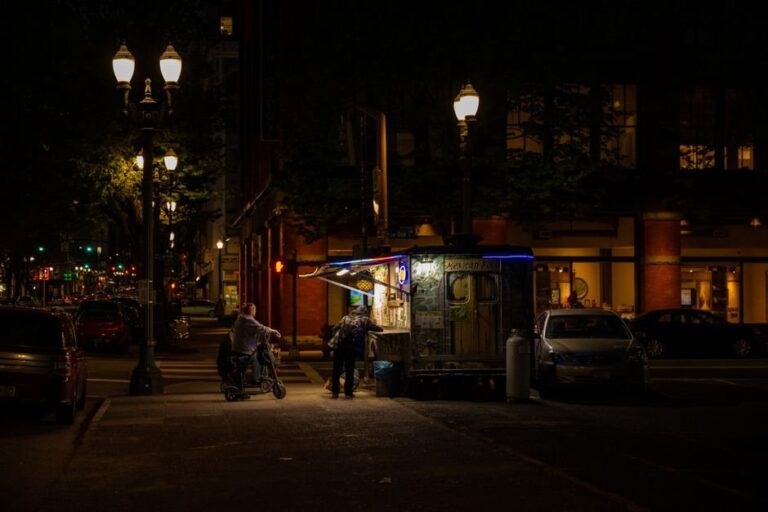
History of Food Carts in Portland
Portland’s food cart scene has a rich and varied history, dating back to the early 1980s when a few brave entrepreneurs set up shop on SW 5th Avenue. Let’s take a look at how it all began.
Early Beginnings and Popularity Growth
In the 1980s, a single food cart on SW 5th Avenue marked the beginning of Portland’s street food scene. The cart’s humble start laid the groundwork for what would become one of the city’s most beloved culinary traditions. During this early period, food carts operated in relative obscurity, but their popularity began to grow steadily.
By the mid-1990s, a handful of carts had sprouted up around downtown Portland, offering simple fare like tacos and hot dogs. These initial carts were often makeshift affairs, with vendors serving from converted trucks or trailers. However, their presence helped lay the foundation for the diversity of cuisines that would eventually come to define the city’s food cart scene.
As the years passed, Portland’s food cart culture continued to gain momentum. The 2000s saw a significant surge in popularity, with the number of carts multiplying and new pods emerging throughout the city. This growth was fueled by factors like the city’s relaxed permitting process, which allowed entrepreneurs to start small and test their concepts without breaking the bank. By the end of the decade, Portland’s food cart scene had become a staple of the city’s identity, attracting visitors from around the world with its unique offerings and laid-back atmosphere.
Factors Contributing to Success
Portland’s food cart scene owes its success to a combination of cultural, regulatory, and accessibility factors. The city’s laid-back culture, often characterized as welcoming and open-minded, creates an environment where entrepreneurs can experiment with diverse cuisines without fear of judgment or reprisal. The city’s permitting process for food carts is relatively straightforward, allowing vendors to quickly and easily obtain necessary licenses and permits.
Additionally, the city’s zoning regulations allow for a high concentration of food carts in central locations, such as Pioneer Courthouse Square and the Food Cart Pod at 5th and Oak Streets. This proximity to foot traffic and other attractions has contributed significantly to the popularity of Portland’s food cart scene. Accessibility is also a key factor; many food cart pods are located near public transportation hubs or within walking distance from residential areas, making it easy for customers to visit without worrying about parking or transportation.
As a result, Portland’s food carts offer a unique combination of flavors and cuisines that cater to a wide range of tastes and dietary needs.
Types of Food Carts in Portland
Portland’s food cart scene offers a wide variety of cuisines, from traditional Mexican and Vietnamese to Hawaiian poke and gourmet grilled cheese. You’ll find something for every craving and taste bud in this eclectic mix.
International Cuisine Options
Portland’s food cart scene is a melting pot of international flavors. You can find authentic Asian cuisine at carts like Pok Pok, serving up spicy Thai dishes, and Nong’s Khao Man Gai, offering traditional Laotian fare. Latin American options abound, with popular choices including Guero’s Tacos for Mexican cuisine and Ceviche Peruano for a taste of Peruvian seafood.
For a dose of international flair in the midst of Portland’s food cart pods, head to Cartlandia, which features an array of global cuisines, from Korean BBQ to Egyptian koshari. Other notable spots include the famous Cart Pod on SW 5th Avenue, where you can sample everything from Vietnamese banh mi to Argentine empanadas.
In addition to traditional sit-down restaurants, Portland’s food cart scene offers a unique opportunity to experience international flavors at an affordable price point. When visiting these carts, be sure to arrive early, as lines can form quickly for popular dishes like Korean fried chicken or Peruvian ceviche. By exploring the diverse array of international cuisine options available at Portland’s food carts, you can sample the world in just one meal.
Specialty Food Carts
Portland is renowned for its diverse food cart scene, but one type of cart has gained a devoted following: specialty carts. These vendors offer creative twists on classic dishes or cater to specific dietary needs. You’ll find gourmet grilled cheese options like the Grilled Cheese Grill, featuring artisanal breads and high-end fillings. Others specialize in BBQ, serving up tender meats smothered in tangy sauces.
For plant-based enthusiasts, vegan carts are a haven. Vtopia’s all-vegan offerings include rich cheese alternatives and decadent desserts. The city also boasts numerous carts dedicated to international cuisines like Korean or Mexican food. These specialty carts not only add variety to the Portland food scene but also help drive innovation in the industry.
Some popular specialty cart pods, such as Cartlandia and Pod 13, showcase these unique vendors alongside other eclectic options. If you’re visiting from out of town, consider stopping by one of these locations to sample a variety of flavors. When selecting a specialty cart, don’t be afraid to ask about ingredients or cooking methods – many vendors are happy to share their stories behind the menu items.
Popular Food Cart Pods in Portland
Portland is home to a plethora of popular food cart pods, each offering its own unique culinary experience. From Pod 13 to Alder Street Bazaar, we’ll highlight some of the city’s most iconic gathering spots.
Pioneer Courthouse Square
Pioneer Courthouse Square is a hub of activity in downtown Portland, home to over 40 food carts serving a diverse array of cuisine. This vibrant square is the largest concentration of food carts in the city, making it an ideal destination for those seeking a taste of Portland’s eclectic street food scene.
You’ll find everything from traditional Mexican dishes to Korean BBQ and Indian curries, with many carts offering vegetarian and vegan options. One of the standout features of Pioneer Courthouse Square is its layout, which allows for easy navigation among the various food vendors. The square is also surrounded by public art installations and other attractions, making it a great destination for families or groups.
Some popular food cart pods within the square include Cartlandia’s Mexican offerings, Wafu’s Japanese-inspired dishes, and Lardo’s creative takes on classic BBQ. Be sure to check out the schedule of carts and vendors, as some may only be available during certain hours or days of the week. With its diverse range of options and lively atmosphere, Pioneer Courthouse Square is a must-visit destination for any food cart enthusiast in Portland.
Other Notable Locations
In addition to Pioneer Courthouse Square, several other food cart pods have gained popularity throughout Portland. One notable location is Hawthorne, where a cluster of carts has sprouted up along SE 37th Avenue and McLoughlin Boulevard. This pod offers a mix of international cuisine, including Mexican, Ethiopian, and Vietnamese options.
Division Street also boasts an impressive collection of food carts, stretching from SE 33rd to SE 38th avenues. Here, you’ll find everything from gourmet grilled cheese to Korean BBQ. Another notable location is SE Powell Boulevard, where a group of carts has taken up residence between SE 28th and SE 32nd avenues.
While these pods may not be as large or well-known as Pioneer Courthouse Square, they still offer an incredible variety of flavors and dining options. If you’re exploring Portland’s food cart scene, consider visiting one (or all) of these locations for a taste of the city’s diversity. When planning your visit, note that some carts may only operate on certain days or during specific hours, so it’s always a good idea to check their schedules before heading out.
Food Safety and Regulations
Food carts in Portland must adhere to strict safety standards, from handling and preparation to storage and disposal, to ensure a safe dining experience for customers.
These regulations protect not only consumers but also food cart vendors themselves.
Health Department Oversight
The Multnomah County Health Department plays a crucial role in regulating food carts to ensure public health safety. To obtain a permit, food cart vendors must undergo rigorous inspections and meet specific requirements for food handling, storage, and preparation. Inspectors visit each cart at least twice during the first year of operation, with subsequent annual visits to verify compliance.
Food carts must also maintain proper documentation, including proof of liability insurance, business registration, and a valid health permit. Regular sanitizing and cleaning schedules are also mandatory, with a focus on high-touch areas like utensils, equipment, and surfaces. Additionally, vendors must follow safe food handling practices, such as maintaining a clean workspace, separating raw ingredients from ready-to-eat foods, and labeling and dating stored items.
To identify an operating food cart that has passed health department inspections, look for the permit sticker on the cart’s window or ask the vendor directly about their certification. This information can provide peace of mind while enjoying your meal at a Portland food cart.
Best Practices for Patrons
When visiting a food cart, you can take several steps to ensure your meal is safe to eat. First, always check for a clear sign indicating that the cart has been inspected by the Multnomah County Health Department. This is typically a green sticker or card displayed on the cart’s window.
Next, look for evidence of proper food handling and storage practices. Make sure the cart’s refrigerators are clean, stocked with ice, and functioning properly. Also, observe how staff handle food and equipment – they should be wearing gloves when preparing food and washing hands frequently.
When ordering, ask the vendor about their menu items’ ingredients and preparation methods if you have specific dietary needs or concerns. Be aware that some vendors may not disclose ingredients used in sauces or seasonings.
If you notice any signs of poor sanitation or unsanitary conditions – such as dirty equipment, expired food, or a strong odor of rotting waste – leave immediately and choose another vendor.
Economic Impact of Food Carts in Portland
Food carts have injected a significant amount of revenue into Portland’s economy, and we’ll explore how these small businesses contribute to local job creation. From increased foot traffic to property values, their economic impact is multifaceted.
Contribution to Local Economy
Food carts have become a significant contributor to Portland’s local economy, generating substantial revenue and creating jobs. According to the City of Portland’s estimates, food carts bring in approximately $250 million annually in sales. This figure is a small fraction compared to traditional restaurants but still represents a substantial contribution to the city’s economic output.
Much of this revenue goes directly into the pockets of cart owners, who often invest their earnings back into the local community through hiring staff and purchasing supplies from other Portland businesses. In fact, many food cart operators rely on their carts as primary sources of income, allowing them to supplement or replace traditional employment.
The impact extends beyond individual cart owners, too. By providing affordable dining options, food carts cater to a diverse range of customers, including students, office workers, and tourists. This widespread appeal contributes to the local economy by increasing foot traffic in neighborhoods and supporting surrounding businesses.
Comparison to Traditional Restaurants
In many ways, food carts offer a more accessible and affordable dining experience compared to traditional restaurants. One of the primary benefits is the lower cost of entry for customers. With average prices ranging from $5 to $15 per meal, food carts make it easier for people on a budget to enjoy a variety of cuisines without breaking the bank.
In contrast, traditional restaurants often have higher price points due to rent, staffing, and overhead costs. Additionally, food carts are more flexible in terms of operating hours, allowing them to cater to late-night crowds or serve breakfast items during off-peak hours. This flexibility also enables food cart owners to experiment with innovative menu options without the financial risk associated with traditional restaurant menus.
For patrons, this means a wider range of dining choices and greater convenience. Food carts can be found in various locations throughout Portland, often within walking distance from residential areas or popular attractions. With over 600 food carts operating in the city, there’s no shortage of options to choose from.
Sustainability and Environmental Considerations
As you enjoy exploring Portland’s vibrant street food scene, it’s also essential to consider the environmental impact of your dining choices. We’ll examine how many food carts are taking steps towards sustainability.
Eco-Friendly Options
Portland’s food cart scene has made significant strides in reducing its environmental footprint. Many vendors have implemented eco-friendly practices, such as composting programs to minimize waste and reduce the amount of organic materials sent to landfills. Some carts even offer discounts or incentives for customers who bring their own reusable containers.
Several initiatives aim to promote sustainability within Portland’s food cart community. The city has established a program to support the adoption of solar-powered carts, which not only reduce greenhouse gas emissions but also save vendors money on electricity costs. Additionally, some vendors have partnered with local organizations to offer composting services and provide educational resources for customers.
If you’re looking to dine at an eco-friendly food cart, look for the “Clean Plate” certification, which indicates that a vendor has met specific sustainability standards. You can also check social media or websites for individual carts’ environmental initiatives. By supporting vendors with green practices, you’re contributing to a more sustainable food system and helping Portland’s street food scene reduce its environmental impact. Some popular eco-friendly options include Voodoo Doughnut’s composting program and Lardo’s solar-powered cart.
Opportunities for Improvement
While Portland’s food cart scene has made significant strides in sustainability, there are opportunities for improvement. One area is reducing waste generation from disposable containers and utensils. Many food carts still rely on single-use plastics, despite the city’s efforts to increase recycling rates. To mitigate this issue, some carts have begun offering compostable or biodegradable alternatives, but more widespread adoption is needed.
Another concern is energy consumption from generators powering food carts. While a necessity for many vendors, these machines can be noisy and contribute to air pollution. Some carts have started exploring alternative energy sources, such as solar panels, but this option is not yet widely adopted.
Food cart owners could also do more to reduce their carbon footprint by sourcing ingredients locally and seasonally. This approach would not only decrease transportation-related emissions but also support local farmers and suppliers. Additionally, some carts could incorporate recycling programs for items like oil and grease, which are often difficult to dispose of properly.
Frequently Asked Questions
What happens during an inspection by the Multnomah County Health Department?
When the health department inspects a food cart, they check for proper food handling and preparation practices, ensuring that all employees have been trained in food safety, and verifying that the cart is up to code. If any issues are found, the cart will be given a chance to correct them before being shut down.
Can I start my own food cart business if I don’t have experience in the industry?
Yes, you can still start your own food cart business even without prior experience. Many successful food cart owners started from scratch and learned as they went along. However, it’s recommended that you seek guidance from experienced vendors and consider taking courses on food safety and business management.
How do I choose a location for my food cart?
When selecting a location for your food cart, consider factors such as foot traffic, competition, and accessibility. Look for areas with high demand for street food and ensure that the location is zoned for food carts. You may also want to research local regulations regarding permits and licenses required for your specific location.
What if my food cart business is struggling financially? Are there any resources available to help?
Yes, there are resources available to help struggling food cart businesses. The City of Portland offers financial assistance programs for small businesses, including food carts. You may also want to consider consulting with a business advisor or accountant to review your finances and identify areas for improvement.
Can I operate a food cart year-round in Portland’s inclement weather?
While some food carts remain open year-round, many vendors choose to close during the winter months due to reduced foot traffic and lower sales. However, if you do plan to stay open, make sure to take necessary precautions such as investing in a reliable heating system and providing clear signage indicating that your cart is still operational.

