Native American tribes have been weaving intricate spiritual practices into their daily lives for centuries, often shrouded in mystery to outsiders. One thing is clear: preserving Native American heritage is crucial not just for their descendants but also for our collective understanding of human culture. Many traditions and customs are tied to specific regions and communities, such as the elaborate ceremonies of the Ojibwe or the vision quests of the Navajo. These practices serve more than just ceremonial purposes; they hold deep spiritual significance and provide a sense of belonging to their people. In this article, we’ll explore traditional Native American practices, examining their cultural importance and the challenges faced in preserving them for future generations. By the end of this exploration, you’ll have a deeper understanding of the rich diversity within Native American spirituality and customs.
Understanding the Diversity of Native American Cultures
Native American cultures are incredibly diverse, encompassing over 570 federally recognized tribes, each with their own distinct traditions and customs. This section will explore some of these differences.
Overview of Tribal Groups in North America
North America is home to over 570 federally recognized Native American tribes, each with their own distinct culture, language, and traditional practices. The three main geographical regions of North America are home to different tribal groups: the Northeast Woodlands, the Southeastern Tribes, the Plains Indians, the Southwestern Tribes, California and the Great Basin, Alaska, Hawaii, and the Arctic.
The Iroquois Confederacy in the Northeast Woodlands is known for its democratic system of government, which influenced the United States’ own founding principles. The Cherokee Nation in the Southeastern Tribes has a rich tradition of storytelling through the epic poem “The Keetoowah”. In contrast, the nomadic Plains Indians, such as the Sioux and Comanche, were skilled buffalo hunters who followed the herds seasonally.
In the Southwestern Tribes, the Navajo are known for their intricate weaving traditions, while the Hopi and Zuni have a strong focus on spiritual ceremonies. The California and Great Basin tribes, including the Ohlone and Paiute, have unique traditional practices related to food gathering and trade. Each of these tribal groups has its own distinct history, language, and cultural identity that is shaped by their geographical location and environmental context.
The diversity of Native American cultures in North America reflects the region’s rich tapestry of languages, customs, and histories.
Traditional Lifeways and Worldviews
Many Native American tribes have traditionally lived in harmony with nature, viewing themselves as part of a delicate balance between humans and the environment. For example, some Plains Indian communities believed that every action had consequences for the entire ecosystem, from hunting to farming to even personal hygiene practices. This worldview is often referred to as “mitakuye oyasin,” or “we are all related.” In this framework, spiritual and physical realms overlap, and every decision has potential repercussions.
In many Native cultures, a deep understanding of the natural world informs daily life. For instance, indigenous peoples in the Pacific Northwest traditionally relied on salmon runs for sustenance, but also recognized that overfishing would deplete their food source and harm the ecosystem as a whole. This holistic perspective encourages individuals to consider long-term effects and live in accordance with nature’s rhythms.
Tribes like the Ojibwe have an even more intricate understanding of relationships between humans, animals, plants, and elements, often using stories to teach these connections. These lessons are meant to guide daily behavior and decision-making processes, ensuring that individual actions align with a broader vision for balance and harmony in the world.
Spiritual Beliefs and Practices
Native American spiritual practices vary greatly from tribe to tribe, but one common thread is a deep connection to nature and the divine. We’ll explore some of these unique traditions in this section.
The Role of Shamanism in Native American Spirituality
Shamanism plays a vital role in Native American spirituality, encompassing various aspects of spiritual practice. Shamans serve as mediators between the physical and spiritual worlds, facilitating communication with spirits to maintain balance and harmony within communities. This is achieved through rituals and ceremonies that promote healing, divination, and spiritual growth.
Healing is a primary function of shamanism in Native American spirituality. Shamans use various techniques, including prayer, singing, and offerings, to restore balance and alleviate suffering. For instance, the Lakota Nation’s Sundance ceremony involves piercing and fasting to purify the body and spirit. In some tribes, shamans are also responsible for diagnosing spiritual causes of illness, which is then treated through rituals and ceremonies.
Divination is another essential aspect of shamanic practice in Native America. Shamans use various tools, such as pipes, drums, and rattles, to communicate with spirits and gain insight into the future. This information is used to guide individuals and communities in making important decisions, ensuring that their actions align with the will of the spirits.
Shamans also serve as spiritual leaders, passing on traditional knowledge and practices to younger generations. By respecting and honoring shamanic traditions, we can better understand and appreciate Native American spirituality.
Ceremonies and Rituals for Life Transitions
Birth is often marked with a naming ceremony, where the child’s name is chosen based on their birth date, time, and circumstances. In some tribes, the baby is given a new name to reflect their unique characteristics or spiritual gifts. For example, among the Ojibwe people, babies born during certain lunar cycles are considered particularly blessed, and their names often reflect this.
Coming of age ceremonies typically involve vision quests, where young adults fast and seek guidance from spirits on their future path in life. These experiences can be intense and transformative, as individuals connect with nature and their own inner wisdom. In some tribes, a sweat lodge ceremony is used to purify the individual and prepare them for adulthood.
Marriage ceremonies often involve elaborate rituals, such as the traditional Navajo “hand-fasting” ceremony, where the couple’s hands are bound together with yarn or twine to symbolize their union. Other tribes may hold marriage ceremonies in conjunction with solar eclipses or other celestial events, which are believed to carry spiritual significance.
Death is typically marked with a period of mourning and ritual cleansing, as the individual’s spirit is guided back to the afterlife. In some tribes, this process involves smudging with sacred herbs, while others use songs and dances to honor the deceased person’s life and legacy.
Cultural Significance of Sacred Sites
Sacred sites play a vital role in Native American spirituality, serving as conduits to connect with ancestors and the divine. Understanding their cultural significance offers insight into traditional practices and beliefs.
Importance of Land and Ancestral Connections
Sacred sites hold immense importance for Native American cultures, serving as physical connections to their ancestral lands and spiritual practices. These locations are often imbued with historical significance, having been used by generations of ancestors for ceremonies, rituals, and everyday life. The presence of ancient petroglyphs, artifacts, or other archaeological features further underscores the sites’ sacred status.
For many Native American communities, land is not merely a physical space but an integral part of their identity and spirituality. This connection to the earth and its natural resources is deeply intertwined with their worldview. The loss or desecration of these sites can lead to cultural erosion, as it breaks the spiritual and emotional ties between the community and their ancestral lands.
To honor and respect this connection, Native American communities often engage in land-based practices such as traditional farming, hunting, and gathering. These activities not only provide sustenance but also serve as a means to maintain cultural continuity and pass down knowledge from one generation to the next. By preserving sacred sites and protecting these connections, communities can safeguard their cultural heritage and ensure its continuation for future generations.
Protection and Preservation Efforts
Many Native American communities are actively working to protect and preserve their sacred sites from development, desecration, or destruction. For example, the Navajo Nation has established a comprehensive cultural resource management program to identify, document, and conserve sacred lands and archaeological sites.
These efforts often involve collaboration with government agencies, non-profit organizations, and local community members. The National Trust for Historic Preservation has partnered with Native American tribes to develop conservation plans and provide technical assistance for protecting culturally significant sites. Some tribes have also established their own preservation programs, such as the Hopi Tribe’s Cultural Resource Management Office.
In addition to these efforts, many sacred sites are being preserved through designation as national monuments or wilderness areas. For instance, the Grand Canyon National Park was designated in part to protect the spiritual and cultural significance of the canyon for the Navajo people. By acknowledging and respecting the cultural importance of these sites, we can help ensure their preservation for future generations.
Art, Storytelling, and Music as Cultural Expression
For many Native American communities, art is not just a form of self-expression but also a powerful way to share stories and convey cultural values. Traditional music and storytelling are often intertwined with visual arts, creating a rich tapestry of cultural expression.
The Significance of Native American Art Forms
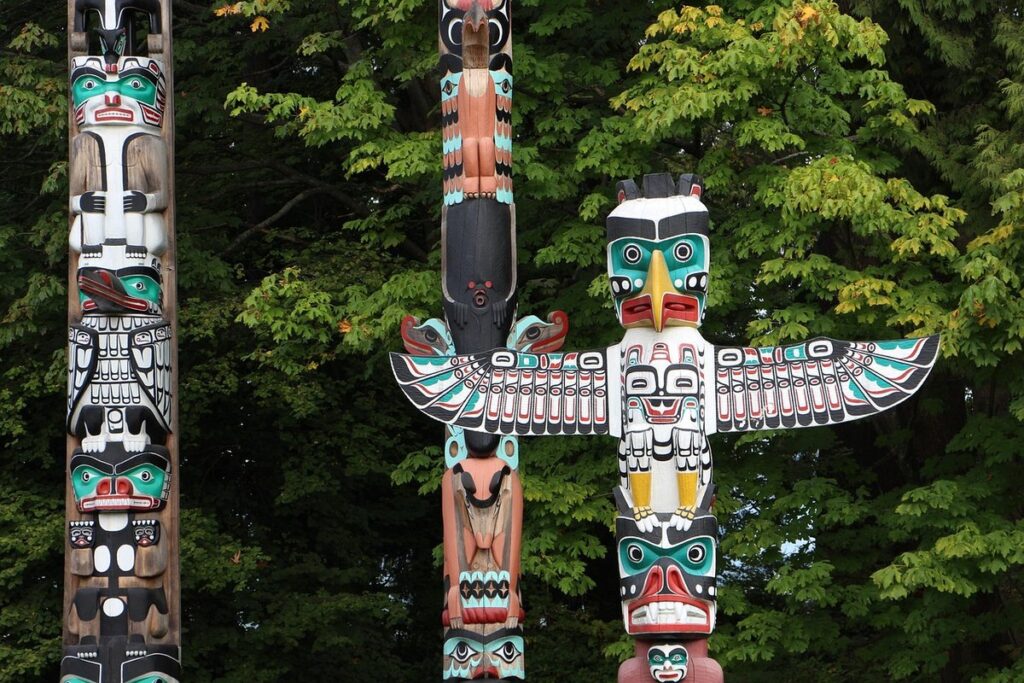
Native American art forms hold deep spiritual significance and serve as a vital means of cultural expression. Pottery, weaving, and woodcarving are just a few examples of traditional arts that have been passed down through generations. These crafts often incorporate symbolic patterns and motifs that tell stories about the tribe’s history, mythology, and connection to the natural world.
In many Native American cultures, art is not simply a decorative pursuit but a way of honoring the divine and communicating with spirits. For instance, the intricate designs on a pottery vessel may represent the cycles of life, while the patterns woven into a blanket might depict ancestral migrations. Woodcarvings often convey stories about creation myths or important events in tribal history.
To truly appreciate the significance of Native American art forms, it’s essential to understand their context and meaning. When interacting with or collecting traditional artwork, remember that these pieces are not mere decorations but sacred objects imbued with cultural and spiritual value. Approach them with respect, reverence, and an openness to learn about the stories they convey. By doing so, you can deepen your understanding of Native American cultures and traditions.
Oral Tradition and Storytelling
Oral tradition and storytelling have long been integral to Native American cultures, serving as a means of preserving history, culture, and spiritual practices. Through the sharing of stories, elders pass down knowledge, values, and traditions from one generation to the next. This oral tradition is often linked to specific events, such as migrations, battles, or significant cultural achievements.
Stories are frequently tied to sacred sites, where mythological figures or ancestral spirits are said to reside. For example, the Ojibwe people have a rich oral tradition surrounding their migration stories, which emphasize the importance of following the “spirit trail” to reach their current homelands. Similarly, the Navajo have stories about the emergence of the Dine (People) from the underworld, which detail their connection to the land and their creation mythology.
To preserve these stories, many Native American communities are working to document and record their oral traditions through written forms like books, videos, or digital archives. This allows younger generations to access and learn from these stories without relying solely on memory. However, it’s essential to recognize that stories should not be reduced to a single written text; instead, they should remain vibrant, living narratives that continue to evolve through shared experience and performance.
Contemporary Issues and Challenges
As we explore Native American beliefs and customs, it’s essential to consider the complex contemporary issues and challenges that many communities face today. From cultural preservation to modernization efforts, we’ll examine some of these pressing concerns.
Cultural Appropriation and Misrepresentation
Cultural appropriation occurs when elements of Native American culture are taken without understanding, permission, or proper context. This can manifest in various ways, such as using sacred symbols like the feather headdress for fashion or spiritual purposes without proper knowledge or initiation. Misrepresentation, on the other hand, involves distorting or manipulating aspects of Native American culture to serve external agendas.
For example, some businesses use Native American imagery and iconography to appear authentic or edgy without actually engaging with the cultural context. This can lead to profiting from cultural appropriation while perpetuating stereotypes and disrespecting the communities they’re supposed to represent.
Native American communities are not a single entity; each tribe has its unique culture, language, and traditions. Appropriating elements from one tribe and applying them to another can be particularly hurtful. To avoid cultural appropriation and misrepresentation, it’s essential to approach cultural exchange with humility, respect, and a willingness to learn. This includes doing thorough research, acknowledging the complexities of Native American cultures, and being mindful of power dynamics in interactions.
When engaging with Native American culture, ask yourself if you’re respecting the original context and meaning or exploiting it for personal gain.
Self-Determination and Sovereignty
Self-determination and sovereignty are fundamental to preserving Native American traditions. For centuries, tribes have fought for control over their lands, resources, and cultural practices. However, many communities still face significant challenges in exercising self-governance. The 1975 Indian Self-Determination and Education Assistance Act aimed to transfer federal authority to tribal governments, but its implementation has been inconsistent.
In practice, this means that many tribes struggle to protect their ancestral lands from development, mining, or other external pressures. For example, the Standing Rock Sioux Tribe’s resistance against the Dakota Access Pipeline highlighted the ongoing tensions between Native American sovereignty and state interests. Tribes must navigate complex federal and state regulations to assert their rights.
To support self-determination, it is essential for non-Native Americans to understand and respect tribal sovereignty. This involves recognizing tribal authority over ancestral lands, acknowledging cultural differences, and avoiding cultural appropriation. By promoting self-governance and respecting Native American autonomy, we can help preserve traditional practices and ensure the long-term survival of these vibrant cultures.
Conclusion: Preserving Native American Traditions
As we conclude our exploration of Native American beliefs and customs, let’s reflect on how these traditions can be preserved for future generations. We’ll discuss ways to honor and respect their heritage.
Recommendations for Supporting Native American Cultures
When engaging with Native American cultures, it’s essential to approach the experience with cultural sensitivity and respect. This means being mindful of your own biases and assumptions, as well as the cultural protocols and customs of the communities you’re visiting.
To promote responsible tourism practices, consider the following guidelines: when visiting sacred sites or attending ceremonies, be sure to follow any specific rules or guidelines provided by local authorities or community members. This may include removing shoes before entering a ceremonial space or refraining from taking photographs during sensitive rituals.
When interacting with Native American artists or vendors, prioritize purchasing authentic and locally-made items rather than mass-produced souvenirs. This supports the economic well-being of indigenous communities and helps preserve traditional craft techniques.
Be aware that cultural appropriation can occur even unintentionally; be cautious when adopting Native American imagery, symbols, or designs into your personal style without proper understanding or permission. Take the time to educate yourself about the significance and context behind these cultural markers, rather than simply using them as fashion statements.
Additionally, consider supporting organizations that prioritize indigenous self-determination and sovereignty. This may involve donating to non-profits working on land preservation efforts or advocating for policy changes that benefit Native American communities.
By adopting a thoughtful and respectful approach to engaging with Native American cultures, you can help promote cross-cultural understanding and support the preservation of traditional practices. Some recommended resources for further learning include:
- The National Museum of the American Indian’s cultural sensitivity guidelines
- The Native Knowledge 360° program, which provides educational materials on indigenous history and culture
- Organizations like the Native American Rights Fund or the National Congress of American Indians, which advocate for Native American sovereignty and self-determination.
Frequently Asked Questions
How Can I Apply the Principles of Native American Spirituality to My Own Life?
You can apply the principles of Native American spirituality by setting aside time for introspection and connection with nature. Start small, such as taking short walks in a nearby park or forest, and gradually increase your commitment to regular spiritual practices. Remember that the key is to listen to your own inner voice and respect your own unique experiences.
What If I Want to Learn More About a Specific Native American Tribe’s Traditions?
Researching specific tribes can be fascinating, but it’s essential to approach this with sensitivity and respect. Look for reputable sources, such as tribal websites or academic books, that provide accurate information about the tribe’s history, customs, and spiritual practices. Be mindful of cultural appropriation by avoiding superficial or commercialized representations.
Is It Possible to Learn Native American Spiritual Practices Without Being Part of a Tribe?
While it’s true that some spiritual practices are specific to certain tribes, many others can be adapted for personal growth and self-improvement. By focusing on the underlying principles of connection with nature and respect for ancestors, you can integrate these practices into your own life without claiming cultural identity.
Can I Use Native American Art Forms as a Form of Personal Expression Without Cultural Appropriation?
Yes, it’s possible to use Native American art forms as inspiration for personal expression while avoiding cultural appropriation. Focus on understanding the historical and cultural context behind each art form, and be mindful of how you represent or interpret them in your own work. Consider collaborating with Native American artists or involving them in the creative process.
How Can I Support Native American Communities and Preserve Their Cultural Heritage?
One way to support Native American communities is by visiting their reservations, attending cultural events, and engaging with local businesses that promote tribal economic development. Additionally, you can advocate for policies that protect sacred sites, preserve traditional knowledge, and recognize tribal sovereignty. By taking small actions, you contribute to a larger movement of cultural preservation and respect.