Israeli cuisine is a vibrant reflection of the country’s complex history and cultural diversity. With its rich blend of Mediterranean, Middle Eastern, and North African influences, traditional Israeli food offers a unique flavor profile that sets it apart from other international cuisines. From classic Jewish dishes like hummus, falafel, and shakshuka to modern twists on traditional recipes, Israeli cuisine is a true melting pot of flavors. But beyond its delicious taste, traditional Israeli food holds a special significance as a symbol of the country’s resilience and adaptability. In this comprehensive guide, we’ll take you on a journey through Israel’s culinary heritage, exploring the history behind its most beloved dishes and sharing expert tips for cooking authentic Israeli cuisine at home. By the end of this article, you’ll be able to recreate these iconic recipes with confidence and appreciation for the rich cultural context that informs them.
History and Cultural Significance
Israeli cuisine has a rich history that spans centuries, shaped by various cultures and traditions that have left an indelible mark on its unique flavors. Let’s explore how these influences have contributed to its distinctive character.
Influences from Around the World
Israeli cuisine is a vibrant reflection of the country’s complex history and cultural diversity. The arrival of Jewish immigrants from various parts of the world brought with them their unique culinary traditions, which blended with those of existing Middle Eastern and Mediterranean cultures to create a distinct fusion.
The Ottoman Empire’s influence on Israeli cuisine is evident in dishes such as kebabs and stuffed grape leaves, known as dolmas. These were introduced by Turkish Jews who settled in Israel after fleeing persecution. The addition of spices like cumin and paprika, commonly used in Middle Eastern cooking, has also contributed to the rich flavor profile of many traditional Israeli recipes.
From Central Asia, Jewish immigrants brought with them their own versions of hearty stews and braises, often made with lamb or beef. These were adapted using locally sourced ingredients like eggplant, tomatoes, and fresh herbs. The blending of these international influences with indigenous Palestinian and Mediterranean traditions has resulted in the unique flavor profiles characteristic of Israeli cuisine today.
Traditional Jewish Dishes and Their Origins
Cholent, knishes, and matzo ball soup are just a few of the classic dishes born from Eastern European and Ashkenazi traditions. These recipes were often slow-cooked on Shabbat or holidays, allowing flavors to meld together over hours. Cholent, for instance, is a hearty stew made with beans, meat, and vegetables that’s typically simmered overnight. Its evolution in Israel saw the addition of local ingredients like eggplant and tomatoes.
Knishes, on the other hand, are baked or fried dough pockets filled with potatoes, meat, or cheese. They were brought to Israel by Ashkenazi immigrants who adapted their recipes using available ingredients. Matzo ball soup, a staple of Jewish cuisine, also underwent changes as it was introduced to Israeli kitchens. The addition of vegetables like carrots and celery added freshness to the traditional matzo balls.
These dishes may have originated in Eastern Europe but have since become integral to Israeli cuisine. Their adaptation to local tastes and ingredients is a testament to the culinary flexibility of Jewish cooks throughout history. When making these recipes at home, consider substituting ingredients with Israeli staples like za’atar or sumac for added depth of flavor.
Staples and Ingredients
When cooking authentic Israeli dishes, a solid understanding of the fundamental ingredients and staples is essential. Let’s take a closer look at the core components that bring these traditional flavors to life.
Grains: Bread, Rice, and Couscous
In Israeli cuisine, grains play a vital role as staples and versatile ingredients. Traditional breads like laffa and pita are staples of the Israeli table. Laffa is often served with dips such as hummus or tzatziki, while pita is used to scoop up falafel or shawarma. The soft, slightly crispy texture of these breads makes them perfect for sopping up flavorful sauces.
Rice and couscous are also integral components of Israeli meals. In many cases, they serve as the base for main courses. For example, a classic combination is grilled meats or fish served over a bed of fluffy rice, often accompanied by steamed vegetables. Couscous is commonly used in North African-inspired dishes like couscous royale, where it’s cooked with meat broth and topped with aromatic spices.
To truly experience the authentic flavors of Israeli cuisine, try incorporating traditional grains into your meals. For instance, use laffa as a base for open-faced sandwiches or as a side to soups and stews. Experiment with different types of rice, such as jasmine or basmati, and pair them with various meats or vegetables. By embracing the importance of grains in Israeli cuisine, you’ll be well on your way to mastering the flavors and traditions of this rich culinary heritage.
Fresh Produce: Fruits and Vegetables
Israeli cuisine is rich in fresh produce, with a focus on seasonal and locally sourced fruits and vegetables. Eggplants, peppers, cucumbers, tomatoes, and dates are staples, often used in salads like tabbouleh and shakshuka. These ingredients also star in stews like chakchouka and harissa, where they’re slow-cooked to bring out their natural sweetness.
In many Israeli households, a vegetable or herb patch is a common sight, reflecting the country’s emphasis on homegrown produce. When selecting fresh produce for your cooking, consider what’s in season – this will ensure you get the best flavor and texture. For example, summer months are perfect for ripe tomatoes, while winter is ideal for hearty root vegetables like carrots and beets.
In traditional Israeli cuisine, fruits and vegetables often play a supporting role to grains and legumes. However, they’re never overlooked. A well-balanced salad, such as one featuring roasted eggplant, red peppers, and fresh parsley, can be a satisfying side dish or light meal in itself. To get the most out of your produce, try grilling or roasting – these methods bring out the natural sweetness and depth of flavor in ingredients like zucchini and bell peppers.
Dishes by Course
Israeli cuisine offers a variety of delicious dishes, each one showcasing a unique combination of flavors and ingredients. In this part of our guide, we’ll explore some traditional favorites that are sure to become new family favorites.
Breakfasts: Shakshuka and More
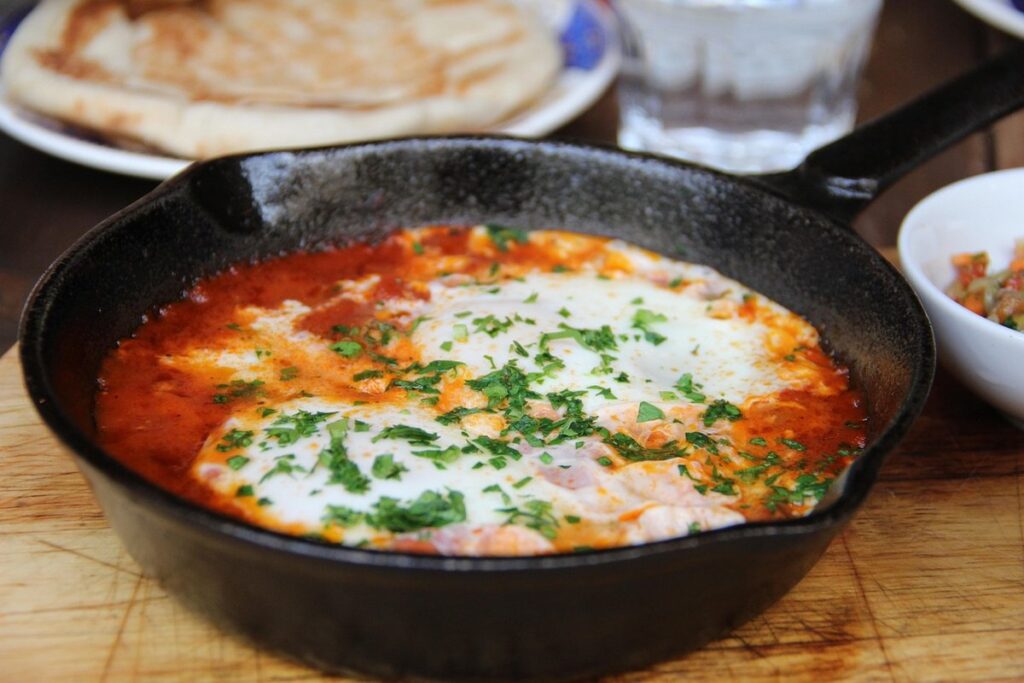
Israeli breakfasts are a far cry from the standard morning fare found elsewhere. Shakshuka, a North African dish that’s been adopted by Israeli cuisine, is often at the forefront of this meal. This popular breakfast staple consists of eggs poached in a spicy tomato sauce and served with crusty bread for dipping.
Another lesser-known but equally delicious option is sabich – fried egg on a pita with vegetables like eggplant, tomatoes, and parsley. This dish has its roots in Iraqi cuisine and is often topped with hummus or tahini sauce.
Hummus itself can also be found on many Israeli breakfast plates. Made from chickpeas, tahini, garlic, and lemon juice, this creamy dip is a staple in Middle Eastern cuisine. It’s often served as part of a larger spread that includes olives, pickles, and bread for scooping.
When trying these dishes at home, consider using locally sourced ingredients whenever possible to get the most authentic flavor. Some Israeli markets also offer pre-made shakshuka sauce or sabich toppings, which can be a convenient option for those short on time.
Soups, Stews, and Salads
Israeli soups and stews are comforting, slow-cooked dishes that warm the heart as much as they fill the belly. Chicken soup with rice is a staple, made with tender chicken, fluffy white rice, and vegetables like carrots and celery. Knishes, another popular option, are essentially dumplings filled with potatoes, meat, or cheese, served in a savory broth. These soups and stews often rely on beef or chicken stock as the base, enriched with herbs and spices that add depth and warmth.
In contrast to these hearty options, Israeli salads are light, fresh, and bursting with flavor. Tabbouleh, made with parsley, bulgur, tomatoes, mint, and lemon juice, is a classic example of the country’s Mediterranean influence. Another popular salad is Israeli-style coleslaw, which combines shredded cabbage, carrots, onions, and sometimes beets with a tangy dressing.
To make an authentic Israeli soup or stew, focus on using high-quality ingredients like homemade chicken stock and a variety of spices. When preparing salads, don’t overdo it with the dressing – a squeeze of fresh lemon juice is often all you need to bring out the flavors of your ingredients.
Regional Specialties
From North to South, Israel’s diverse regions showcase unique culinary traditions that are woven into the fabric of its vibrant culture. Explore the distinct flavors and specialties that define each region.
Northern Israel: Druze and Arab Influences
Northern Israel’s unique culinary landscape is shaped by its Druze and Arab communities. The Druze people, an indigenous minority, have maintained their distinct traditions despite centuries of cultural exchange with other groups. One notable specialty from this region is the kebab, typically made with tender lamb or chicken, served on a bed of rice or wrapped in a pita bread. You’ll often find these street food stalls and markets filled with the aroma of grilled meats.
The Arab communities in northern Israel also contribute to the local cuisine. Their influence can be seen in dishes like musakhan, a simple but flavorful dish made with chicken, onions, and sumac, often served with rice or flatbread. Pastries are another staple, often filled with meat, cheese, or spinach. Try the knafeh, a sweet pastry soaked in syrup, typically served as a dessert.
When exploring this region’s specialties, look for local ingredients like za’atar, sumac, and pomegranate molasses. These herbs and spices add depth to many Druze and Arab dishes.
Southern Israel: Bedouin Traditions
In southern Israel’s arid landscape, the Bedouin population has preserved a distinct culinary heritage, shaped by centuries of nomadic traditions. One iconic dish is musakhan, a flavorful chicken stew made with sautéed onions and sumac, often served over pita bread. This hearty meal reflects the Bedouins’ resourcefulness in utilizing available ingredients, such as onions, garlic, and olive oil.
Another traditional favorite is gormeh sabzi, an herb-rich stew typically featuring parsley, cilantro, and kidney beans. Gormeh sabzi’s bold flavors are achieved through a combination of herbs, spices, and lemon juice. When preparing these dishes, it’s essential to respect the Bedouin tradition of using locally sourced ingredients, which not only enhances flavor but also promotes sustainability.
To experience the authentic taste of southern Israel’s Bedouin cuisine, look for family-owned restaurants or local markets that specialize in traditional recipes. Be sure to ask about the specific ingredients used and how they contribute to the dish’s unique character. By embracing this regional specialty, you’ll gain a deeper appreciation for the rich cultural heritage and resourcefulness of Israel’s Bedouin community.
Desserts and Sweets
Traditional Israeli desserts are a sweet conclusion to any meal, with treats like baklava, halva, and ma’amoul showcasing the country’s rich cultural heritage. These iconic sweets offer a glimpse into Israel’s diverse culinary traditions.
Traditional Pastries: Borekas and Rugelach
Borekas and rugelach are two traditional pastries that have become staples in Israeli bakeries. Borekas, also known as “burekas,” are flaky pastry pockets filled with a variety of ingredients such as cheese, spinach, or minced meat. The filling is typically wrapped inside a thin layer of dough, which is then sealed and baked to perfection.
To make authentic borekas at home, it’s essential to use a combination of all-purpose flour and water to create the right balance of flakiness and texture. A small amount of oil can also be added to enhance the flavor and tenderness of the pastry. Spinach or cheese fillings are traditional favorites, but feel free to experiment with other ingredients like eggplant or mushrooms.
Rugelach is another classic Israeli pastry that’s similar to a croissant but filled with jam or chocolate instead of butter. To make rugelach, simply roll out the dough, spread your desired filling in the center, and fold the dough into triangles or squares before baking until golden brown. Experimenting with different types of jam or chocolate can add unique flavor profiles to this classic dessert.
Fruit-Based Desserts and Drinks
In Israel, seasonal fruits are a staple ingredient in traditional desserts and drinks. One popular dessert is the sabra tart, made with fresh strawberries and topped with whipped cream. The tart’s sweetness pairs well with the tangy flavor of the strawberry, creating a refreshing taste experience. Another classic dessert is the orange cake, often served at Shabbat meals.
Fresh seasonal fruits are also used to make a variety of sweet drinks, such as arak spritzers. Arak, an anise-flavored spirit, is typically diluted with water and ice before being served over rocks in a glass. In Israel, it’s common for families to gather around the table on Friday evenings and enjoy a refreshing drink made with arak and seasonal fruits like strawberries or oranges.
When preparing fruit-based desserts and drinks, consider using locally sourced ingredients whenever possible. Not only will this support local farmers, but you’ll also be ensuring that your dessert tastes its best. Look for seasonal fruits at markets and stores to incorporate into your recipes, such as the popular Israeli strawberry jam made with fresh strawberries from the Kibbutz fields.
Modern Twists and Fusion Cuisine
As you’ve explored the rich flavors of traditional Israeli cuisine, it’s time to see how modern chefs are putting their own creative spin on classic dishes. We’ll discover innovative twists that blend old-world traditions with fresh flavors and techniques.
Experimentation with Local Ingredients
Israeli chefs are pushing the boundaries of traditional cuisine by creatively incorporating local ingredients into classic dishes. Take, for instance, the use of Jerusalem artichokes in place of potatoes to add a sweet, nutty flavor to hummus. This innovative twist is not only a testament to Israeli culinary ingenuity but also an ode to the country’s rich agricultural heritage.
In Tel Aviv’s bustling food scene, chefs are experimenting with new flavor combinations by pairing local produce with international spices and techniques. For example, some restaurants now offer a modern take on the traditional sabich sandwich, topped with pickled vegetables and a fried egg, while others substitute sumac for paprika to give their falafel a tangy kick.
When experimenting with local ingredients, chefs must consider the delicate balance between preserving tradition and innovating flavor. A good starting point is to explore the seasonal produce available at local markets and farms. This approach not only ensures that dishes are made with fresh, locally sourced ingredients but also allows for creative freedom to reimagine classic recipes. By embracing this fusion of flavors and techniques, Israeli chefs are breathing new life into traditional cuisine while honoring its roots.
Innovative Desserts and Treats
Israeli chefs have always been masters at fusing traditional flavors with international influences. When it comes to desserts, you’ll find creative combinations like chocolate-covered dates, which pair the sweetness of Medjool dates with the richness of dark chocolate. This sweet treat is a staple at many Israeli bakeries and cafes.
Another innovative dessert that showcases Israel’s culinary creativity is halva ice cream. By blending the nutty flavor of halva with creamy vanilla ice cream, chefs have created a unique taste experience that’s both refreshing and indulgent. You can find this delicious ice cream at many modern Israeli eateries or even make it yourself by combining store-bought halva with a high-quality vanilla ice cream.
Some other innovative desserts you might come across include baklava-stuffed French toast, which layers crispy phyllo pastry with sweet honey and walnuts, and cardamom-infused cheesecake. These creative desserts demonstrate the adaptability of traditional Israeli cuisine and its willingness to incorporate new flavors and techniques while remaining true to its roots.
When experimenting with international ingredients in your own baking, remember that balance is key. Start by combining a familiar flavor with a new one and adjust accordingly until you find the perfect harmony.
Frequently Asked Questions
Can I substitute ingredients to make traditional Israeli dishes vegetarian or vegan?
Yes, many Israeli dishes can be adapted with plant-based alternatives. For example, replace ground meat in falafel with chickpeas or use vegan cheese instead of feta in shakshuka. However, some traditional recipes rely heavily on animal products, so it’s essential to understand the original flavor profiles before making substitutions.
How do I balance the flavors in a traditional Israeli stew like cholent?
To achieve the rich, savory flavor characteristic of cholent, focus on balancing umami notes from ingredients like soy sauce or miso paste with acidity from lemon juice or vinegar. Adjust seasoning gradually, tasting regularly to avoid overpowering the dish.
What are some key differences between Middle Eastern and Mediterranean influences in Israeli cuisine?
Middle Eastern flavors tend to be more intense and aromatic, often featuring cumin, coriander, and sumac. Mediterranean flavors, on the other hand, emphasize freshness and lightness, with an emphasis on olive oil, lemon, and herbs like oregano and thyme.
Can I make traditional Israeli pastries at home without specialized equipment?
Yes, many traditional Israeli pastries can be made at home without specialized equipment. Start by investing in a good quality rolling pin and pastry brush. Practice working with different types of dough, such as phyllo or puff pastry, to achieve the desired texture.
How do I incorporate international flavors into my own modern Israeli recipes?
Draw inspiration from global cuisines, but balance innovative elements with traditional Israeli flavors. For example, pair Korean chili flakes (gochugaru) with Middle Eastern sumac for a unique and authentic fusion taste experience.