Vietnamese cuisine is a treasure trove of flavors and aromas, with dishes like pho and banh mi becoming increasingly popular worldwide. But there’s more to Vietnamese food than just these iconic street foods – regional specialties and traditional cooking techniques are waiting to be explored by home cooks eager to take their skills to the next level. For those who want to cook authentic Vietnamese meals at home, the challenge lies not only in mastering the recipes but also in understanding the nuances of each dish, from the delicate balance of flavors to the precise preparation methods that make each dish truly special. In this article, you’ll learn expert guides and tips for cooking like a local, covering everything from popular dishes to regional specialties and essential cooking techniques. By the time you finish reading, you’ll be able to create delicious, authentic Vietnamese meals with confidence.
Origins and Influences
Traditional Vietnamese cuisine has its roots in China, India, and Southeast Asia, blending flavors and techniques that create a unique flavor profile. Let’s explore how these cultural influences shaped the country’s rich culinary heritage.
Cultural Significance of Food in Vietnam
Food plays a central role in Vietnamese culture, serving as more than just sustenance for the body. It’s an integral part of family gatherings, celebrations, and daily life. In Vietnamese households, mealtimes are often sacred, with food bringing people together to share stories and bond over shared experiences.
One of the most significant ways food is woven into Vietnamese culture is through its use in special occasions. During Tet Nguyen Dan (Lunar New Year), families come together to prepare traditional dishes like banh chung (square glutinous rice cake) and banh tet (cylindrical glutinous rice cake). These foods are not only delicious but also hold deep symbolic meaning, representing good fortune and prosperity.
In daily life, food is often used as a way to show respect and hospitality. When visiting someone’s home, it’s customary to bring a small gift of food or drinks, such as fresh fruit or a bottle of wine. This gesture is seen as a sign of appreciation for the host’s generosity and care. By understanding the importance of food in Vietnamese culture, visitors can better navigate social situations and build stronger connections with locals.
Historical Influences on Vietnamese Cuisine
Chinese influence on Vietnamese cuisine is evident in dishes such as pho, a popular noodle soup, and banh bot loc, a type of tapioca dumpling. These dishes were introduced during the Chinese occupation of Vietnam from 111 BC to 939 AD. Chinese traders also brought with them their own cooking techniques, including steaming and stir-frying.
The French colonization of Vietnam from 1862 to 1954 had a lasting impact on Vietnamese cuisine as well. The introduction of bread, croissants, and other baked goods led to the creation of banh mi, a fusion of French and Vietnamese flavors. Many traditional Vietnamese dishes were also adapted with French ingredients, such as the use of butter in place of oil.
In addition to Chinese and French influences, the migration of people from other parts of Asia, including Thailand and Indonesia, has also contributed to the diversity of Vietnamese cuisine. The use of chilies, for example, was introduced by Southeast Asian traders who settled in Vietnam centuries ago. Today, these diverse cultural influences continue to shape the country’s culinary identity, resulting in a unique blend of flavors and cooking techniques that is quintessentially Vietnamese.
Popular Traditional Dishes
From popular noodle soups to savory stir-fries, we’ll delve into the beloved dishes that showcase Vietnam’s rich culinary heritage. You’ll discover favorites like Pho and Bun Cha.
Pho: Vietnam’s National Noodle Soup
Pho is more than just a comforting bowl of noodles – it’s a symbol of Vietnamese culture and a reflection of the country’s rich culinary heritage. The origins of pho date back to the early 20th century, when street vendors in Hanoi began serving a hearty noodle soup made with beef or chicken broth, rice noodles, herbs, and various toppings.
Today, there are two main types of pho: Pho Bac, originating from the north, which features a clear broth, while Pho Nam from the south has a richer, more flavorful broth. Regardless of regional variation, pho is often served as a comfort food, with families gathering around the table to share a steaming hot bowl.
To make authentic pho at home, start by using a rich beef or chicken broth made with bones, aromatics, and herbs like ginger and star anise. Use thin rice noodles that are cooked just before serving, and don’t be shy with toppings – sliced beef, bean sprouts, lime wedges, and fresh herbs all add to the flavor and texture of this beloved dish.
For a more authentic experience, try using a combination of rare and well-done beef for added depth.
Banh Mi: A Fusion of French and Vietnamese Flavors
Banh mi’s origins date back to the French colonial period, when baguettes were introduced to Vietnam. Initially, Vietnamese vendors filled these French loaves with pickled carrots and daikon, cucumber slices, coriander leaves, chili sauce, and various meats, such as grilled pork or chicken. The result was a fusion of flavors that blended the freshness of Vietnamese herbs with the crusty bread of its French colonizers.
Over time, banh mi spread throughout Vietnam and gained popularity in major cities like Hanoi and Ho Chi Minh City. Today, this iconic sandwich has become a global culinary phenomenon, with variations popping up on menus worldwide. In the US, for instance, popular banh mi spots often add their own twist by incorporating ingredients such as grilled pork belly or Korean-style BBQ beef.
To experience the authentic flavor of banh mi, look for vendors in Vietnam that use freshly baked baguettes and locally sourced meats and herbs. Some recommended fillings include grilled chicken with chili sauce and pickled carrots, or tofu with sriracha mayonnaise and fresh cilantro. For those who want to try their hand at making banh mi at home, a key tip is to invest in a good quality baguette that will hold up to the various fillings.
Goi Cuon (Spring Rolls) and Other Fresh Wraps
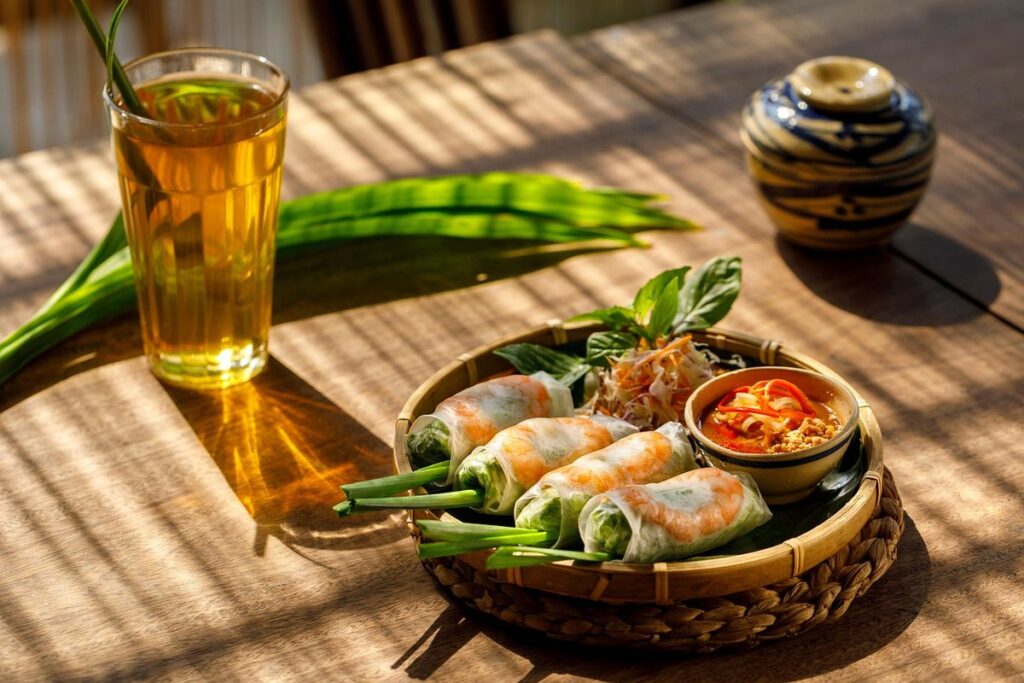
Goi cuon, or spring rolls, are a quintessential Vietnamese dish that showcases the country’s love for fresh ingredients and delicate flavors. To make goi cuon, you’ll need a variety of fillings such as shrimp, pork, vegetables like carrots and cucumbers, and rice noodles. Typically, a mixture of shredded lettuce and herbs like mint and basil is added to the filling.
A good goi cuon should have a balance of flavors, textures, and temperatures. To achieve this, use a sweet and spicy dipping sauce made from fish sauce, lime juice, and chili peppers. The assembly process is just as important: layer the fillings in the rice paper wrapper, leaving a small border at the top to seal it.
Other popular fresh wraps like banh trang and cha gio are also worth trying. Banh trang, or rice paper rolls, typically include pickled carrots and daikon, shrimp, and pork. Cha gio, on the other hand, are deep-fried spring rolls that often contain a mixture of shrimp, pork, and vegetables.
When assembling goi cuon, remember to handle the rice paper wrappers gently to avoid tearing them. This will ensure your spring rolls stay intact until you take a bite. By mastering the art of making goi cuon, you’ll be able to enjoy this refreshing Vietnamese dish at home.
Regional Specialties
From spicy noodle dishes to fragrant street foods, each region of Vietnam offers its own unique culinary delights that showcase the country’s incredible flavor diversity. Let’s take a closer look at some regional specialties that are sure to tantalize your taste buds.
Northern Vietnam’s Delicacies
Northern Vietnam is renowned for its rich and distinct culinary offerings. One of the north’s most beloved noodle soups is bun thang, a dish originating from Hanoi. This delicate soup features rice noodles served with chicken, egg, and a sprinkle of ginger and onion. Bun thang’s flavors are elevated by the use of traditional Vietnamese fish sauce and herbs.
Another celebrated northern delicacy is cha ca, a sizzling hot fish dish popularized in Hanoi’s Old Quarter. To prepare cha ca, thin slices of fish are marinated in a mixture of scallions, dill, and turmeric before being grilled to perfection. This aromatic fish is often served with steamed rice noodles and a side of fresh vegetables.
In contrast to the rich flavors of bun thang and cha ca, bun bo nam bo offers a refreshing twist on traditional Vietnamese noodle soups. This Hue-style beef noodle soup features rare beef slices cooked in a flavorful broth made from annatto seeds and star anise. Bun bo nam bo’s unique flavor profile is a testament to the north’s diverse culinary landscape.
These distinctive dishes showcase Northern Vietnam’s dedication to using local ingredients and creative flavor combinations, resulting in truly authentic Vietnamese cuisine experiences.
Central Vietnam’s Coastal Cuisine
Central Vietnam’s coastline offers a unique blend of flavors and textures, shaped by its proximity to the sea. The region is renowned for its seafood-rich dishes, which often feature fresh catches from the waters off Da Nang and Nha Trang. One popular example is banh beo, a delicate water fern cake typically served with a sweet and savory sauce made from prawn paste, sugar, and lime juice.
Another specialty of the central coast is banh khot, small savory pancakes made from rice flour and coconut milk, often filled with shrimp or pork. These bite-sized morsels are usually served as an appetizer or snack, and their crispy edges give way to a tender interior. Com am thuc, a seafood rice bowl dish from the central region, is also worth trying – it typically features a variety of fresh seafood such as squid, mussels, and shrimp, cooked in a flavorful broth with fish sauce, lime juice, and chili peppers.
These dishes showcase the creative fusion of flavors and textures found in traditional Vietnamese cuisine. When exploring Central Vietnam’s coastal cuisine, be sure to look for local markets or street food stalls serving these specialties, where you can experience the authentic taste of the region.
Southern Vietnam’s Sweet and Savory Delights
In Southern Vietnam, you’ll find a unique blend of sweet and savory flavors that reflect the region’s cultural heritage. One iconic dish is banh xeo, a sizzling pancake made from rice flour, water, and turmeric, often served with fresh herbs and sweet sauce. Com tam, or broken rice, is another staple in Southern Vietnamese cuisine, typically paired with grilled pork or chicken and a fried egg.
Regional influences on Vietnamese cuisine are also evident in the South. The region’s proximity to Cambodia has introduced new flavors and cooking techniques, such as the use of fish sauce and prahok (a type of fermented fish paste) in dishes like goi duong, a fresh fruit salad often mixed with shrimp, pork, or chicken.
When trying these Southern specialties, be sure to balance sweet and savory flavors. For example, pair the crispy banh xeo with a side of fresh herbs and sweet sauce, or combine the rich flavors of com tam with a squeeze of lime juice and a sprinkle of cilantro. By understanding the regional influences on Vietnamese cuisine, you can better appreciate the diversity and richness of traditional Southern dishes.
Street Food and Night Markets
One of Vietnam’s greatest culinary delights is its vibrant street food scene, where local flavors come alive at night markets. Let’s explore the popular dishes you can find in these bustling markets.
Experience the Flavors of Hanoi’s Old Quarter
In Hanoi’s Old Quarter, traditional street food stalls serve up some of Vietnam’s most beloved dishes. Bun cha, for example, is a popular breakfast option, featuring grilled pork served with rice noodles and herbs. Banh cuon, or rolled cakes, are another favorite, made with thin sheets of rice flour and filled with shrimp, pork, and bean sprouts. Xoi xeo, sticky rice pancakes topped with mung beans and scallions, make for a satisfying snack.
Night markets in Hanoi offer a more extensive selection of street food options. To navigate the crowds, focus on stalls with high turnover and fresh ingredients. Look for vendors who cook to order, rather than those who sit out pre-cooked dishes all day. Some popular night market destinations include Dong Xuan Market and Cho Dong Xuan Night Market. When ordering from a vendor, don’t be afraid to point at what you want or ask for recommendations – many street food stalls offer English menus or translations.
Some essential items to try in Hanoi’s Old Quarter include bun cha, banh cuon, xoi xeo, and banh mi (a fusion of French and Vietnamese flavors). Be sure to also sample some fresh fruit smoothies and local coffee.
Ho Chi Minh City’s Bustling Street Food Scene
Ho Chi Minh City’s street food scene is a sensory explosion of flavors and aromas. In Saigon, you’ll find iconic dishes like banh mi, goi cuon, and com tam at nearly every corner. Banh mi shops serve up crispy baguettes filled with pickled carrots, daikon, cilantro, and various meats, from grilled pork to chicken or tofu.
At popular night markets like Ben Thanh Market and Binh Tay Market, the air is thick with the smell of sizzling meat and spices. These markets are a great place to try com tam, a Southern specialty featuring broken rice topped with grilled pork, egg, and various sauces. Goi cuon, fresh spring rolls filled with shrimp, vegetables, and herbs, are another popular snack.
To navigate Ho Chi Minh City’s street food scene like a local, consider visiting the following areas: District 1’s Dong Khoi Street, where you can find high-end restaurants alongside casual eateries; Binh Thanh District’s An Suong Night Market, which offers a wide range of traditional dishes; and Cu Chi District’s street food stalls, serving up authentic com tam and other regional specialties.
Traditional Ingredients and Cooking Techniques
Traditional Vietnamese cuisine relies heavily on a few key ingredients, including fresh herbs, chilies, fish sauce, and rice, which are often combined in unique ways to create bold flavors. Let’s take a closer look at these essential components and how they’re used in cooking.
Key Herbs and Spices in Vietnamese Cuisine
Fish sauce and lime juice are staples in Vietnamese cooking. They add a salty depth to many dishes. Fish sauce is used as a marinade, seasoning, and ingredient in sauces, while lime juice adds brightness and acidity. Chilies, such as Thai bird’s eye or Korean chili flakes, bring heat to various preparations. Cilantro, or rau răm, is often paired with fish sauce and chilies for added flavor.
In many Vietnamese dishes, a balance of sweet, sour, salty, and spicy flavors is sought. Fish sauce and lime juice are key components in achieving this balance. For example, in a classic Banh Xeo (sizzling pancake) recipe, a mixture of fish sauce, lime juice, sugar, and chilies creates a savory and slightly sweet glaze.
To incorporate these ingredients into your cooking, start by experimenting with different proportions of fish sauce to lime juice in marinades or sauces. Adjust the amount of chili flakes according to your desired level of heat. Cilantro can be added as a garnish or chopped and mixed into sauces for extra flavor. By mastering the use of these essential herbs and spices, you’ll unlock new possibilities in traditional Vietnamese cuisine.
Steaming, Grilling, and Stir-Frying: Essential Cooking Methods
Steaming is a fundamental cooking technique in Vietnamese cuisine, often used to prepare delicate ingredients like fish and vegetables. In Vietnam, steaming baskets called “lò luộc” are commonly used to steam food over boiling water. To master this method at home, you’ll need a large pot with a steamer basket or a bamboo steamer. Fill the pot with enough water to come up to the bottom of the steamer, and bring it to a boil.
Grilling is another popular cooking technique in Vietnamese cuisine, often used for marinated meats like pork and chicken. In Vietnam, grills are typically fueled by charcoal or wood, giving food a smoky flavor. To replicate this at home, you can use a gas or charcoal grill, or even a grill pan on the stovetop.
Stir-frying is perhaps the most versatile cooking technique in Vietnamese cuisine, used for a wide range of dishes from simple vegetable stir-fries to more complex meat and seafood combinations. When stir-frying, it’s essential to use high heat quickly to prevent ingredients from becoming soggy or overcooked. Use a wok or large skillet with a non-stick surface to make the process easier.
Frequently Asked Questions
Can I make pho without beef broth?
Yes, you can make pho with chicken or vegetable broth as substitutes for beef broth. Simply substitute the same amount of your chosen broth in place of the beef broth and adjust seasoning accordingly. This is a great option for vegetarians or those who want to try a different flavor profile.
How do I avoid overcooking my banh mi fillings?
When assembling banh mi, it’s essential to balance fillings like pickled carrots, daikon, and grilled pork with the rest of the sandwich. To avoid overcooking your fillings, cook them separately until they’re just done, then assemble the sandwiches right before serving.
What if I don’t have access to fresh herbs like cilantro or basil?
While fresh herbs are essential in Vietnamese cuisine, you can substitute dried or frozen herbs as a last resort. However, note that the flavor and aroma will be different from using fresh herbs. If possible, try to find alternative herbs with similar flavors, such as parsley or dill.
Can I make goi cuon ahead of time?
Yes, you can prepare goi cuon fillings like shrimp and pork a day in advance, but assemble the spring rolls just before serving. The rice paper wrappers will become soggy if left out too long, so it’s best to assemble them right away.
What are some regional specialties I should try when traveling to Vietnam?
When visiting different regions of Vietnam, be sure to try local specialties like bun thang in Hanoi, banh beo in central Vietnam, and com tam in the south. Each region offers unique flavors and dishes that showcase the diversity of Vietnamese cuisine.