Europe’s Christmas markets are a true winter wonderland, with twinkling lights, festive atmosphere, and of course, delicious food and drink. From traditional German delights like bratwurst and glühwein to unique French specialties like macarons and vin chaud, there’s something for every taste at these magical holiday events. But planning the perfect Christmas market trip can be daunting – with so many destinations to choose from, how do you narrow down your options? Whether you’re a seasoned traveler or just looking for a fun and festive getaway, this guide will help you discover the best European Christmas markets and plan an unforgettable trip. We’ll take you on a tour of some of the most popular and unique markets in countries like Germany, France, and Austria, and share expert tips on what to eat, drink, and see at each one. By the end of this article, you’ll be well-equipped to plan your own festive adventure through Europe’s best Christmas markets.
Planning Your Christmas Market Adventure
When visiting multiple Christmas markets, planning is key to making the most of your holiday trip. Start by mapping out which markets you want to visit and how long you have to spend at each one.
Choosing the Right Time and Place
When planning a trip to European Christmas markets, timing and location are crucial factors to consider. Generally, the peak season for visiting Christmas markets is from late November to early January, with most markets opening around mid-November and closing by December 31st. However, some popular destinations like Germany’s Dresden Striezelmarkt and Vienna’s Christkindlmarkt begin as early as late October.
Consider what you’re looking for in a Christmas market experience: are you drawn to traditional German beer gardens or perhaps the elegant atmosphere of Austria’s markets? Some cities offer smaller, more niche markets that cater to specific interests. For example, Berlin’s WeihnachtsZauber focuses on handmade crafts and local designers, while Munich’s Christkindlmarkt features a wide range of international food stalls.
Before heading out, ensure you have the necessary travel documents, such as a valid passport and any required visas. Some European countries may also require visitors to be up-to-date with certain vaccinations, especially for longer stays or winter sports activities. Research your destination and plan accordingly to make the most of your Christmas market adventure.
Top Destinations for Christmas Markets in Europe
Dresden’s Striezelmarkt is one of Germany’s most beloved and oldest Christmas markets, dating back to 1434. This charming market takes place in the historic Altstadt district, surrounded by picturesque half-timbered houses and decorated fountains. Visitors can enjoy traditional treats like Lebkuchen, a type of soft gingerbread cookie, and Glühwein, a warm mulled wine.
Austria’s Vienna Christkindlmarkt is another must-visit destination during the holiday season. Set up in front of the City Hall, this market offers a wide range of festive goods and food, including handmade ornaments, wooden toys, and delicious Austrian pastries. Don’t miss the opportunity to take a horse-drawn carriage ride through the city’s snow-covered streets.
In France, Strasbourg’s Christkindelsmärik is a standout attraction during the winter months. This market boasts over 300 stalls selling everything from festive decorations to local specialties like tarte flambée and Elsass-style Christmas cookies. Be sure to explore the beautiful Gothic cathedral, which serves as the backdrop for this lively market scene.
These three destinations are just a few examples of the many fantastic Christmas markets Europe has to offer.
History and Traditions Behind European Christmas Markets
From the intricate wooden stalls to the festive holiday treats, every aspect of a European Christmas market is steeped in rich history and tradition. Let’s take a closer look at the stories behind these beloved winter destinations.
Origins and Evolution of Christmas Markets
The modern Christmas market has its roots in 14th-century Germany, where towns would host festive fairs to raise money for the poor and celebrate the start of the Christmas season. These early markets offered a range of goods, including candles, glassware, and handmade toys. Over time, Christmas markets spread throughout Europe, each developing their unique character and traditions.
In the 16th century, Vienna’s Christkindlmarkt became one of the most famous in Europe, attracting visitors from across the continent with its intricate wooden stalls and festive atmosphere. As trade and cultural exchange increased between European cities, Christmas market traditions were adopted and adapted by different regions. Today, each country has its own distinct take on the traditional Christmas market.
For example, Germany’s Weihnachtsmarkt tends to focus on local food and drink, such as glühwein (mulled wine) and lebkuchen (gingerbread), while Austrian Christkindlmarkts often feature handmade crafts and festive decorations. In contrast, Italian mercatini di Natale emphasize traditional clothing and textiles, reflecting the country’s rich textile heritage. By understanding the evolution of Christmas markets in Europe, visitors can better appreciate the unique character of each market they visit.
Unique Traditions and Customs at Christmas Markets
One of the most delightful aspects of visiting European Christmas markets is discovering the unique traditions and customs that set each market apart. For instance, in Germany’s Christkindlmarkt, you’ll find intricately crafted wooden toys and festive nutcrackers, while in Poland’s Krakow Christmas Market, you can sample traditional oscypek cheese and pierogi. In Austria’s Vienna Christmas Market, you might be treated to a glass of mulled wine or glühwein, served with a decorative spiced cookie.
In many European countries, Christmas markets offer a range of festive foods and drinks that are steeped in tradition. For example, Germany is famous for its gingerbread (Lebkuchen), while the Netherlands’ Winter Parade Market features an array of sweet treats, including stollen and speculaas cookies. In France’s Strasbourg Christkindelsmärik, you can sample Alsatian delicacies like tarte flambée and bretzel.
To make the most of these unique traditions and customs, be sure to explore beyond the main stalls and try some local specialties. Don’t be afraid to ask vendors about their products or traditions – many are happy to share stories and insights into their craft. By immersing yourself in these cultural experiences, you’ll not only find one-of-a-kind gifts but also create unforgettable memories of your European Christmas market adventure.
Must-Try Foods and Drinks at Christmas Markets
Indulge in the festive flavors of Europe’s Christmas markets, where traditional treats like glühwein, gingerbread, and roasted chestnuts are must-try delights for any visitor. From Germany to Austria and beyond, local specialties abound.
Traditional German Delights
When browsing traditional German Christmas markets, be sure to try some of the classic treats on offer. Glühwein is a staple at most German markets, and for good reason: this spiced wine is made with red wine, sugar, and spices, and is typically served in a decorative ceramic mug that you get to keep as a souvenir when you return it. This festive drink is perfect for warming up on a chilly winter evening.
Another sweet treat you won’t want to miss is lebkuchen, a type of gingerbread cookie that’s been a German Christmas tradition for centuries. These soft and spicy cookies are often made with honey and decorated with icing and candies, making them almost too beautiful to eat.
For those looking for something more substantial, stollen is a classic German Christmas bread filled with dried fruits and nuts. This sweet and savory bread is typically served as a dessert or snack, but it’s also delicious on its own or paired with a warm beverage. Be sure to try these traditional German delights when visiting the Christmas markets in Germany.
French and Austrian Specialties
When browsing the stalls at French and Austrian Christmas markets, you’ll find a delightful array of unique foods and drinks to sample. In France, escargots are a popular treat, typically served as an appetizer with garlic butter and parsley. Macarons are also widely available, often in festive holiday flavors like gingerbread or chocolate.
Austrian markets, on the other hand, offer a variety of traditional specialties. Kaiserschmarrn, a sweet shredded pancake dish topped with powdered sugar, raisins, and sometimes fruit, is a must-try. You might also encounter other Austrian delights like Leberkäse (a type of meatloaf) or Gugelhupf (a Bundt-shaped cake).
Some markets may also offer mulled wine, known as Glühwein in German-speaking countries, which is typically made with red wine, spices, and sugar. Be sure to try it while strolling through the market stalls – it’s a great way to warm up on a chilly winter evening. If you’re feeling adventurous, consider trying some of the more unique offerings like Austrian-style donuts or French patisserie delicacies.
Shopping and Gift Ideas for Christmas Markets
Looking for unique gifts to bring home from your European Christmas market visit? Here are some festive shopping ideas to make your holiday season even brighter.
Unique Handmade Crafts and Gifts
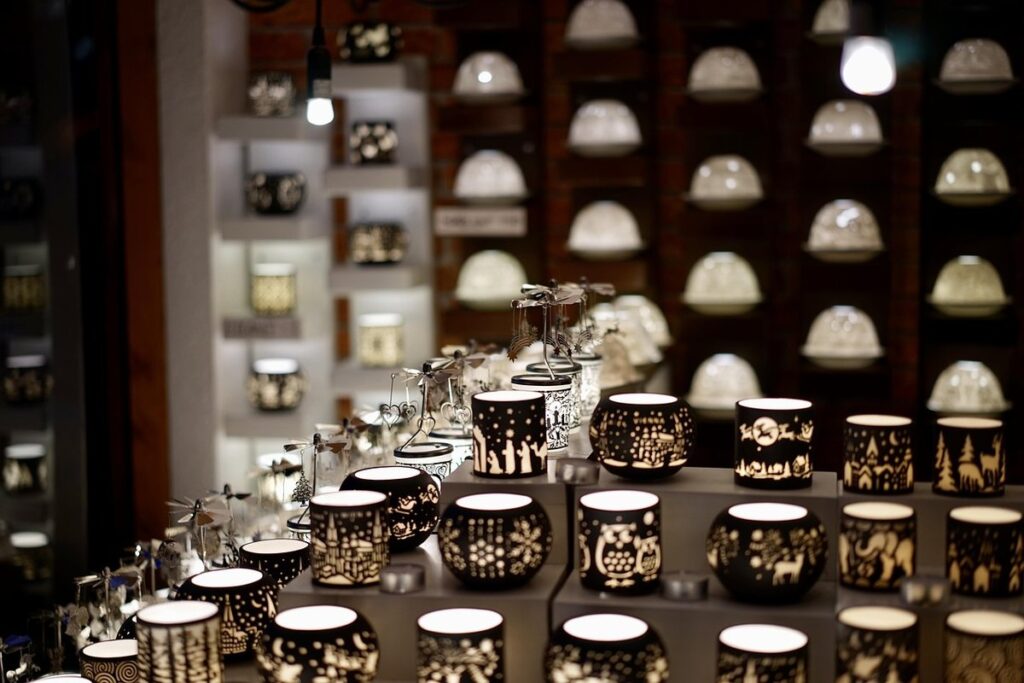
When browsing through the stalls at European Christmas markets, you’ll often find a treasure trove of unique handmade crafts and gifts. Glassware, pottery, and textiles are just a few examples of the types of items you can expect to discover.
One popular item is hand-painted glass ornaments from Germany’s famous Bavarian region. These delicate pieces are made by skilled artisans using traditional techniques that have been passed down through generations. Look for intricate designs and vibrant colors that will add a touch of festive charm to your home.
In Austria, you might come across beautifully crafted wooden decorations, such as intricately carved Nativity scenes or hand-painted wooden angels. These items make thoughtful gifts or additions to your own Christmas decor.
If you’re on the hunt for textiles, consider searching for handmade woolen scarves from Poland’s rural regions. These thick, warm scarves are perfect for braving the cold winter months and often feature traditional folk patterns and designs.
Authentic Souvenirs to Bring Home
When browsing through the stalls at European Christmas markets, it’s easy to get caught up in the excitement of finding unique souvenirs. However, not all products are created equal, and some may be mass-produced or even imported from other countries. To ensure you bring home authentic souvenirs that truly reflect the local culture, look for products made from natural materials like wood, ceramics, or textiles.
Avoid stalls with identical products bearing generic names like “Handmade in Germany” – these are often signs of tourist traps. Instead, seek out vendors who can tell you about the artisanal process behind their wares and proudly display certificates of origin. You might also consider purchasing from local artisans or craftspeople who work directly at the market.
To identify high-quality products, inspect them carefully for details like intricate craftsmanship, unique designs, or distinctive materials. A well-crafted wooden ornament, for example, may feature a hand-carved signature or come with a certificate of authenticity. Be wary of overly cheap prices, as they can indicate lower quality or even counterfeits.
Budgeting and Safety Tips for Visiting Christmas Markets
To make the most of your festive trip, it’s essential to plan ahead and set a budget for food, drinks, and souvenirs. Consider these practical tips to ensure a fun and stress-free visit to Christmas markets in Europe.
Staying Within Your Means
Accommodation costs can quickly add up when visiting multiple Christmas markets across Europe. To stay within your means, consider budget-friendly options such as hostels or Airbnb apartments. Prices vary depending on location and availability, but you can expect to pay around €30-€50 per night for a shared hostel room.
When it comes to food, try to eat at the market stalls themselves rather than restaurants or cafes nearby. These vendors often offer traditional Christmas treats like glühwein and gingerbread at reasonable prices – typically between €5-€10 per item. Be mindful of portion sizes and sharing with friends can help stretch your budget.
Transportation costs can also be a significant expense, especially if you’re traveling by train or plane to reach multiple markets. Research affordable options in advance, such as group discounts or budget airlines, and plan your itinerary accordingly. Consider purchasing a Eurail pass or a regional public transportation card for convenient and cost-effective travel between destinations.
Budget-conscious travelers can also take advantage of free or low-cost activities at the market itself, like browsing stalls, attending live performances, or taking in the festive atmosphere. By prioritizing affordable accommodations, mindful eating, and strategic planning, you can stay within your means and still enjoy a magical Christmas market experience.
Safety and Security at Christmas Markets
European Christmas markets are generally well-policed and secure areas. However, as with any crowded public space, petty theft and pickpocketing can occur. Be mindful of your belongings, especially in areas with high foot traffic, such as near food stalls or popular attractions. Keep a close eye on your purse or wallet, and consider using a money belt to add an extra layer of security.
In some markets, you may notice a visible police presence or security personnel patrolling the area. Don’t be surprised if vendors also keep a watchful eye on their surroundings. Many stalls have small security cameras installed as well. While these measures are in place, it’s still essential to remain vigilant and report any suspicious activity to local authorities.
To stay safe while shopping at Christmas markets, follow basic crowd etiquette: avoid walking into crowded areas without checking for obstacles first, keep your phone and other valuables secure, and don’t leave drinks or belongings unattended. Some markets may also have designated lost-and-found areas or customer service desks where you can report lost items or ask questions.
In general, European Christmas markets are welcoming and safe environments for visitors. By being aware of your surroundings and taking necessary precautions, you can enjoy the festive atmosphere without worrying about your safety.
Conclusion: Making the Most of Your Christmas Market Experience
As you wrap up your festive market-hopping adventure, it’s time to reflect on what made each experience truly special and how you can make the most of future visits. Think back to your favorite moments.
Tips for Making Your Trip Unforgettable
When visiting European Christmas markets, you’ll want to make the most of your experience. To do so, try immersing yourself in local traditions by attending a festive mass or service at one of the market’s churches. This is a great way to soak up the atmosphere and get a glimpse into the community’s holiday spirit.
Another key aspect is sampling the diverse array of food and drink on offer. Be adventurous and try some regional specialties, such as Germany’s glühwein (mulled wine) or France’s vin chaud (hot wine). Don’t be afraid to ask locals for recommendations – they often know the best places to indulge in seasonal treats.
In addition to trying new foods, make an effort to engage with local artisans and vendors. Many Christmas markets feature handmade crafts and souvenirs, offering a unique opportunity to take home something truly authentic. Look for items that reflect the region’s history or cultural heritage – these will make wonderful gifts or mementos of your trip.
When browsing market stalls, keep an eye out for seasonal ingredients like roasted chestnuts, spiced nuts, or freshly baked gingerbread. These treats not only make for delicious snacks but also provide a glimpse into local culinary traditions.
Some specific tips to enhance your experience include:
- Arriving early to beat the crowds and get a good spot for ice skating or other activities
- Bringing cash, as some vendors may not accept credit cards
- Dressing warmly, as Christmas markets often take place in chilly winter weather
Frequently Asked Questions
What if I’m short on time and can’t visit multiple Christmas markets in one trip?
Yes, it’s absolutely possible to visit just one or two markets in a short amount of time. Focus on the most important experiences for you, such as trying local specialties or browsing handmade crafts.
Can I find non-traditional or vegan options at European Christmas markets?
While traditional German delights like glühwein and lebkuchen are plentiful, many markets now cater to diverse dietary needs. Look for signs indicating vegan or gluten-free options, or ask vendors directly about alternatives.
How do I spot authentic souvenirs versus tourist traps?
When shopping for local handicrafts or souvenirs, inspect the items carefully for quality and craftsmanship. Avoid overpriced or mass-produced items that may be sold at multiple markets; instead, seek out unique, handmade pieces from smaller vendors.
What if I get lost or separated from my group in a crowded market?
Don’t worry – most Christmas markets have clear signage and helpful staff on hand to assist visitors. If you’re separated from your group, try finding an information booth or asking a local for directions; better yet, stay together and enjoy the festive atmosphere!
Can I attend European Christmas markets with mobility issues or disabilities?
Many Christmas markets are wheelchair-accessible, but it’s essential to research individual market conditions before visiting. Consider contacting market organizers in advance to inquire about accessibility features, such as ramps, elevators, or accessible restrooms.