The goth subculture has long been a beacon for those who reject mainstream norms and celebrate individuality. Born from the ashes of post-punk, this rich and complex movement has evolved over the decades, influencing music, fashion, and art in profound ways. At its core, goth culture is about embracing the darker aspects of life, not just aesthetically but also philosophically. It’s about rejecting societal expectations and forging your own path. In this article, we’ll delve into the history of goth subculture, from its early days to its modern-day manifestations. We’ll explore how goth aesthetics have evolved, influencing everything from fashion trends to musical styles. By examining the evolution of goth culture, we hope to not only celebrate its enduring influence but also inspire those who find solace in its nonconformist ethos.
A Brief History of Goth Music
Goth music has its roots in post-punk and new wave bands of the late 1970s and early 1980s, setting the stage for a unique sound to emerge.
Origins in Post-Punk Era
In the late 1970s, the post-punk movement emerged as a reaction against the commercialization of punk rock. This era saw the birth of a new wave of musicians and artists who sought to push the boundaries of sound and explore darker themes. Bands like Joy Division, Siouxsie and the Banshees, and Bauhaus became the vanguard of this movement, delving into the realms of existential crises, social isolation, and mortality.
Their music was characterized by its brooding intensity, driving rhythms, and introspective lyrics that reflected a sense of despair and disillusionment. These pioneers of goth rock paved the way for a subculture that would explore the depths of human emotion, embracing the shadows as much as the light. By examining the post-punk era’s fascination with darkness and existential crises, we can see the seeds being sown for the goth movement’s distinctive aesthetic and attitude.
This was also an era marked by experimentation with fashion, art, and aesthetics, where individuals began to express themselves through bold, avant-garde styles that blurred the lines between music, visual arts, and performance. The fusion of these elements laid the groundwork for the goth subculture’s rich tapestry of expression, one that would become a sanctuary for those seeking refuge from mainstream culture.
Key Bands and Influences
The early days of goth music owe a significant debt to several influential bands that helped shape its distinctive sound. Joy Division’s dark and introspective style, characterized by Ian Curtis’ haunting vocals, is often cited as one of the key precursors to the goth genre. Their 1979 single “Atmosphere” laid the groundwork for goth’s signature atmospheric and melancholic vibe.
Siouxsie and the Banshees also played a crucial role in developing the goth sound. With their fusion of post-punk and art rock, they created an edgy and avant-garde style that influenced many subsequent goth bands. Songs like “Spellbound” showcased their ability to craft haunting melodies and lyrics that explored themes of darkness and mortality.
Bauhaus, formed in 1978, is often credited as one of the first true goth bands. Their debut single “Bela Lugosi’s Dead” is a seminal work in the genre, featuring eerie soundscapes and poetic lyrics that captured the spirit of Victorian Gothic romance. These pioneering acts laid the foundation for the goth subculture’s sonic and aesthetic identity, paving the way for future generations of goth musicians to explore their unique blend of darkness, drama, and style.
Gothic Fashion: Aesthetic Evolution
Gothic fashion has undergone significant transformations since its emergence in the late 1970s, reflecting a broader evolution of the goth subculture’s style and identity. Let’s take a closer look at these aesthetic shifts over time.
Early Goth Style (1980s)
The early days of gothic fashion were all about making a statement. In the 1980s, goths rejected mainstream fashion and created their own unique aesthetic. One iconic look from this era was the fishnet stockings paired with leather jackets, creating a bold and edgy contrast between soft and hard textures.
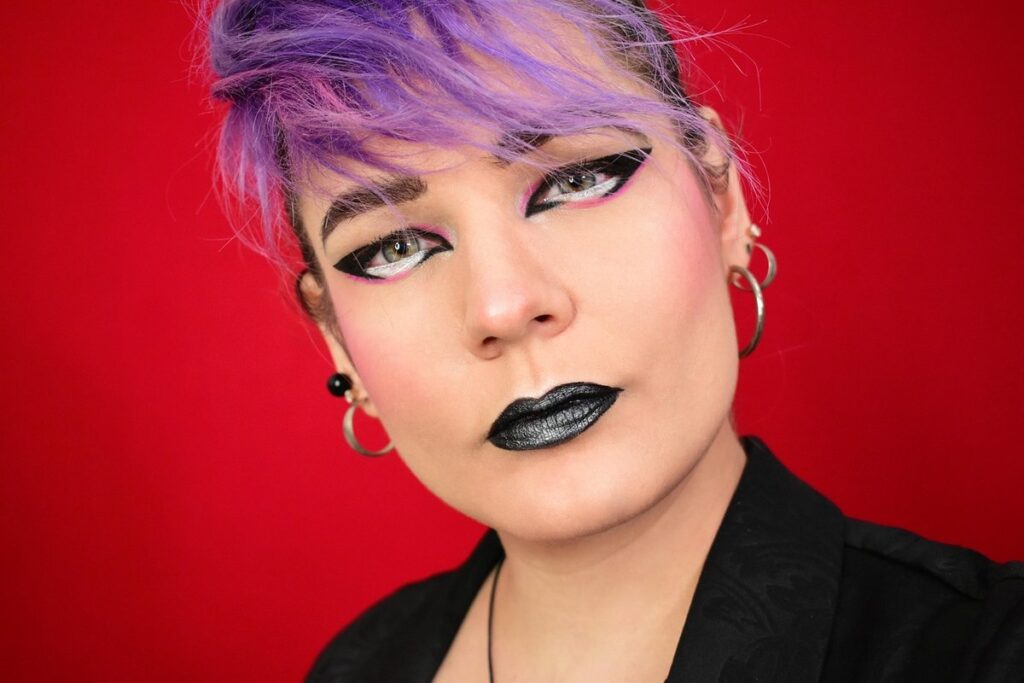
Black eyeliner became a staple of early goth style, often worn in thick lines to accentuate dark eyes. This dramatic eye makeup was accompanied by heavy eyelashes and bold lip colors, creating an overall effect that was both mysterious and alluring. Inspired by the likes of David Bowie and Siouxsie Sioux, young people began experimenting with their own gothic looks, incorporating elements like lace, ruffles, and velvet into their wardrobes.
To achieve a similar look, try pairing fishnet stockings with a fitted leather jacket or skirt. Don’t be afraid to experiment with bold makeup choices, such as thick eyeliner or bright lip colors. As you build your wardrobe, remember that goth fashion is all about expressing yourself through the clothes you wear.
Influences and Inspiration
Gothic fashion is a melting pot of influences from various eras and cultures. One of its earliest inspirations comes from Victorian mourning attire, characterized by dark colors, lace, and intricate details. The goth subculture often incorporates elements like velvet, ruffles, and brocade, which were originally used in 19th-century mourning dresses.
Another significant influence on gothic fashion is punk aesthetics. The DIY ethos of punk culture encouraged experimentation with unconventional materials and styles, leading to the development of bold, daring, and eclectic looks within the goth subculture. This fusion of punk’s raw energy and gothic’s dark romanticism created a unique visual identity for the subculture.
Gothic fashion also draws inspiration from ancient cultures like Egypt and Greece. Pharaonic headdresses, Greek columns, and other architectural motifs are often incorporated into modern goth designs. These elements add a sense of history and mysticism to gothic attire, reflecting the subculture’s fascination with the past.
Goth Subculture: An Intersection of Art and Identity
The goth subculture is deeply rooted in artistic expression, embracing the dark, the mysterious, and the avant-garde as a means of self-definition. This section explores how art intersects with identity within this unique community.
Visual Arts and Gothic Aesthetics
The visual arts have been an integral part of the goth subculture from its inception. One notable influence on goth aesthetics is film noir-inspired photography, which emphasizes dark and moody lighting to create a sense of mystery and intrigue. This style can be seen in the work of photographers like Tim Walker and Gregory Crewdson, who use elaborate sets and lighting to create hauntingly beautiful images.
In addition to film noir-inspired photography, goth visual arts often incorporate elements of dark surrealism and avant-garde movements. Artists like H.R. Giger and Zdzisław Beksiński have created iconic works that blend the strange and the beautiful with a sense of foreboding. Their art often explores themes of mortality, decay, and the unknown.
If you’re interested in incorporating these aesthetics into your own goth-inspired artwork, consider experimenting with dramatic lighting and bold colors to create a moody atmosphere. You can also draw inspiration from classic horror movies, literature, and mythology to infuse your art with a sense of eeriness and mysticism.
The Role of Literature
Goth literature has long been a cornerstone of the subculture’s aesthetic and philosophical framework. Authors like Edgar Allan Poe, H.P. Lovecraft, and Anne Rice have captivated audiences with their dark, haunting tales that reflect the goth mindset. Their works often explore themes of mortality, the supernatural, and the human condition, resonating deeply with those who identify as goth.
For instance, Poe’s “The Raven” (1845) is a quintessential example of gothic literature, its atmospheric and melancholic tone echoing the introspective nature of many goths. Lovecraft’s Cthulhu Mythos, while influential in the horror genre, also embodies the goth fixation on the unknown and unknowable, as well as the futility of human existence.
These authors’ works have not only shaped the literary canon of the goth subculture but also provided a sense of community and shared experience among its adherents. To delve into this rich literary heritage, readers can start by exploring Poe’s collected works or immersing themselves in Lovecraft’s cosmic horror stories.
Goth Music: A Diverse and Ever-Changing Scene
Goth music has evolved significantly over the years, incorporating various styles such as post-punk, industrial, and electronic elements to create a unique sound. Let’s delve into its diverse evolution and impact on the subculture.
Sub-Genres Within Goth Music
Goth music is a vast and eclectic genre that has branched out into several distinct sub-genres over the years. One of the most notable sub-genres within goth music is deathrock, which emerged in the late 1970s as a fusion of gothic rock with punk’s raw energy and attitude. Bands like The Sisters of Mercy and Bauhaus are often credited with pioneering this sound.
Another influential sub-genre is post-punk revival, characterized by its dark and atmospheric soundscapes. Artists such as Joy Division and Siouxsie and the Banshees helped shape this style, which drew on the post-punk movement’s emphasis on experimentation and sonic innovation.
Ethereal wave, a more dreamy and atmospheric offshoot of goth music, also gained popularity in the 1980s and 1990s. Bands like Cocteau Twins and Dead Can Dance exemplified this sound, with its lush textures and hypnotic melodies.
These sub-genres not only showcase the diversity within the goth music scene but also highlight its ever-changing nature. By exploring these different styles, fans can gain a deeper appreciation for the evolution of gothic rock and its continued influence on contemporary music.
Emerging Artists and Trends
The modern goth scene is thriving with new artists and trends that are pushing the boundaries of the genre. One notable trend is the incorporation of industrial-tinged sounds, which adds a darker, more mechanized edge to classic goth melodies. Artists like The Soft Moon and She Wants Revenge have successfully blended gothic rock with industrial elements, creating a hauntingly atmospheric sound.
Atmospheric electronica is another emerging trend that’s captivating audiences. This style combines lush synths and pulsing beats to create a moody, cinematic experience. Artists like Cocteau Twins’ Robin Guthrie and his solo project, VHS or Beta, are redefining the goth sound with their ethereal, electronic-infused tracks.
If you’re new to these emerging trends, start by exploring the discographies of The Soft Moon and She Wants Revenge. Listen for how they incorporate distorted synths, driving beats, and haunting vocal melodies into their songs. Experimenting with different playlists on streaming platforms is also a great way to discover new goth artists and absorb the latest sounds of this evolving scene.
Goth and Counterculture: Rebellion and Nonconformity
Within the realm of goth subculture, a deep-seated desire for rebellion against mainstream norms has been a driving force behind its evolution and enduring appeal. This section explores that spirit of nonconformity in greater depth.
Resistance Against Mainstream Culture
The goth subculture has long been a beacon for those seeking to reject mainstream conformity and celebrate individuality. At its core, goth culture is about embracing the outsider’s perspective and rejecting societal norms. This rejection is not merely a negation of what exists but rather an affirmation of alternative values and aesthetics.
Historically, goths have used fashion as a means of visualizing their resistance to mainstream culture. The iconic black eyeliner, fishnet stockings, and leather jackets are more than just a style; they’re a badge of honor symbolizing the wearer’s willingness to challenge societal expectations. In doing so, goth subculture has become an incubator for self-expression and creative exploration.
For those drawn to this counterculture movement, embracing individuality means more than just donning a specific aesthetic – it’s about adopting a mindset that celebrates difference rather than conformity. By rejecting the mainstream’s emphasis on sameness, goths have created their own vibrant and inclusive communities built around shared values of creativity and nonconformity.
The goth subculture is not merely an expression of rebellion but also a way to redefine what it means to be part of a community. In embracing individuality, goths are redefining the notion of belonging – one that’s centered on inclusivity rather than homogeneity.
The Relationship with Other Subcultures
Goth subculture’s appeal lies not only in its unique aesthetic but also in its connections to other countercultures. The goth scene has intersected with punk, metal, and rave scenes, sharing values of nonconformity and individualism.
In the 1980s, the goth-punk overlap was marked by bands like Siouxsie and the Banshees and Joy Division, who explored dark, introspective themes in their music. This fusion paved the way for later goth-metal hybrids, such as Type O Negative and Sisters of Mercy. The goth-rave connection emerged with the rise of industrial and techno music, which influenced the development of darkwave and ethno-techno subgenres.
Shared values between these scenes revolve around creative expression, emotional intensity, and a willingness to challenge mainstream norms. As a goth, you can draw inspiration from punk’s DIY ethos, metal’s sonic experimentation, or rave’s immersive atmosphere. When attending festivals or concerts, don’t be afraid to engage with attendees from other subcultures – you might discover new perspectives, fashion ideas, or artistic collaborations. By embracing the diversity within counterculture circles, you’ll enrich your goth experience and foster a more vibrant, inclusive community.
Conclusion: Goth Subculture’s Enduring Legacy
As we come full circle, let’s explore how goth subculture has left an indelible mark on fashion, art, and music that continues to inspire new generations. Its enduring legacy is a testament to its timelessness.
Lasting Impact on Music and Fashion
Goth subculture’s influence on music is undeniable. Bands like The Sisters of Mercy, Bauhaus, and Joy Division pioneered the genre, laying the groundwork for future generations to draw from. Their moody soundscapes and introspective lyrics continue to inspire contemporary artists such as Interpol, The National, and Florence + The Machine.
This legacy extends beyond individual bands, too. Goth’s emphasis on atmosphere over traditional song structure has influenced a wide range of musical styles, from post-punk to industrial to darkwave. Artists like Nine Inch Nails and Marilyn Manson have cited goth forebears as influences, incorporating elements like distorted guitars and introspective lyrics into their own work.
Goth subculture’s impact on fashion is equally significant. The genre’s aesthetic – think black clothing, fishnet stockings, and heavy makeup – has been adopted by numerous mainstream designers and brands over the years. From Alexander McQueen’s runway shows to the proliferation of goth-inspired streetwear, it’s clear that the culture’s influence extends far beyond its original countercultural context.
Yet goth subculture’s relevance in contemporary culture goes beyond mere style or aesthetic influence. At its core, the genre represents a powerful rejection of mainstream values – a celebration of individuality, nonconformity, and creative expression. In an era where social media platforms often prioritize homogeny over diversity, goth’s emphasis on authenticity and self-expression is more vital than ever.
Aspiring creatives can draw from goth’s rich legacy by embracing its core principles: experimentation, risk-taking, and unapologetic individuality. By combining these elements with their own unique perspectives and styles, artists can create something truly innovative – a fusion of past and present that reflects the complexity and diversity of modern culture.
Frequently Asked Questions
What’s the best way to express my individuality through goth fashion, without getting lost in the sea of trends?
Expressing your individuality through goth fashion involves finding a balance between aesthetics and authenticity. Take inspiration from iconic goth style pioneers like Siouxsie Sioux or Robert Smith, but don’t be afraid to add your own twist. Experiment with different combinations of dark colors, statement pieces, and bold accessories to create a look that truly reflects your personality. Remember, goth fashion is about embracing the darker aspects of life, not just following the latest trends.
How do I navigate the complexities of post-punk and goth music without getting overwhelmed?
Navigating the world of post-punk and goth music can be daunting, especially for new listeners. Start by exploring key bands like Joy Division, The Cure, or Bauhaus, who laid the foundation for the genre. Then, branch out to sub-genres like darkwave, coldwave, or industrial, which offer a rich tapestry of sounds and styles. You can also explore modern artists inspired by goth music, such as She Wants Revenge or Editors. With an open mind and a willingness to explore, you’ll find your way through the complex landscape of post-punk and goth.
Can I incorporate elements of goth culture into my everyday life without being “pretentious” or “trying too hard”?
Incorporating elements of goth culture into your daily life is all about authenticity. It’s not about trying to fit in with a specific group or following a set of rules; it’s about embracing the values and aesthetics that resonate with you. If you’re drawn to the darker aspects of life, but also appreciate beauty and artistry, then goth culture might be a natural fit for you. Experiment with different elements – music, fashion, literature, or art – and see what feels most true to your identity.
How do I handle criticism from friends or family who don’t understand my interest in goth subculture?
Dealing with criticism from others can be tough, especially when it comes to something as personal as your interests. First, remember that you’re not alone; there are many people out there who share your passion for goth culture. When confronted by critics, try to explain why this culture resonates with you – its themes of individuality, nonconformity, and self-expression might surprise them. If they still don’t understand, it’s okay; focus on finding like-minded communities where you can express yourself freely.
What role does literature play in the goth subculture, and how can I explore its literary influences?
Literature has long been a cornerstone of goth culture, providing a rich source of inspiration for musicians, artists, and writers. Classics like Edgar Allan Poe’s “The Raven” or Bram Stoker’s “Dracula” have influenced countless works in the genre. You can also explore modern literature that resonates with goth themes, such as Anne Rice’s vampire novels or Poppy Z. Brite’s gothic fiction. Experimenting with different literary styles and authors will help you tap into the darker aspects of human experience and connect with the goth ethos on a deeper level.