For many people around the world, the Hindu festival of lights, Diwali, is a time of joy, love, and celebration with family and friends. But have you ever wondered what makes this festival so significant? Diwali is more than just a holiday – it’s a celebration of the triumph of light over darkness, good over evil, and knowledge over ignorance. For Hindus, it’s a time to come together with loved ones, share stories, and honor the divine. In this article, we’ll explore the history and significance of Diwali, and provide you with a step-by-step guide on how to celebrate this special festival with your loved ones, from decorating your home to cooking traditional sweets and sharing stories of the holiday’s rich history. By the end of this article, you’ll be able to host a beautiful and meaningful Diwali celebration that will bring you closer to your family and friends.
The Significance of Diwali in Hinduism
Diwali holds a special place in Hinduism as a celebration of light over darkness, good over evil, and knowledge over ignorance. Let’s explore why this festival is so deeply revered by Hindus around the world.
The Story Behind the Festival
According to Hindu mythology, the festival of Diwali is deeply rooted in the triumph of good over evil. One of the most popular stories associated with Diwali is the return of Lord Rama, the king of Ayodhya, after a 14-year exile. The people of Ayodhya lit diyas, or earthen lamps, to welcome their beloved king back home. This legend has become an integral part of the Diwali celebrations, symbolizing the victory of good over evil.
Another legend behind Diwali is the victory of Lord Krishna over the demon king Narakasura. The story goes that Krishna, with the help of his wife Satyabhama, defeated Narakasura and set free the people of the kingdom. This tale is often depicted in Diwali celebrations, highlighting the power of good over evil.
These legends have become an essential part of the Diwali celebrations, symbolizing the triumph of good over evil. The stories are often retold and re-enacted during the festival, serving as a reminder of the importance of good deeds and the power of light to overcome darkness.
The Symbolism of Light in Diwali
Light is a pervasive theme in Hinduism, often symbolizing knowledge, wisdom, and the divine. In the context of Diwali, light takes on a more specific meaning, representing the triumph of good over evil. The festival’s emphasis on illumination is not merely a celebration of the return of Lord Rama to Ayodhya, but also a reminder of the victory of light over darkness.
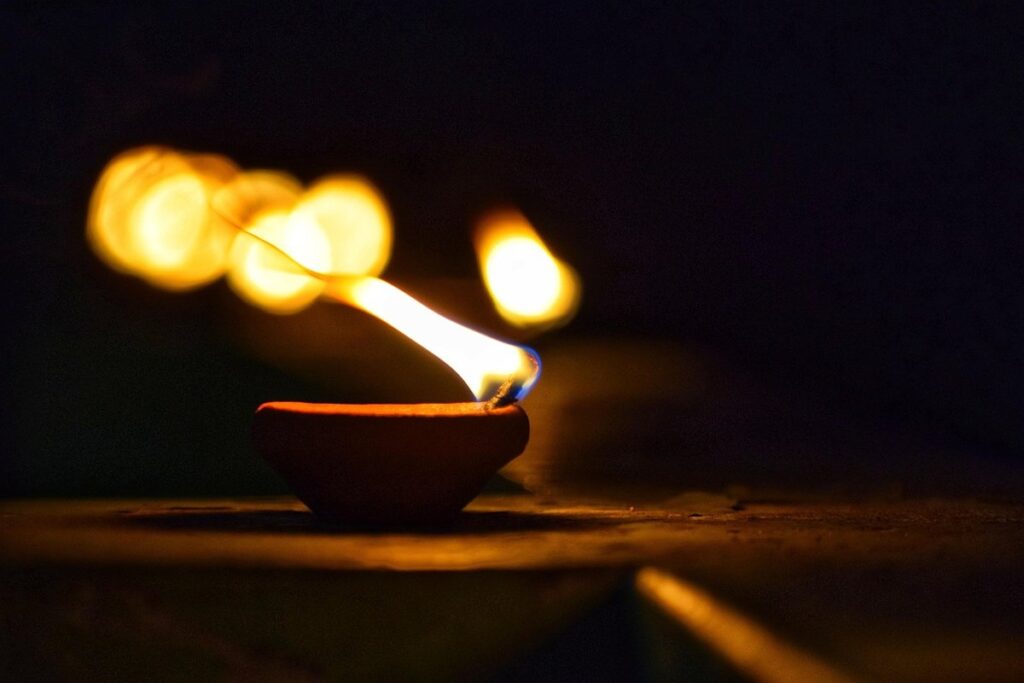
The use of diyas, or clay lamps, is a crucial part of Diwali celebrations. These simple yet elegant lamps are filled with ghee or oil and wicks, symbolizing the light that dispels darkness. The diyas are often placed in windows, doors, and other strategic locations to illuminate the home and welcome the goddess Lakshmi.
In Hindu mythology, light is often associated with the goddess Lakshmi, who is revered as the embodiment of light and prosperity. The goddess is often depicted riding a swan, which represents the divine light that illuminates the universe. By lighting diyas and candles during Diwali, Hindus are essentially inviting Lakshmi into their homes and seeking her blessings.
The Role of Diwali in Modern Hinduism
Diwali is deeply ingrained in modern Hindu culture, with families and communities around the world celebrating its significance. In many Hindu households, Diwali is a time for family reunions and bonding. Children often help with preparations, such as cleaning and decorating the home, which fosters a sense of responsibility and togetherness. On Diwali night, families gather around the puja (altar) to perform the Lakshmi Puja, praying for prosperity and good fortune. Community celebrations are also an essential part of Diwali, with temples and public spaces hosting events and festivities. In some regions, Diwali is celebrated over five days, with each day having its own unique significance and rituals. For instance, the first day, Dhanteras, is dedicated to the worship of Dhanwantari, the god of health and medicine. The second day, Chhoti Diwali, is a minor festival that marks the beginning of the main celebrations.
Preparing for Diwali: Traditions and Rituals
As you prepare to celebrate the vibrant Hindu festival of Diwali, let’s explore the traditional rituals and customs that play a significant role in making this occasion truly special. Cleaning and decorating homes is an essential part of the preparations.
Purification and Cleaning
In the days leading up to Diwali, Hindus observe a series of purification rituals to cleanse their homes and workplaces. This process, known as “shuddhi,” is crucial in preparing the individual and community for the festival. Homes are thoroughly cleaned, and all surfaces are scrubbed with a mixture of water and cow dung, which is believed to have purifying properties. The floors are then polished with a mixture of oil and sandalwood powder, creating a smooth and gleaming surface.
In addition to physical cleaning, Hindus also engage in spiritual purification rituals. These may include prayers, mantra recitation, and offerings to the gods. The use of incense sticks and fragrant oils, such as sandalwood and jasmine, is also common during this period. These rituals help to create a peaceful and serene atmosphere, allowing individuals to focus on their spiritual growth and connection with the divine.
By engaging in these purification rituals, Hindus are able to create a clean and harmonious environment, which is essential for the celebration of Diwali. This practice also serves as a reminder of the importance of spiritual growth and self-reflection in the Hindu tradition.
Decorating Homes and Altars
The decoration of homes and altars is an essential part of the Diwali celebrations. As the festival of lights approaches, families and individuals begin to adorn their spaces with vibrant flowers, candles, and other decorative items. This tradition serves as a visual representation of the triumph of light over darkness, good over evil, and knowledge over ignorance. The use of flowers, particularly marigolds and jasmine, is significant, as they are considered sacred in Hinduism and are believed to purify the surroundings.
In Hindu homes, the altar, or puja room, is a sacred space where the gods are worshipped. During Diwali, the altar is decorated with diyas, or earthen lamps, candles, and other offerings to the gods. This decoration is not just aesthetically pleasing but also holds spiritual significance. The diyas are believed to represent the light that guides us through the darkness, while the flowers and candles symbolize the beauty and joy of the festival. When decorating your home or altar, consider using natural materials and choosing a color scheme that reflects the festive atmosphere.
Preparing Traditional Diwali Foods
Traditional Diwali foods are an essential part of the festival’s celebrations. Sweets play a significant role, with popular options including gulab jamun, jalebi, and barfi. These sweet treats are typically made with ingredients like milk, sugar, and ghee, and are often flavored with cardamom or saffron. Snacks like samosas, kachoris, and mathris are also common, often served with a side of chutney or raita. Main courses may include dishes like chana masala, dal makhani, and tandoori chicken, which are often served with naan or roti.
In many households, the preparation of traditional Diwali foods is a family affair, with multiple generations working together to create a variety of dishes. This collaborative effort not only adds to the festive atmosphere but also allows for the sharing of recipes and cooking techniques. For those looking to try their hand at traditional Diwali cuisine, it’s worth noting that many of these dishes can be made in advance, allowing for a stress-free and enjoyable celebration. By incorporating these traditional foods into your Diwali celebrations, you can add depth and meaning to your festivities.
The Celebrations of Diwali
Diwali celebrations are a vibrant display of light, love, and joy, filled with traditional rituals and festivities that bring families and communities together. From decorative lights to delicious sweets, we’ll explore the exciting ways Diwali is celebrated around the world.
Night of Lights: The Story of Narakasura
In Hindu mythology, the night of lights is a pivotal moment during the festival of Diwali. It is known as Narakasura’s night, named after the powerful demon Narakasura, who was a son of the Earth goddess Bhudevi. According to legend, Narakasura was a brutal and oppressive ruler who terrorized the people of his kingdom. He was eventually defeated by the gods, who joined forces to defeat him.
The significance of this night lies in the triumph of good over evil. The defeat of Narakasura marks the beginning of the end of darkness and the start of a new era of peace and prosperity. During this night, people light lamps and candles to symbolize the victory of light over darkness. They also recite prayers and perform rituals to invoke the blessings of the gods.
In many parts of India, people celebrate Narakasura’s night with great enthusiasm. They light diyas (earthen lamps) and distribute sweets to their neighbors. The night is also a time for family bonding, as people gather together to share stories and exchange gifts. By embracing the spirit of Narakasura’s night, individuals can tap into the power of good over evil and create a more harmonious and peaceful world.
The Significance of Lakshmi Puja
On the third day of Diwali, Hindus honor Lakshmi, the goddess of wealth and prosperity, through a puja that is deeply ingrained in the festival’s tradition. This ritual is significant because it symbolizes the celebration of good fortune and prosperity. During the puja, devotees worship Lakshmi with offerings of flowers, fruits, and sweets, and often place a small idol or image of the goddess in their homes. The worship is typically performed in the evening, when the lights and diyas are lit, creating a festive atmosphere. In many households, the Lakshmi puja is a family affair, with members coming together to participate in the ritual and pray for the well-being and prosperity of their loved ones. The puja is also an opportunity for devotees to reflect on their personal and spiritual growth, and to seek guidance and blessings from the goddess. In some parts of India, the puja is accompanied by the distribution of gifts and charity to those in need.
The Final Day of Diwali: The Victory of Rama
On the final day of Diwali, Hindus celebrate the triumph of Lord Rama over Ravana, the powerful demon king of Lanka. According to the epic Ramayana, Ravana had abducted Sita, Rama’s wife, and taken her to his kingdom. Rama, with the help of his loyal brother Lakshmana and the monkey god Hanuman, launched a successful campaign to rescue Sita and defeat Ravana.
The victory of Rama over Ravana is a pivotal moment in Hindu mythology, marking the defeat of evil and the triumph of good. It is often seen as a symbol of the eternal struggle between light and darkness, with Rama representing the light of truth and justice. The final day of Diwali is a time for Hindus to reflect on the importance of standing up against evil and injustice, and to honor the courage and determination of Rama and his allies.
In many parts of India, the final day of Diwali is celebrated with traditional folk dances and music, which retell the story of Rama’s victory. It is also a time for families to come together and share stories of their own struggles and triumphs, drawing inspiration from the legend of Rama.
The Cultural Significance of Diwali
Diwali is more than just a festival of lights, it’s a celebration of good over evil, knowledge over ignorance, and light over darkness in many cultures. Let’s explore the cultural significance of this beloved Hindu festival.
Diwali in Different Parts of India
In the southern state of Tamil Nadu, Diwali is celebrated as a 10-day festival known as Deepavali. During this time, people visit temples, wear new clothes, and exchange gifts with family and friends. The highlight of the festival is the worship of the goddess Lakshmi, who is believed to bring good fortune and prosperity. In contrast, in the northern state of Uttar Pradesh, Diwali is celebrated with a greater emphasis on the victory of Lord Rama over the demon king Ravana. The festival is marked by the worship of Rama, the construction of elaborate rangoli designs, and the exchange of gifts.
In the eastern state of West Bengal, Diwali is celebrated as Kali Puja, where the goddess Kali is worshipped. The festival is marked by the construction of elaborate idols of Kali, the exchange of gifts, and the worship of the goddess with diyas and flowers. In the western state of Gujarat, Diwali is celebrated with a greater emphasis on the worship of the goddess Lakshmi and the goddess Saraswati. The festival is marked by the exchange of gifts, the worship of the goddess with diyas and flowers, and the celebration of the victory of Lord Rama over Ravana.
In each region, the unique cultural and historical context of the area is reflected in the way Diwali is celebrated.
Diwali in Non-Hindu Communities
In non-Hindu communities, Diwali is often celebrated as a festival of light and as a time for spiritual renewal. In many parts of the world, including the United States, the United Kingdom, and Singapore, people of different faiths come together to observe Diwali. This phenomenon is a testament to the universal appeal of the festival’s themes of light, hope, and victory over darkness.
In these communities, Diwali is often observed through cultural and social events, such as candlelight vigils, music performances, and community service projects. Some non-Hindu individuals may also participate in traditional Diwali activities, such as decorating their homes with diyas and exchanging gifts with friends and family.
In addition, many non-Hindu communities have incorporated their own unique traditions and customs into their Diwali celebrations. For example, some may hold interfaith Diwali events, which bring together people of different faiths to share in the celebration. Others may observe Diwali as a time for reflection and introspection, using the festival’s themes to guide their personal growth and development. By embracing Diwali’s universal message, individuals from diverse backgrounds can come together to celebrate the triumph of light over darkness.
The Economic Impact of Diwali
Diwali is a significant contributor to India’s GDP, with many businesses relying on the festival for revenue. The economic impact of Diwali is multifaceted, with various industries benefiting from the celebrations. One of the primary ways Diwali generates revenue is through the sale of traditional goods and decorations. Many small-scale industries, such as pottery and handicrafts, experience a surge in demand during Diwali, providing employment opportunities for thousands of artisans.
The festival also boosts the sales of sweets, snacks, and other food items. The demand for firecrackers and diyas (earthen lamps) is another significant contributor to the economic impact of Diwali. In addition, the festival generates revenue through tourism, with many Indians and foreigners visiting India to experience the celebrations. According to estimates, Diwali contributes around 2-3% to India’s GDP, making it a crucial period for the country’s economy. The economic benefits of Diwali are not limited to India; it also has a significant impact on the global market, with many countries importing Indian goods and services during this time.
Conclusion
As we conclude our journey through the vibrant traditions and rich history of Diwali, let’s summarize the key takeaways from this celebration.
Reflection on the Significance of Diwali
Diwali serves as a powerful reminder of the eternal struggle between good and evil. The festival’s significance lies in its ability to inspire individuals to strive for moral excellence and to seek the light of knowledge. In modern Hinduism, Diwali is a celebration of the triumph of good over evil, with the goddess Lakshmi symbolizing the victory of light over darkness. The festival’s emphasis on the importance of knowledge and wisdom is also reflected in the legend of Narakasura, who was defeated by the gods through the power of knowledge and devotion.
The significance of Diwali can be seen in its widespread celebration across India and beyond. The festival is a testament to the universal appeal of Hinduism and its values. As the world becomes increasingly complex, Diwali’s message of the triumph of good over evil remains as relevant as ever. To incorporate this message into daily life, individuals can reflect on the values that Diwali embodies and strive to incorporate them into their own lives. This can be achieved by cultivating a sense of compassion, empathy, and self-awareness.
The Future of Diwali Celebrations
As the world becomes increasingly globalized, Diwali celebrations are evolving to reflect the changing values and traditions of its participants. With more people celebrating Diwali worldwide, the festival is adapting to incorporate diverse cultural practices and customs. In India, for instance, Diwali is now celebrated with greater emphasis on environmental sustainability, with many households opting for eco-friendly decorations and using energy-efficient lighting.
In non-Hindu communities, Diwali is being celebrated with greater inclusivity, with people from various backgrounds coming together to share in the joy of the festival. This trend is reflected in the growing number of interfaith Diwali events and cultural exchanges. Furthermore, the rise of digital media has enabled people to participate in Diwali celebrations remotely, with online puja ceremonies and virtual Diwali events becoming increasingly popular.
To stay connected with the changing face of Diwali, it’s essential for communities to be open to new ideas and traditions. By embracing diversity and inclusivity, we can ensure that the spirit of Diwali continues to thrive in the years to come. This may involve incorporating new customs, such as hosting Diwali events in public spaces or creating community-led initiatives to promote environmental sustainability.
Final Thoughts
As we conclude our exploration of the Hindu Festival of Lights, it’s clear that Diwali’s significance extends far beyond its cultural and historical roots. In modern times, Diwali has become a beacon of hope, renewal, and unity for people of all faiths and backgrounds. As the world becomes increasingly divided, Diwali’s message of light and love is more relevant than ever.
One of the most important takeaways from Diwali is the importance of embracing diversity and inclusivity. In India, Diwali is celebrated by Hindus, Jains, and Sikhs, each with their unique traditions and customs. This blending of cultures and faiths is a testament to the power of Diwali to bring people together.
As the world becomes more globalized, we can learn from Diwali’s example of inclusivity and cultural exchange. By embracing our differences and celebrating our shared humanity, we can create a brighter, more harmonious world. So, as you reflect on the significance of Diwali, remember to spread love, kindness, and light to those around you, and to strive for a more inclusive and compassionate community.
Frequently Asked Questions
What if I’m short on time and can’t complete all the Diwali purification rituals?
You can still participate in the festival by focusing on the most important rituals, such as cleaning your home and worshipping the goddess Lakshmi. Even a small effort to purify your space and invoke the blessings of the goddess can bring positivity and good fortune into your life.
Can I celebrate Diwali with non-Hindu friends and family, or is it only for Hindus?
While Diwali is a significant festival in Hinduism, it’s wonderful to share this time of celebration with loved ones from different faiths. You can involve them in the festivities, share the stories and significance of Diwali, and learn about their traditions and customs in return.
How can I make Diwali celebrations more sustainable and eco-friendly?
Consider using eco-friendly decorations, opting for homemade or locally sourced traditional sweets, and reducing waste by using biodegradable materials. You can also involve your community in initiatives that promote sustainability and environmental conservation.
What if I’m not from India or have no connection to Hinduism, but I’m interested in celebrating Diwali?
You’re welcome to participate in Diwali celebrations! You can learn about the festival’s significance, participate in the rituals and traditions, and even share your own cultural practices and customs with others. Diwali is a celebration of light, love, and positivity, which transcends cultural and geographical boundaries.
Can I celebrate Diwali alone or do I need to be part of a community or family gathering?
While Diwali is often celebrated with family and friends, it’s perfectly fine to celebrate the festival alone. You can create your own small rituals, light diyas, and worship the goddess Lakshmi in the comfort of your own space. The most important thing is to cultivate a sense of inner peace, love, and positivity during the festival.