Holi, the vibrant and joyous festival of colors, has been a beloved tradition in India and beyond for centuries. At its core, Holi is a celebration of the triumph of good over evil, a mythological tale that has been woven into the fabric of Hindu culture. Yet, as we splash colors and dance in the streets, it’s easy to forget the rich history that underlies this festive occasion. From its origins in ancient India to its modern-day significance as a cultural and social phenomenon, Holi is more than just a colorful spectacle – it’s a celebration that reflects the country’s values, traditions, and relationship with the environment. In this article, we’ll take a closer look at the history of Holi, exploring its mythological roots, cultural and social significance, and environmental impact, so that you can appreciate this festival in all its glory.
Origins and Mythological Significance
The vibrant colors and infectious energy of Holi owe a great deal to the rich mythological significance of the festival, which dates back thousands of years. Let’s explore the ancient stories behind this joyous celebration.
The Legend of Holika and Prahlad
The story of Holika and Prahlad is deeply intertwined with the origins of Holi. According to Hindu mythology, Holika was the sister of Hiranyakashyap, a powerful king who sought to prevent his son Prahlad from worshiping Lord Vishnu. Despite his father’s orders, Prahlad remained devoted to the god, which enraged Holika, who was a fierce devotee of Lord Brahma. Holika, who was said to be immune to fire, decided to punish Prahlad by throwing him into a blazing fire.
However, as Prahlad was tossed into the flames, he emerged unscathed, while Holika was consumed by the fire. This event is said to have taken place on the full moon day of Phalguna, which is now celebrated as Holi. The legend of Holika and Prahlad is a testament to the power of devotion and the triumph of good over evil. It is also a reminder of the importance of respecting individual freedoms and choices. The story has been passed down through generations, and its significance is still celebrated in the festival of Holi, which is a time for renewal, forgiveness, and celebration of the divine.
Ancient Vedic Roots
In ancient India, festivals played a pivotal role in celebrating the changing of the seasons. As the Vedic period unfolded, the spring equinox marked a significant turning point in the agricultural calendar. To commemorate this occasion, the ancient Indians celebrated with festivals that honored the arrival of spring. The Vedic texts, such as the Rigveda, contain hymns and prayers that reflect the changing of the seasons.
These early festivals were not just celebrations of nature’s cycles but also served as a means to connect with the divine. The Vedic people believed that the spring equinox marked the triumph of light over darkness, good over evil, and order over chaos. This dichotomy is reflected in the celebration of Holi, where the colors of spring are used to symbolize the victory of light over darkness.
The importance of festivals in ancient India cannot be overstated. They were an integral part of the Vedic way of life, providing a sense of community, spiritual renewal, and connection with the natural world. The Vedic festivals were often tied to astronomical events, such as the spring equinox, and were designed to promote harmony between humans and nature.
Early Hindu Traditions
In the early Hindu traditions surrounding Holi, the worship of Lord Krishna and his love for Radha play a significant role. The Bhakti movement, which emerged in the 12th century, emphasized the importance of devotion and love for a personal deity. Krishna, often depicted as a mischievous and charming god, was a central figure in this movement. His love for Radha, a gopis (cowherd maiden), was seen as a representation of the divine love between the god and his devotee. The celebration of Holi was closely tied to the legend of Krishna’s love for Radha, with the festival marking the union of the two. In many Hindu traditions, Holi is celebrated as a day of romance and love, with songs and dances often focusing on the love story of Krishna and Radha. The festival’s colors and festivities are also seen as a reflection of the joy and abandon of Krishna’s love for Radha. The worship of Krishna and the celebration of his love for Radha continue to be an integral part of Holi celebrations in many parts of India and Nepal.
Evolution of Holi Festival
From its ancient roots to its modern-day celebrations, Holi has undergone significant transformations over the centuries, reflecting the changing times and cultures of India and beyond. Let’s take a closer look at its fascinating evolution.
Influence of Cultural Exchange
As Holi spread throughout ancient India, it was influenced by cultural exchange between various civilizations. The festival’s evolution was shaped by the interactions between Indian and foreign cultures, particularly during periods of foreign invasions. The Mauryan and Gupta empires, for instance, had extensive trade and cultural exchange with Central Asian and Mediterranean civilizations. These interactions brought new ideas, customs, and rituals that were incorporated into the festival.
The arrival of Islam in India during the Delhi Sultanate period introduced new elements to Holi. The festival’s focus on color and music was influenced by the Persian New Year (Nowruz) celebrations, which were brought to India by Muslim rulers. Similarly, the Mughal era saw the incorporation of Persian and Turkish traditions, such as the use of perfumes and fragrances during the festival.
This cultural exchange not only added new dimensions to Holi but also helped to spread the festival across different regions of India. The festival’s adaptability and ability to absorb new influences have been key factors in its enduring popularity. The influence of cultural exchange can be seen in the diverse ways Holi is celebrated across India, with each region adding its unique twist to the festival.
Mughal and British Era Celebrations
During the Mughal era, Holi celebrations were heavily influenced by the Mughal Empire’s Muslim rulers. Despite the Islamic tradition’s emphasis on sobriety and restraint, the Mughal emperors, particularly Akbar and Jahangir, actively participated in Holi festivities. They even introduced new elements, such as the use of rosewater and perfumes, which became a distinctive feature of Mughal-era Holi celebrations.
The British era saw a significant shift in Holi traditions, particularly in the 19th century. As the British imposed their own cultural and social norms on India, Holi celebrations became more subdued and less extravagant. The use of animal products, such as cow dung and urine, which were traditional Holi ingredients, was discouraged by the British, who deemed them “uncivilized.”
In an effort to adapt to British rule, many Indians began to adopt more sanitized and Westernized versions of Holi. However, this movement was not uniform, and some communities continued to celebrate Holi with traditional fervor. Despite these changes, Holi’s core spirit of joy, color, and community remained intact, a testament to the festival’s enduring appeal and adaptability.
Modern Celebrations
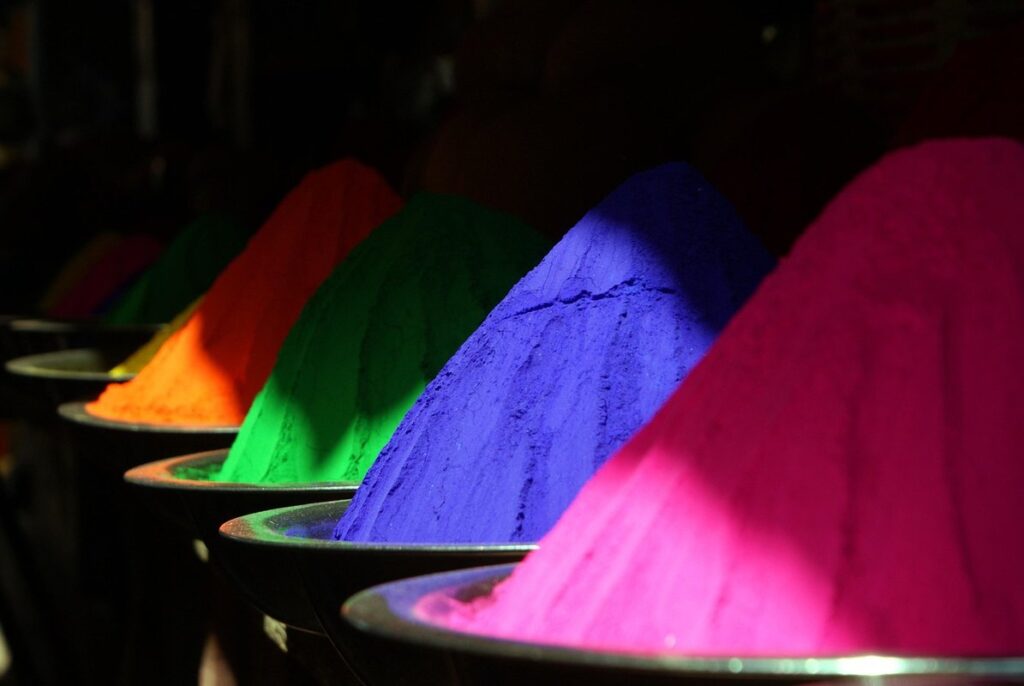
In modern celebrations of Holi, the vibrancy of the festival is more pronounced than ever. Colors play a significant role, not just in the traditional way of throwing colored powders and liquids, but also in the form of art, fashion, and social statements. Many people now choose colors with specific meanings, such as pink for peace or green for growth. This trend has given rise to a colorful and expressive culture, where individuals can showcase their personalities and values.
Music and dance have also become integral parts of contemporary Holi celebrations. Electronic dance music (EDM) has become increasingly popular, with many artists creating Holi-themed tracks and mixes. Traditional folk music and dances, such as the Garba, continue to be an essential part of the festival, with many communities and social organizations organizing massive dance parties and events. These events not only bring people together but also help to promote social harmony and inclusivity.
In many cities, Holi celebrations now include cultural events, workshops, and exhibitions that showcase the festival’s rich history and diversity. These events often feature traditional crafts, art, and performances, which help to preserve and promote the cultural heritage of Holi.
Regional Variations and Traditions
As we explore the rich history of Holi, let’s look at how different regions in India and beyond have given their own unique twists to this vibrant festival, making it a kaleidoscope of traditions.
North Indian Traditions
In North India, Holi is a joyous celebration that’s deeply rooted in tradition. In cities like Delhi and Varanasi, the festival is marked by the vibrant use of colors, known as gulal. While the colors are a key aspect of Holi celebrations across India, North Indian traditions take it a step further. The festival is typically celebrated over two days, with the first day dedicated to Holika Dahan, where bonfires are lit to symbolize the triumph of good over evil. On the second day, people gather in open spaces, often near temples or ghats, to splash colors and dance to traditional folk music.
In Delhi, the celebrations are particularly grand, with many families and communities coming together to play Holi at the Yamuna River ghats. In Varanasi, the festival is marked by the worship of Lord Krishna, with devotees offering prayers and performing rituals at the Assi Ghat. While the festival is a time for revelry and merriment, North Indian traditions also emphasize the importance of family and community bonding. As you plan your own Holi celebrations, consider hosting a gathering with friends and family, and incorporating local traditions and customs to make the experience more meaningful. This can be as simple as preparing traditional North Indian dishes or playing folk music that’s relevant to your region.
South Indian Traditions
In South India, Holi is celebrated with a unique blend of tradition and cultural flair. One distinctive aspect of the festival in this region is the use of flowers, particularly the vibrant hibiscus and marigold blooms, which are used to decorate homes and temples. In cities like Chennai and Bengaluru, the streets come alive with colorful processions and festivities, as people from all walks of life gather to celebrate the joy of Holi.
The festival is also marked by the traditional use of ‘Puli’ or ‘Panaka’, a sweet and spicy drink made from flowers, fruits, and spices. This drink is an integral part of the celebrations and is believed to have medicinal properties. In some parts of South India, the festival is also associated with the worship of Lord Vishnu, who is said to have played a key role in the legend of Holika and Prahlad.
To experience the true spirit of Holi in South India, visitors can attend the famous Holi celebrations in the temples of the region, where the priests and devotees come together to perform traditional dances and sing devotional songs. By embracing the local traditions and customs, one can truly appreciate the beauty and diversity of Holi celebrations in South India.
Eastern Indian Traditions
In Eastern India, Holi is a celebration of vibrant colors and rich cultural heritage. The festival is particularly vibrant in cities like Kolkata and Guwahati, where the air is filled with the sweet scent of flowers and the sound of traditional folk music. The traditional colors used in Eastern India’s Holi celebrations are a mix of natural dyes, including henna, indigo, and turmeric, which are applied to the skin using intricate designs.
One of the unique aspects of Eastern Indian Holi is the celebration of the festival on the banks of the Ganges River in Varanasi. Devotees gather on the ghats to immerse themselves in the sacred waters, washing away their sins and seeking spiritual renewal. In Kolkata, the festival is celebrated with grand processions, where people carry elaborately decorated effigies of Holika, the demon queen, and Prahlad, the devotee, on their shoulders.
During Holi in Eastern India, people also engage in traditional folk dances, such as the Chaiti and the Jhulan, which are performed to the accompaniment of traditional instruments like the dhol and the flute. Visitors can experience the authentic flavor of Eastern Indian Holi by attending these events and immersing themselves in the region’s rich cultural heritage.
Holi in Modern Times
Holi has evolved significantly over the centuries, adapting to changing social norms and cultural values, and now looks very different from its traditional roots. Let’s see how the festival has been influenced by modern society.
Environmental Impact
Holi celebrations have become increasingly dependent on chemicals and plastics in making colors, leading to significant environmental concerns. Many traditional colors, such as organic dyes and plant-based pigments, have been replaced with artificial and synthetic dyes. These chemicals can contaminate water sources and harm aquatic life.
The most notable issue is the use of lead in some traditional colors, particularly those made from vermilion and other lead-based pigments. Lead is a toxic substance that can cause serious health problems, including neurological damage and developmental issues in children. The Indian government has banned the use of lead in some colors, but enforcement remains a challenge.
In addition to chemical contamination, Holi celebrations also generate a significant amount of plastic waste, particularly from the use of single-use plastic colors and decorations. To mitigate this impact, some cities have implemented initiatives to promote eco-friendly colors and decorations made from natural materials. For example, some communities are promoting the use of turmeric, henna, and other plant-based pigments, which are not only biodegradable but also offer vibrant colors.
Cultural Exchange and Global Celebrations
Holi has transcended geographical boundaries, with celebrations taking place in various parts of the world. The festival’s global reach can be attributed to the exchange of traditions and ideas between different cultures. In the United States, for instance, Holi is celebrated in cities like New York and Los Angeles, where Indian diaspora communities come together to mark the occasion.
In India, Holi is often a time for cultural exchange, with people from different regions and communities participating in the festivities. The festival has also been adopted by other countries, such as Nepal and Sri Lanka, where it is celebrated with unique twists and traditions. In some parts of the world, Holi is observed as a dry festival, where participants use natural colors instead of chemical-based ones.
The internet has played a significant role in popularizing Holi globally. Social media platforms are filled with images and videos of Holi celebrations, inspiring people to learn more about the festival and participate in it. As a result, Holi has become a symbol of cultural diversity and exchange, bringing people together across the globe.
Social and Economic Impact
Holi’s economic impact is significant, with many local businesses benefiting from the influx of tourists and revelers. In India, the festival is estimated to generate billions of rupees in revenue each year, with a substantial portion of it coming from the sale of traditional Holi colors, sweets, and other festive items. The celebration also creates jobs for thousands of people, from vendors and shopkeepers to entertainers and event organizers.
In addition to its economic benefits, Holi plays a vital role in modern society, promoting cultural exchange and social bonding. The festival brings people together, transcending social and economic barriers, and fostering a sense of community and belonging. Many communities also use Holi as an opportunity to raise awareness and funds for local charities and social causes.
To fully appreciate the social and economic significance of Holi, consider attending a local celebration or participating in a Holi event in your own community. Not only will you experience the vibrant colors and infectious energy of the festival, but you’ll also contribute to the local economy and help spread the joy and spirit of Holi. By embracing this ancient tradition, you can help preserve its cultural significance and ensure its continued relevance in modern times.
Conclusion
As we conclude our journey through the vibrant history of Holi, let’s summarize the key highlights from this ancient festival’s rich cultural heritage.
Recap of Holi’s History
Holi’s history is a rich tapestry of mythological roots, cultural exchange, and evolving traditions. From its origins in ancient Vedic rituals to its modern-day celebrations, the festival has undergone significant transformations over time. At its core, Holi remains a celebration of the triumph of good over evil, as embodied in the legend of Holika and Prahlad. However, the festival’s evolution is also a testament to the cultural exchange and influence of various empires and traditions.
As we’ve explored in earlier sections, the Mughal and British eras saw significant changes in Holi celebrations, with the incorporation of new customs and practices. In modern times, Holi has become a global celebration, with various regional traditions and cultural influences contributing to its diversity. Despite these changes, the festival’s core significance remains unchanged. The emphasis on community, love, and color continues to be a defining aspect of Holi celebrations worldwide.
Significance of Holi in Modern Times
Holi’s significance in modern times extends far beyond its cultural importance. The festival has become a catalyst for social change, with many communities using it as an opportunity to promote unity and break down social barriers. In India, for example, Holi has been used as a platform to raise awareness about issues like casteism and communalism. By embracing the festival’s message of love and acceptance, individuals can help create a more inclusive and equitable society.
The environmental impact of Holi celebrations is also a pressing concern. The festival’s reliance on chemical dyes and water has led to water pollution in many regions. However, many communities are now shifting towards more sustainable practices, such as using natural dyes and reducing waste. By adopting these eco-friendly approaches, individuals can help minimize the festival’s ecological footprint.
In addition to its social and environmental importance, Holi also continues to play a significant role in promoting cultural exchange and understanding. As the festival gains popularity globally, it provides an opportunity for people from diverse backgrounds to come together and experience the rich cultural heritage of India. By embracing Holi’s traditions and values, individuals can help foster greater cultural awareness and appreciation.
Frequently Asked Questions
Can I celebrate Holi in a way that’s environmentally friendly?
Yes, you can celebrate Holi in an environmentally friendly way by opting for natural colors, reducing the use of plastics, and disposing of waste properly. Many communities are now using eco-friendly Holi colors made from natural ingredients like flowers, leaves, and spices. You can also participate in local initiatives that promote sustainable Holi practices.
How can I incorporate traditional Holi practices into my modern celebrations?
You can incorporate traditional Holi practices into your modern celebrations by learning about the local customs and traditions surrounding the festival. For example, in North India, it’s traditional to apply a paste made from turmeric and sandalwood on the skin before playing with colors. You can also involve your community in the celebrations by hosting a Holi party or participating in local events.
What if I’m celebrating Holi in a different country or culture? How can I adapt the traditions to fit my new surroundings?
When celebrating Holi in a different country or culture, it’s essential to be respectful of the local customs and traditions. You can adapt the traditions by incorporating local elements and themes into your celebrations. For example, if you’re celebrating Holi in a Western country, you can use natural colors and incorporate elements of local culture, such as music and dance, into your celebrations.
Can I celebrate Holi in a way that’s accessible and inclusive for people with disabilities?
Yes, you can celebrate Holi in a way that’s accessible and inclusive for people with disabilities by incorporating accessible elements into your celebrations. For example, you can host a Holi party that’s wheelchair accessible, provide accommodations for people with visual or hearing impairments, and make sure that the colors and materials used are safe for people with allergies or sensitivities.
How can I learn more about the cultural significance of Holi in my local community?
You can learn more about the cultural significance of Holi in your local community by attending local events and festivities, participating in cultural workshops and classes, and speaking with community leaders and elders. You can also visit local museums and cultural centers to learn more about the history and traditions surrounding Holi in your area.