
The Chinese language is a treasure trove of fascinating stories, waiting to be uncovered. With thousands of characters, each with its own unique structure, meaning, and composition, it’s no wonder why learning Chinese can seem daunting. But have you ever wondered how these words came into being? Where did they originate from, and what do they mean in everyday life? In this article, we’ll take a deep dive into the world of Chinese words, exploring their origins, character structure, and composition. We’ll also discuss how to decipher their meanings and usage, making it easier for beginners and advanced learners alike to navigate the complexities of the Chinese language. Whether you’re a linguist, a traveler, or just curious about this beautiful language, get ready to discover the secrets behind Chinese words.
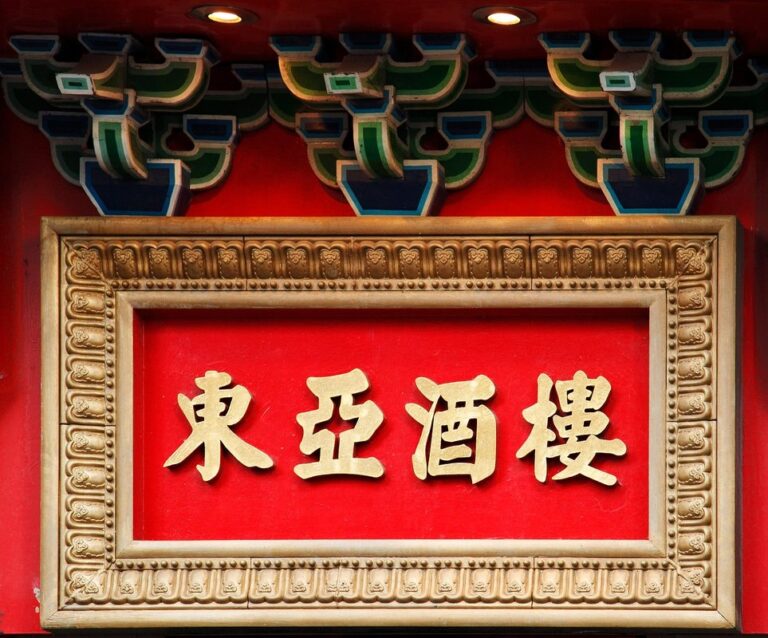
History and Evolution of Chinese Characters
Chinese characters have a rich history spanning over 3,000 years, evolving from simple pictograms to complex symbols that convey nuanced meanings. Let’s take a journey through their fascinating evolution.
Origins of Chinese Writing System
The origins of the Chinese writing system are shrouded in mystery, but one thing is certain – it has a rich and storied history that spans thousands of years. Evidence suggests that the earliest forms of written Chinese date back to the Shang Dynasty (16th-11th centuries BCE), where inscriptions on oracle bones reveal the beginnings of a complex writing system.
These oracle bones, made from animal bones or turtle shells, were used by diviners to communicate with the gods and predict the future. The inscriptions found on these bones are some of the oldest known examples of written Chinese characters, with many still remaining undeciphered today.
As you delve into the world of Chinese characters, it’s essential to understand that the earliest forms of writing were often pictorial representations of objects or concepts. For example, the character for “sun” is a simple drawing of the sun itself, while the character for “moon” features a crescent shape. This intuitive connection between image and meaning is still visible in many Chinese characters today.
The evolution of the Chinese writing system is a testament to the ingenuity and creativity of ancient civilizations. By studying these early forms of written Chinese, we can gain a deeper appreciation for the language and its cultural significance.
Development of Chinese Characters
Chinese characters have been evolving over thousands of years, with various dynasties and cultural influences contributing to their development. The earliest known Chinese writing system dates back to the Shang Dynasty (16th-11th centuries BCE), where oracle bones were used for divination purposes. These early characters were likely created from pictograms, which represented objects or concepts.
During the Zhou Dynasty (1046-256 BCE), the script was refined and became more stylized. The introduction of Bronze Age technology led to the creation of more complex characters. This period also saw the emergence of logograms, where a single character represented a word or phrase.
The Qin Dynasty’s standardization of Chinese characters in 213 BCE marked a significant milestone. A committee was established to create a uniform writing system, resulting in the creation of over 3,000 characters. Despite this effort, the use of regional dialects and variations persisted.
Over time, Chinese characters have been influenced by other cultures, such as Buddhism, which introduced new characters from Sanskrit and Pali languages. The evolution of Chinese characters continues to this day, with many modern characters being simplified or modified for ease of use.
Impact of Chinese Writing System on Language
The complexity and nuances of the Chinese writing system have had a profound impact on the language itself. One of the most notable effects is the sheer number of characters to learn. With over 50,000 characters in use today, it’s no wonder that many learners find the task daunting. However, this also means that Chinese has a rich and expressive vocabulary, capable of conveying subtle shades of meaning.
The logographic nature of Chinese characters allows for complex grammatical concepts to be encoded within the character itself. For example, the character for “mother” contains components that convey maternal affection and nurturing qualities. This level of detail makes Chinese writing both highly expressive and context-dependent.
To navigate this complexity, learners must develop a deep understanding of character composition and how to read between the lines. With practice and patience, however, Chinese characters can be deciphered with ease, revealing a wealth of cultural and linguistic knowledge.
Basic Principles of Chinese Characters
At its core, mastering Chinese characters relies on understanding a few fundamental principles that will help you decipher their meaning and usage. Let’s dive into these essential building blocks together!
Structure of Chinese Characters
At its core, each Chinese character is made up of various components that work together to convey meaning. One of the fundamental aspects of Chinese characters is the use of radicals, which are the basic building blocks of a character’s structure. Radicals can be defined as the part of a character that indicates its semantic meaning or category. For example, the radical for “water” is used in many characters related to water, such as , and .
In addition to radicals, Chinese characters also consist of strokes, which are the lines and marks that make up the character’s shape. The number and order of strokes can indicate different nuances of meaning within a character. For instance, the character for “tree” has only four strokes, whereas the character for “forest” has 12 strokes.
Components, such as phonetic indicators or semantic determinants, also play a crucial role in determining a character’s structure. Phonetic indicators provide clues to the character’s pronunciation, while semantic determinants offer hints about its meaning. By understanding these components and how they interact with each other, you’ll be better equipped to decipher the complexities of Chinese characters and develop a deeper appreciation for their intricate design.
Radical System in Chinese Characters
In the radical system of Chinese characters, radicals play a crucial role in conveying meaning and functionality. A radical is a component that carries a specific meaning or association with a particular theme, such as water, tree, or person. By understanding radicals, learners can decipher complex character meanings more efficiently.
Radicals function as keys to unlocking the secrets behind Chinese characters. They help readers identify relationships between seemingly unrelated words by highlighting shared themes and associations. For instance, the “water” radical is used in characters like , indicating a connection to water or liquid elements.
To develop proficiency in reading Chinese characters, it’s essential to grasp the significance of radicals. Start by learning common radicals, such as those representing animals, plants, and natural elements. Practice breaking down complex characters into their component parts and identifying the associated radical. With time and practice, you’ll become more adept at deciphering character meanings and expanding your vocabulary.
Common Stroke Orders in Chinese Writing
When writing Chinese characters, mastering common stroke orders is crucial for efficient and correct character formation. In Chinese, each character has its unique sequence of strokes, which can be categorized into different types based on their order.
The most common stroke orders in Chinese writing are:
* Horizontal strokes (from left to right)
* Vertical strokes (from top to bottom)
* Diagonal strokes (at an angle from top-left to bottom-right or vice versa)
For example, the character “” (shàng) means “above” and has a horizontal stroke followed by two vertical strokes. In contrast, the character “” (xià) means “below” and has two vertical strokes followed by a horizontal stroke.
To practice writing Chinese characters with correct stroke orders, start by identifying the different types of strokes in each character. You can use online resources or flashcards to help you recognize common patterns. As you become more comfortable with these basic principles, you’ll be able to write Chinese characters with ease and confidence.
Understanding Chinese Character Meaning
Understanding the meaning behind Chinese characters is a crucial step in grasping the language, as many words are composed of multiple radicals and strokes. Let’s break down how to decode their complex meanings together.
Radicals and Meaning
When you see a Chinese character, you might wonder how it’s possible for so many words to share similar components. This is where radicals come into play – they’re the building blocks of meaning in Chinese characters. A radical is a part of a character that indicates its general meaning or category.
For instance, the character (hú) means “net” and consists of two parts: the top element, which resembles a mouth, and the bottom element, which looks like a net. The top element is the radical (móu), indicating that the character refers to something related to water or a net. This radical is used in many other characters, such as (shuǐ) meaning “water”.
As you learn more about Chinese radicals, you’ll start to notice patterns and relationships between characters. By understanding how these components contribute to the overall meaning of a word, you can decipher unfamiliar vocabulary more easily. To get started, try identifying the radical in each character you come across. With practice, you’ll develop an intuitive sense of how these building blocks fit together to create nuanced meanings.
Phonetics and Semantic Analysis of Characters
When learning Chinese characters, it’s essential to understand the relationship between sound and meaning. This is where phonetic and semantic analysis come into play. Phonetics refers to the study of the sounds associated with a character, while semantics focuses on the meaning.
In Chinese, each character has a unique combination of strokes that correspond to a specific sound and meaning. For example, the character for “mouth” (kǒu) is composed of six strokes, including a distinctive curve at the top. This shape not only represents the sound /kʌ/ but also conveys the concept of an opening or entrance.
To develop your phonetic and semantic analysis skills, practice recognizing patterns in Chinese characters’ shapes and strokes. Notice how similar sounds are often represented by similar visual elements. For instance, the character for “heart” (xīn) shares a striking resemblance with the character for “mind” (nǎi), both featuring a center stroke surrounded by other elements.
By combining phonetic and semantic analysis, you’ll better grasp the complex relationships within Chinese characters. This will enable you to decipher even unfamiliar words and expand your vocabulary.
Common Chinese Characters Used in Everyday Life
When it comes to navigating everyday life in China, understanding and recognizing common Chinese characters is essential. While there are thousands of characters to learn, mastering a few hundred will give you a solid foundation for communication.
Characters like (rén) meaning ‘person’ or ‘people’, (wǒ) meaning ‘I’ or ‘me’, and (zhè) meaning ‘this’ or ‘that’ are commonly used in conversations. For example, when asking someone how they are, you can say: “nǐ hǎo ma?” which means “hello” but literally translates to “are people good?”
Practicing the character (shí) for time is also crucial. Recognizing numbers and basic mathematical operations like addition and subtraction will help you in everyday transactions. For instance, asking for the time in Chinese, “nǐ de shí jiān nǎ lǐ?” means “what’s the time now?” Using correct characters for time can be as simple as combining (shí) with other characters to indicate hours or minutes.
Familiarizing yourself with these essential characters will make interacting with locals much easier and enhance your overall experience in China.
Chinese Character Composition and Breakdown
Let’s dive into the intricacies of Chinese character composition, where we’ll explore how individual components combine to form words that convey complex meanings. This unique system is a cornerstone of the language.
Hanzi Decomposition
Hanzi decomposition is an essential concept to grasp when learning Chinese characters. It’s the process of breaking down complex characters into simpler components, making them more manageable and easier to remember. Think of it like a puzzle: each character has its unique pieces that can be combined to form new meanings.
To apply hanzi decomposition, start by identifying the radicals within a character. A radical is a common component that appears in multiple characters, often with slightly different meanings or pronunciations. For example, the radical (fire) is found in several characters related to heat, warmth, and energy. By understanding the radicals, you can begin to decode more complex characters.
One effective way to practice hanzi decomposition is by using flashcards or online tools that highlight the individual components of a character. This helps you develop your ability to recognize patterns and connections between seemingly unrelated characters. As you become more comfortable with hanzi decomposition, you’ll find it’s not just a useful tool for learning Chinese characters but also an essential skill for reading and writing in Mandarin Chinese.
Radical-based Analysis for Advanced Learners
As you’ve progressed through the basics of Chinese character composition and breakdown, it’s now time to dive into more advanced techniques for analyzing meaning using radicals and other components. Radical-based analysis is a powerful tool that can help you decipher even the most complex characters.
To begin with, let’s revisit the concept of radicals. Radicals are the building blocks of Chinese characters, often representing an object or concept that’s inherent in the character’s meaning. By identifying the radicals within a character, you can start to break down its overall meaning. For instance, take the character for “water” (shuǐ). It contains two key radicals: water and woman. The combination of these two elements suggests the idea of nourishment or sustenance.
Now that you’ve grasped the basics of radical identification, it’s time to explore more advanced techniques. Try combining multiple characters with similar meanings or components to understand their nuanced relationships. Analyze how the placement of radicals affects a character’s overall meaning and composition. By mastering these techniques, you’ll be able to unlock even the most intricate Chinese words and become a skilled character analyst in your own right.
Tips for Mastering Chinese Character Composition
Mastering Chinese character composition is essential to reading and writing proficiency. To break down complex characters into simpler components, start by learning radicals – the building blocks of Chinese characters. There are 214 standard radicals that can be combined to form new characters.
To practice character composition, try breaking down unfamiliar characters into their constituent parts. For example, take the character for ‘water’ (shuǐ). It’s composed of two simpler characters: ‘flowing water’ (lǚ) and ‘female’ (nǚ). Recognizing these components can help you decipher the meaning and pronunciation of the word.
To improve your skills, practice regularly by:
* Learning new radicals each week
* Breaking down unfamiliar characters into their constituent parts
* Practicing with flashcards or online tools that provide character decomposition
Additionally, focus on understanding the different types of strokes used in Chinese characters, such as horizontal, vertical, and diagonal strokes. Mastering stroke order will also aid in your ability to break down complex characters.
By following these tips and practicing regularly, you’ll be well on your way to mastering Chinese character composition.
Using Chinese Characters in Writing and Reading
Mastering Chinese characters is a crucial step towards proficient reading and writing, but it can be intimidating at first. Let’s break down the process of incorporating them into your daily practice.
Stroke Order Practice and Exercises
When practicing stroke order, it’s essential to start with simple characters and gradually move on to more complex ones. Begin by choosing a character that interests you or is relevant to your daily life. For example, if you’re a foodie, practice writing the character for “rice” (米). Start with the correct sequence of strokes, paying attention to the direction and movement.
To improve your stroke order skills, focus on the following tips:
* Practice regularly: Set aside 10-15 minutes each day to practice writing Chinese characters.
* Break down complex characters: Divide intricate characters into smaller components, making it easier to follow the stroke order.
* Use online resources: Utilize apps and websites that provide stroke order animations, allowing you to visualize the correct sequence.
By incorporating these techniques into your daily routine, you’ll become more confident in writing Chinese characters with accurate stroke orders.
Common Mistakes to Avoid when Writing Chinese Characters
When writing Chinese characters, it’s easy to get bogged down by mistakes that can hinder your progress. One common error is misremembering the strokes of a character, leading to incorrect hand-writing. To avoid this, try using stroke order diagrams and practicing slowly to commit each sequence to memory.
Another mistake learners often make is neglecting to practice regularly, resulting in forgotten characters. Set aside time daily or weekly to review previously learned characters, focusing on those that are difficult for you. You can also use flashcards with the character on one side and its meaning or pronunciation on the other to help reinforce learning.
In addition to these mistakes, be cautious of over-reliance on Romaji (Latin script) when writing Chinese characters. While it’s helpful to learn Romaji as a backup, relying too heavily on it can hinder your ability to recognize and write characters correctly in their native form.
Effective Strategies for Memorizing Chinese Characters
When it comes to mastering Chinese characters, memorization is key. The sheer number of characters can be overwhelming, but with effective strategies and study techniques, you’ll be writing like a native in no time. Here are some tried-and-true methods for committing Chinese characters to memory.
Start by using flashcards, which are an excellent way to review characters at your own pace. You can create digital flashcards using apps like Anki or Quizlet, or opt for physical cards with the character on one side and the pronunciation and meaning on the other. Another approach is to focus on radicals, which are the building blocks of Chinese characters. By learning a set of common radicals, you’ll be able to decipher unfamiliar characters.
Mnemonics are also an excellent tool for remembering tricky characters. Create associations between the character and a word or phrase that sounds similar, or relate it to a personal experience. For example, if you’re struggling with the character for “shoe” (xié), remember that it looks like a cross between a shoe and a horse.
Another technique is to use spaced repetition, which involves reviewing characters at increasingly longer intervals to help solidify them in your long-term memory. This can be done using flashcards or apps like Memrise.
Frequently Asked Questions
Can I learn Chinese characters without prior knowledge of the language?
Yes, it’s possible to start learning Chinese characters from scratch, but having a basic understanding of the language can help you decipher their meanings more efficiently. Focus on learning common radicals and stroke orders first, which will give you a solid foundation for further exploration.
How do I know when to use simplified or traditional Chinese characters?
The choice between simplified and traditional Chinese characters depends on the context in which you’re using them. Simplified characters are commonly used in mainland China, while traditional characters are used in Taiwan, Hong Kong, and Macau. When writing for a specific region, use the corresponding character set. However, when communicating across regions, it’s best to use simplified characters to avoid confusion.
What are some common mistakes I should avoid when learning Chinese characters?
One common mistake is not paying attention to stroke order, which can change the meaning of a character. Another mistake is assuming that radicals always indicate meaning, as some radicals have multiple meanings or no direct connection to the character’s meaning.
Can I use technology to help me learn and memorize Chinese characters?
Yes, there are various apps, software, and online tools available to aid in learning and memorizing Chinese characters. These tools often incorporate games, quizzes, and interactive exercises that make practice more engaging and effective. Consider using a combination of digital resources and traditional study methods for optimal results.
How do I effectively apply the knowledge I’ve gained about Chinese characters in real-life situations?
To apply your knowledge effectively, focus on learning characters commonly used in everyday life, such as those related to food, transportation, and basic phrases. Practice writing and reading these characters regularly, and try to use them in context by creating short stories or conversations.

