
Norway has two official languages: Bokmål and Nynorsk, but most Norwegians speak one language at home. You might be surprised to learn that both languages have their own grammar rules and pronunciation guides, which can be quite different from each other. In everyday life, you’ll likely hear people speaking a dialect called Dano-Norwegian or Riksmål, but the official language is Bokmål. To truly understand Norway’s culture and way of life, learning some basic phrases in Norwegian can go a long way. This comprehensive guide will walk you through the history of the national language, its grammar rules, pronunciation guide, and cultural significance. By the end of this article, you’ll be able to use your new knowledge in everyday situations, from ordering food at a café to asking for directions on the street.
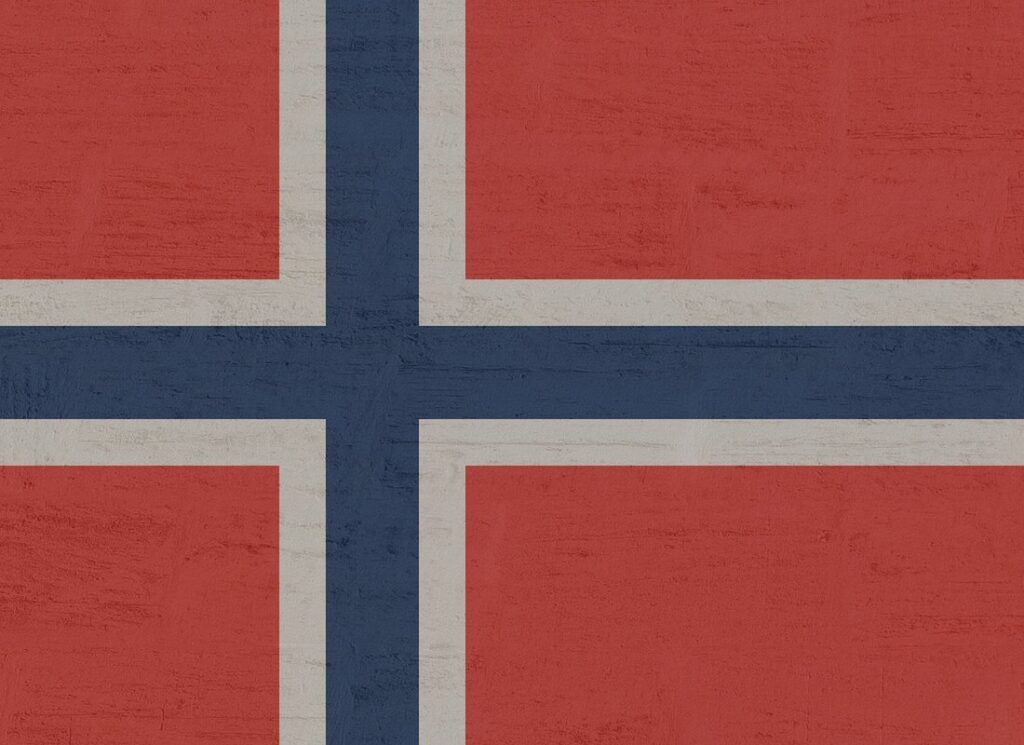
The Official Language of Norway
Norway has a single official language, which is also the most widely spoken one, and you’ll soon discover its interesting history and characteristics. Let’s take a closer look at this unique aspect of Norwegian culture.
History and Origins
Norwegian language has its roots in Old Norse, which was spoken by the Vikings and other ancient Germanic tribes. As the Viking Age came to an end, the language evolved into Middle Norwegian, used during the 13th to 15th centuries. The Norwegian language then branched out into two distinct forms: Bokmål (Book Language) and Nynorsk (New Language), both of which are still in use today.
Bokmål is based on the Danish language and was introduced by King Christian IV in the 17th century as a standardized form of writing. It’s used by around 85-90% of the population, primarily in urban areas. Nynorsk, on the other hand, was developed from the dialects spoken in western Norway and is used mainly in rural areas.
The Norwegian government has actively promoted both forms since the early 20th century, with education and media playing a significant role in their development. The official language policy recognizes both Bokmål and Nynorsk as equal, and public institutions use them interchangeably. Understanding these historical roots can help you appreciate the nuances of the Norwegian language and its unique characteristics.
Dialects and Variations
Norway has two official written forms of the language: Bokmål and Nynorsk. While they share a common grammar and vocabulary base, their spelling and vocabulary differ significantly. For instance, Bokmål is based on the Danish language, whereas Nynorsk draws from Old Norse. Høgskulesprak (University Language) is another variant used in certain academic and administrative contexts.
Each dialect has its own unique characteristics, making them distinct from one another. In practice, most Norwegians use a mix of both Bokmål and Nynorsk in their daily lives, often depending on the context or region they are in. For example, Bokmål is commonly used in formal writing, such as newspapers and official documents, while Nynorsk is more prevalent in spoken language and informal writing.
In some parts of Norway, like the west coast regions, Riksmål (a standardized form of Bokmål) is also widely spoken. In contrast, Høgskulesprak is mainly used by students and academics at university level. Overall, understanding these variations is crucial for communicating effectively in Norway, as they reflect regional identities and cultural nuances that are an integral part of the country’s linguistic heritage.
Official Status and Recognition
Norwegian is the sole official language of Norway and enjoys a high level of recognition within the country. The government has designated Norwegian as the primary medium for most public services, including education, healthcare, and administration. In fact, the majority of educational institutions offer Norwegian-language programs, with students typically beginning their education in Bokmål or Nynorsk, depending on the region.
The education system plays a significant role in promoting the use of Norwegian. At the primary level, students are taught to read and write in both Bokmål and Nynorsk, allowing them to understand and communicate effectively in each dialect. By upper secondary school, students can choose to specialize in one or the other. This emphasis on language proficiency helps ensure that citizens have a strong foundation in Norwegian.
Media also plays a crucial role in promoting the use of Norwegian. The vast majority of television programs, radio broadcasts, and newspapers are produced in Norwegian, with many publications catering specifically to regional dialects.
Grammar and Pronunciation
Mastering the basics of Norwegian grammar is essential for anyone looking to communicate effectively, so let’s start by exploring verb conjugations and sentence structure.
Basic Sentence Structure
In Norwegian, word order is relatively flexible compared to other languages. However, the basic sentence structure typically follows a subject-verb-object (SVO) pattern. This means that the subject of the sentence usually comes first, followed by the verb and then the object.
For example: “Jeg spiser en frokost” translates to “I eat a breakfast.” In this sentence, “jeg” is the subject (I), “spiser” is the verb (eat), and “en frokost” is the object (a breakfast).
When it comes to verb conjugation, Norwegian verbs change depending on the tense, mood, and person. For instance, in the present tense, the verb “to be” changes as follows:
- Jeg er (I am)
- Du er (you are)
- Han/hun er (he/she is)
In the imperative mood, the verb form changes to give commands or instructions: “Spiser!” means “Eat!”
To practice building simple sentences in Norwegian, try combining a subject with a verb and object. For example:
- Jeg spiser en kake (I eat a cake)
- Du leser en bok (you read a book)
Remember that word order can be adjusted for emphasis or to create a different sentence structure. With practice, you’ll become more comfortable with the basic sentence structure in Norwegian and be able to create your own sentences.
Verb Conjugation and Tenses
In Norwegian, verb conjugation changes depending on tense. The present tense is used for general statements and habits. For example, “Jeg går” means “I go,” while “Han går” means “He goes.” To form the past tense, you add “-et” or “-t” to the infinitive form of the verb, as in “Jeg gikk” (I went) or “Han kom” (he came). The future tense is formed using the auxiliary verb “skal,” for example, “Jeg skal gå” (I will go).
To master these tenses, it’s essential to learn the correct endings for regular and irregular verbs. For instance, the verb “kjøre” (to drive) has different conjugations in each tense: “kjører” (drives), “kjørte” (drove), and “skal kjøre” (will drive). Practice is key, so try to use these tenses in context through language exercises or conversations with native speakers.
Here are some general rules for verb conjugation:
- Regular verbs typically follow the pattern: infinitive + -er/-et/-t
- Irregular verbs have unique endings and exceptions to this rule
- The auxiliary verb “skal” is used to form the future tense
Pronunciation Guide
Norwegian pronunciation can be challenging for non-native speakers due to its unique sounds and intonation patterns. The language has a distinctive pitch accent system, where words are pronounced with either a rising or falling tone. For example, the word “hei” (hello) is pronounced with a rising tone, while “ja” (yes) is pronounced with a falling tone.
To improve pronunciation, focus on mastering these intonation patterns. Practice speaking with native speakers or listen to Norwegian media, such as podcasts or TV shows, to get a feel for how words are pronounced in different contexts. Pay attention to the way vowels are pronounced, particularly the “ø” and “å” sounds, which can be difficult for non-native speakers.
In particular, note that the letter combination “sj” is pronounced like an English “sh”, while “kj” is pronounced like a soft “ch”. For instance, “sjøen” (the sea) is pronounced with a soft “sh” sound. Learning these unique sounds and intonation patterns will help you improve your pronunciation and communicate more effectively in Norwegian.
Vocabulary and Idioms
As you continue learning Norwegian, it’s essential to build a strong foundation in vocabulary and idioms that will help you communicate effectively with native speakers. We’ll explore some common expressions and words that are commonly used in everyday conversations.
Basic Phrases and Expressions
When interacting with native Norwegians, learning basic phrases and expressions can go a long way in making a positive impression. A simple “Hei” (pronounced “hay”) is sufficient as a greeting, while “Velkommen” (vay-koh-mohn) means “welcome.” Introductions are also straightforward: use “Jeg heter [name]” (yay het-er) to say “my name is [name].”
Basic questions like “Hva er klokken?” (kva er kloh-khen) or “What’s the time?” and “Hvor ligger stasjonen?” (vor lee-gur staht-soh-nen) or “Where is the station?” are essential for navigating everyday situations. You can also ask “Hvordan heter du?” (khvo-rahn het-er doo) to say “what’s your name?”
When interacting with locals, it’s a good idea to learn basic phrases like “Takk” (tahk), which means “thank you,” and “Ja/Nei” (yah/nay) for yes/no responses. These expressions may seem simple, but they show respect for the culture and people. By incorporating these basic phrases into your vocabulary, you’ll be better equipped to handle everyday conversations in Norway.
Food-Related Vocabulary
Norwegian cuisine often features fish and seafood, so it’s no surprise that words like “fisk” (fish) and “skalldyr” (shellfish) are common. You’ll also find references to ingredients like “laks” (salmon), “krebs” (crab), and “karamelliseret” (caramelized). Some popular dishes include “kjøttkaker” (meatballs), “fårikål” (mutton and cabbage stew), and “smørbrød” (open-faced sandwiches).
When it comes to cooking techniques, you might encounter words like “stek” (to fry), “grill” (to grill), or “steke” (to boil). To help you navigate this vocabulary, here are a few key phrases:
- “Jeg vil ha en kopp kaffe, takk” – I’ll have a cup of coffee, thank you
- “Hva kosten på denne maten?” – How much does this meal cost?
- “Kan jeg få noen mer fisk?” – Can I have some more fish?
Keep in mind that Norwegian cuisine is heavily influenced by its coastal location and cultural heritage. Familiarizing yourself with these food-related words will help you better understand the language and appreciate the country’s culinary traditions.
Idiomatic Expressions and Colloquialisms
Idiomatic expressions and colloquialisms are an integral part of Norwegian language and culture. These phrases often convey more than their literal meaning, providing a glimpse into the country’s values, customs, and way of life.
For instance, the phrase “Ha det bra!” is commonly used as a casual greeting or farewell, but it literally translates to “Have it good!” It’s an expression of goodwill and support for someone’s well-being. Similarly, saying “Kaffe, takk” when offered coffee means “Coffee, thanks,” but it also implies that you’re not thirsty.
In everyday conversations, Norwegians frequently use colloquial expressions like “Mange feil, men ingen sand” (Many mistakes, but no lies), which is a humorous way of saying “I’m trying my best.” These idiomatic phrases add flavor and nuance to the language, making it more expressive and engaging.
To effectively communicate with native speakers, it’s essential to familiarize yourself with these expressions. Learning how to use them in context will not only enhance your communication skills but also demonstrate your interest in Norwegian culture. Start by practicing common phrases like “Ha det bra!” or “Kaffe, takk” during conversations, and gradually explore more complex idiomatic expressions as you become more confident in your language abilities.
Education and Learning Resources
To learn Norwegian, accessing quality education and learning resources is crucial. This section highlights some of the best online courses, language schools, and study materials to help you achieve fluency in Nynorsk or Bokmål.
Language Courses and Programs
Institutions such as the University of Oslo and the Norwegian School of Economics offer language courses for both credit and non-credit students. The university’s program is highly regarded and attracts international students seeking to learn Norwegian. Online platforms like Coursera, edX, and FutureLearn partner with Norwegian universities to provide MOOCs (Massive Open Online Courses) in the language.
The Norwegian government also supports several programs aimed at promoting language learning. For example, the “UfA” (University of Norway Abroad) program allows students from around the world to study in Norway while taking classes in Norwegian language and culture. Additionally, institutions like the Sogn og Fjordane University College offer flexible online courses designed for working professionals or those with limited time.
When selecting a course, consider factors such as level (beginner, intermediate, advanced), format (online, offline), and pace. Some programs may also offer additional support services, including language exchange partners, tutors, or mentorship programs. Researching the curriculum, teaching methods, and student reviews can help you make an informed decision about which program best suits your needs and goals.
Language Exchange Partnerships
Language exchange partnerships offer a valuable opportunity for learners to improve their speaking skills and become more confident communicators. These partnerships typically involve pairing with a native speaker of Norwegian who is also learning a different language, such as English.
To find suitable partners, consider joining online platforms that connect language learners, such as Tandem or HelloTalk. You can also try attending local language exchange events in your area, where you can meet other language enthusiasts and potential partners. When selecting a partner, look for someone with similar learning goals and language proficiency levels to ensure a mutually beneficial exchange.
During the exchange, focus on having natural conversations rather than just practicing grammar rules or vocabulary lists. Encourage your partner to do the same, and try to avoid correcting each other’s mistakes too much. Instead, use this opportunity to learn from each other and build your communication skills in a relaxed atmosphere. A good language exchange partnership can be a fun and rewarding way to improve your speaking abilities, but it’s essential to find someone with whom you have a compatible learning style and goals.
Online Resources and Tools
If you’re learning Norwegian on your own, there are several online resources and tools at your disposal. Duolingo is a popular language-learning app that offers a comprehensive Norwegian course with interactive lessons and exercises. Another useful tool is the Norwegian language learning platform, Babbel, which provides personalized lessons and a focus on conversational skills.
For those who prefer audio-based learning, there are several podcasts available that can help you improve your listening and comprehension skills. “Norwegian Class 101” is a popular podcast that offers beginner-friendly lessons and conversations with native speakers. You can also find grammar guides and vocabulary builders like the Norwegian language website, Språkrådet, which provides detailed explanations of Norwegian grammar and syntax.
Additionally, there are several online communities and forums dedicated to Norwegian learners, such as the Reddit community r/NorwegianLanguage, where you can connect with other learners and get feedback on your pronunciation and writing skills. Another useful resource is the YouTube channel “Learn Norwegian with Thomas”, which offers video lessons and explanations of various aspects of Norwegian language and culture.
Cultural Significance and Usage
Norway’s cultural identity is deeply intertwined with its language, making it essential to explore how Bokmål and Nynorsk are used in everyday life and traditional customs. You’ll discover how the national language plays a vital role in preserving Norway’s heritage.
Language in Daily Life
In everyday life, Norwegian is an integral part of navigating daily routines. At a store, you might ask for assistance with “kan jeg få hjelp?” (can I get help?). In a restaurant, ordering food involves phrases like “jeg vil ha en kaffe” (I’ll have a coffee) or “vi ønsker maten på ditt mest populære menyttak” (we’d like the most popular menu item). Even simple transactions, such as paying for parking, require basic Norwegian skills: “hur mye er det å betale?” (how much is it to pay?).
Social interactions in Norway often involve using polite language and formal titles. For instance, when greeting someone, you use “hei” (hello) rather than the more informal “hei du”. In professional settings, addressing colleagues with “fremmede navn” (first name) might be considered too casual. Language also reflects the country’s values: emphasis on equality is evident in phrases like “jeg ønsker å være selvstendig og likeverdig med alle” (I want to be independent and equal with everyone). By incorporating these everyday expressions into your vocabulary, you’ll better understand how Norwegian contributes to Norway’s distinct cultural identity.
Literature and Media
Norwegian literature has a rich history, with notable authors such as Henrik Ibsen and Knut Hamsun making significant contributions to the language’s cultural heritage. Their works often explored themes of Norwegian identity, culture, and society, providing valuable insights into the country’s past and present.
The poetry of Nordahl Grieg is another example of the impact of literature on the national language. His use of simple yet powerful language helped to promote a sense of shared experience and unity among Norwegians.
In more recent times, authors such as Karl Ove Knausgaard have gained international recognition for their writing in Norwegian. Their works often blur the lines between fiction and non-fiction, creating a unique reading experience that challenges traditional notions of storytelling.
While these examples illustrate the importance of literature to the national language, it’s worth noting that many Norwegians are also active writers outside of these well-known authors. In fact, Norway has a thriving literary scene, with new voices emerging every year.
Language Preservation Efforts
The Norwegian government has implemented various initiatives to promote and preserve the use of the national language. For instance, the Ministry of Education and Research has established a program aimed at revitalizing minority languages, including Sami, Kven, and Romani. This effort includes providing funding for language courses and cultural activities.
Educational institutions also play a crucial role in preserving Norwegian culture. Many schools offer bilingual programs that allow students to learn both Norwegian and other languages. Additionally, universities have established language centers that provide courses on Norwegian language and culture for international students.
Community organizations are also actively involved in promoting the use of Norwegian. The Association for the Preservation of Norwegian Language and Culture is one such organization that works with local schools to develop curricula that incorporate traditional Norwegian folklore and literature. These initiatives demonstrate a concerted effort by various stakeholders to preserve and promote the Norwegian language within Norway.
Frequently Asked Questions
Can I learn Norwegian on my own without taking any classes?
Yes, with the right resources and dedication, it’s possible to learn Norwegian independently. The article provides a comprehensive guide to get you started, but consider supplementing with online courses or language exchange partnerships for personalized feedback.
How long will it take me to become fluent in Norwegian?
The time it takes to reach fluency varies depending on individual factors such as prior language experience and study schedule. With consistent effort, you can make significant progress in a few months, but achieving true fluency may take several years of dedication.
What if I’m having trouble with verb conjugation? Are there any specific tips or resources that can help?
Verb conjugation can be challenging, especially for beginners. Reviewing the grammar rules and practicing with exercises from the article’s pronunciation guide can help solidify your understanding. You can also seek additional support through online language courses or tutoring services.
Can I use Norwegian in my job or studies if I’m not living in Norway?
Yes, many companies and institutions recognize the value of multilingual employees. Even if you’re not physically present in Norway, you can still utilize your Norwegian skills in international business, research, or cultural exchange programs. Be prepared to adapt your communication style to the specific context.
How do I know when I’m ready to start using Norwegian in everyday conversations?
Pay attention to your progress and comfort level with the language. When you feel confident enough to hold basic conversations, start incorporating Norwegian into your daily interactions, such as ordering food or asking for directions. Don’t be afraid to make mistakes – it’s an essential part of the learning process.

