Traditional values have been deeply ingrained in Korean society for centuries, influencing almost every aspect of daily life. From the intricate rituals performed during special occasions to the respect shown towards elders, tradition plays a vital role in maintaining social harmony and family bonds. Understanding the historical roots of these customs is crucial in grasping their modern relevance and significance. This article will explore how tradition impacts cultural practices, from ancestor worship to Seollal celebrations, and examine its influence on family values such as filial piety and respect for authority. By examining the impact of tradition on Korean society, you’ll gain a deeper understanding of this unique aspect of Korean culture and its continued importance in modern times, allowing you to appreciate the rich cultural heritage that underpins contemporary Korean life.
Understanding the Significance of Tradition in Korean Society
Tradition plays a vital role in shaping Korean identity, and understanding its significance is essential to grasping the country’s rich cultural heritage. Let’s explore how tradition influences daily life in South Korea.
Historical Roots of Korean Tradition
The foundation of Korean tradition is rooted in the country’s ancient history. Three major influences – Buddhism, Confucianism, and shamanism – have shaped the nation’s customs and values over time. Buddhism arrived in Korea from China during the 4th century and emphasized compassion, self-discipline, and mindfulness. This emphasis on spiritual growth contributed to a strong sense of community and respect for elders.
Confucianism, introduced in the 7th century, placed great importance on social hierarchy, filial piety, and moral values such as ren (benevolence), yi (righteousness), and li (etiquette). Confucian principles continue to influence Korean family relationships and social interactions. Shamanism, which dates back to ancient times, involves the practice of communicating with spirits to maintain balance and harmony in life.
The interplay between these three philosophies has created a unique cultural identity that is deeply rooted in tradition. Understanding this historical context provides valuable insight into why certain customs and values are still observed today. For example, the importance placed on respect for elders can be seen in traditional Korean bowing etiquette, which demonstrates deference to those of higher social status.
Modern Relevance of Traditional Practices
Traditional practices continue to hold significance in modern Korean society. Festivals such as Seollal (Lunar New Year) and Chuseok Harvest Festival remain vibrant celebrations where families come together, honoring their ancestors and the changing of seasons. Weddings often incorporate traditional rituals, with the bride and groom participating in ceremonial tea ceremonies and wearing intricately designed hanbok attire.
In fact, many modern Koreans choose to incorporate these traditions into their special occasions as a way to connect with their heritage. Family gatherings, such as Jeong (a traditional Korean dinner), continue to be an essential part of Korean culture, fostering community and strengthening family bonds. These events provide opportunities for families to share stories, pass down cultural values, and create lasting memories.
In addition to these celebrations, many Koreans also participate in regular traditional practices like Taekkyeon (a traditional martial art) or Ssireum (traditional wrestling). These activities not only promote physical fitness but also serve as a way to connect with one’s ancestors and community.
Family and Social Structure
Traditional Korean culture places great emphasis on family ties, where respect for elders is deeply ingrained in daily life. You’ll discover how these values shape relationships within families and communities.
The Role of Ancestors in Korean Tradition
In Korean tradition, ancestor worship plays a significant role in the social structure and family dynamics. The practice of honoring one’s ancestors is deeply ingrained in Korean culture, with many families believing that their ancestors’ spirits continue to watch over them. This respect for elders is evident in the performance of Charye, an annual ritual where families gather to honor their ancestors through food offerings, incense, and other ceremonies.
One notable example of ancestor worship is Seongmyo, a day dedicated to paying respects to one’s ancestors. Families typically visit ancestral gravesites, clean and decorate them with flowers and offerings, and spend time in quiet contemplation. This tradition not only shows respect for one’s lineage but also fosters a sense of community among family members.
To incorporate this practice into your own life, consider visiting an ancestor’s grave during Seongmyo or Charye, even if you’re not Korean. Observe the rituals and traditions, and learn about the significance behind them. By honoring your ancestors, you’ll gain a deeper understanding of your heritage and develop a greater appreciation for your family’s history.
Traditional Korean Family Values
In traditional Korean families, filial piety is deeply ingrained as a core value. This respect for elders is evident in the way children are taught to show deference and care for their parents and grandparents. The concept of “jeong” or deep emotional connection, particularly between generations, is vital in maintaining harmony within the family.
Traditionally, Korean families place great importance on intergenerational relationships, with older members holding significant authority and influence. Children are expected to demonstrate obedience and respect towards their elders, often through daily actions such as offering tea or helping with household chores. This emphasis on filial responsibility fosters a sense of community and cooperation within the family unit.
Social hierarchy is also deeply ingrained in traditional Korean families, with age and position within the family dictating social roles and responsibilities. For instance, older sons are often expected to take on leadership roles and manage family businesses or finances, while younger children focus on education and personal development. Understanding these traditional values can help visitors appreciate the rich cultural heritage of Korea and its influence on modern society.
Food and Drink Traditions
From savory kimchi stews to sweet rice cakes, traditional Korean cuisine is deeply rooted in culture and history. Let’s take a look at some of the country’s most beloved food and drink traditions.
Traditional Korean Cuisine
Kimchi, bibimbap, and bulgogi are staples of traditional Korean cuisine. Kimchi, a fermented vegetable dish made with cabbage or radish, is more than just a side dish – it’s a cultural icon that plays a crucial role in mealtimes throughout Korea. Not only does kimchi add flavor and texture to meals, but its nutritional value is also significant: rich in vitamins A and C, calcium, and iron.
Bibimbap, which translates to “mixed rice,” is another beloved dish that showcases the country’s emphasis on balance and harmony in food. This signature bowl of mixed vegetables, meat (usually beef), and fried egg over a bed of white rice is often served with a spicy chili pepper paste called gochujang.
Bulgogi, a marinated beef dish, is typically grilled or stir-fried and served with a side of rice. Its sweet and savory flavors are a testament to the country’s love for balance in taste. While these dishes may have evolved over time, their traditional roots remain strong. In Korea, mealtimes are often viewed as opportunities to connect with others and share in cultural heritage – and kimchi, bibimbap, and bulgogi are at the heart of this tradition.
Tea Culture in Korea
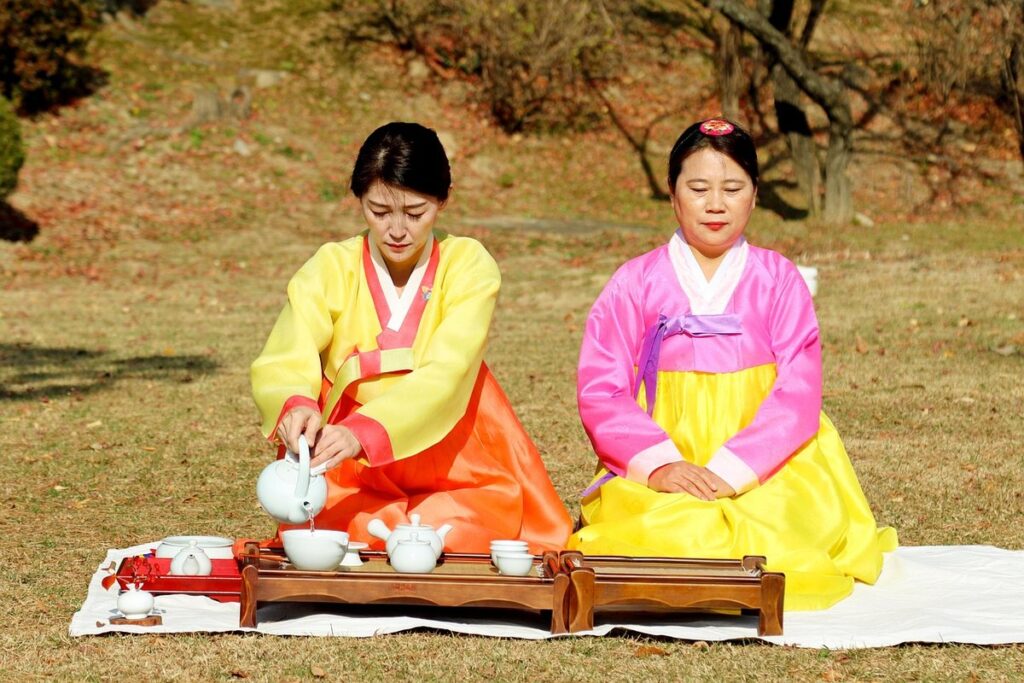
In Korea, tea has been an integral part of traditional culture for centuries. The practice of drinking tea dates back to the Silla Dynasty (57 BC – 935 AD), when Buddhist monks introduced tea from China as a way to promote spiritual growth and relaxation. Today, tea remains a staple in Korean society, particularly during social gatherings and ceremonies.
Traditional Korean tea is made from green tea leaves, which are grown mainly in the Boseong region of Jeollanam-do Province. The tea leaves are carefully hand-picked, pan-fried, and then rolled to create a delicate flavor profile. When brewing Korean tea, it’s essential to use the right amount of water and temperature to bring out the optimal flavor.
In Korea, tea is often served as a sign of respect during social gatherings, such as weddings and traditional festivals like Seollal (Lunar New Year). The traditional Korean tea ceremony, called “Cha-do,” involves preparing and serving tea in a tranquil setting, emphasizing the importance of harmony between nature and human society. Visitors to Korea can experience this unique tradition by attending a Cha-do ceremony at a traditional tea house or cultural center.
Traditional Arts and Crafts
South Korea is renowned for its rich cultural heritage, and traditional arts and crafts are an integral part of that. From intricate wood carvings to delicate paper-cutting techniques, these ancient skills are still practiced today.
Korean Music and Dance
Korean music and dance are an integral part of the country’s traditional arts. One of the most distinctive forms is pansori, a narrative singing performance that combines music, dance, and drama. A trained pansori singer, known as a pansori master, will sing and act out stories from Korean folklore and literature. The performance is accompanied by a jeongeum player, who plays a traditional percussion instrument.
Pansori has been recognized by UNESCO as an Intangible Cultural Heritage of Humanity, highlighting its importance in Korean culture. However, it’s worth noting that pansori has undergone some modernization in recent years, with some performances incorporating more contemporary elements. For those interested in experiencing traditional Korean music and dance, attending a live pansori performance is a unique opportunity.
K-pop, on the other hand, is a distinctly modern phenomenon that originated in South Korea. Noraebang, or K-pop clubs, have become increasingly popular among locals and tourists alike. While not traditionally considered part of Korea’s cultural heritage, K-pop has undoubtedly had an impact on the country’s music scene and global popularity.
Traditional Korean Textiles and Fashion
Hanbok, traditional Korean clothing, is a significant aspect of Korean heritage. Its history dates back to the Goryeo Dynasty, where it was worn for both ceremonial and everyday purposes. Hanbok’s significance extends beyond its beauty; it represents Korea’s cultural identity and values. The garment typically consists of a jacket (jeogori) and pants (baji), with intricate designs and patterns that often symbolize good fortune.
In modern times, hanbok has been incorporated into contemporary fashion. Many Korean designers have adapted traditional patterns and fabrics to create stylish, wearable pieces. You can spot hanbok-inspired clothing in high-end boutiques and streetwear stores alike. Some even wear hanbok for everyday occasions, such as weddings or special holidays.
Hanbok is also worn during cultural events like festivals and traditional performances. During these events, you may see people dressed in vibrant hanbok attire, complete with elaborate headpieces and accessories. If you’re interested in experiencing Korean culture firsthand, consider attending one of these events or even trying on a hanbok yourself. Many museums and cultural centers offer hanbok rentals or guided tours to help you appreciate the intricacies of this traditional garment.
Festivals and Celebrations
South Korea is known for its vibrant festivals, each one showcasing a unique aspect of Korean culture. From traditional music to elaborate costumes, these celebrations are not to be missed.
Seollal (Lunar New Year) Traditions
Seollal is a significant holiday in Korean culture, marking the beginning of the new year on the lunar calendar. To prepare for Seollal, families typically clean their homes thoroughly to sweep away bad luck and make room for good fortune. They also cook traditional foods such as tteokguk (rice cake soup) and makgeolli (traditional rice wine). On the eve of Seollal, families gather to exchange gifts and pay respects to their ancestors.
The following morning, Koreans participate in a ritual called “chaeban” where they visit their elderly relatives’ homes and receive blessings from them. During this time, children also perform traditional games and activities such as yut nori (a board game) and jegi (traditional kite-flying). Throughout the holiday, people wear traditional hanbok clothing to honor their heritage.
Seollal is a time for families to come together and strengthen bonds. By participating in these traditions, you can experience the rich cultural heritage of Korea firsthand. Even if you’re not Korean, incorporating some of these customs into your own celebrations can be a meaningful way to connect with others and appreciate the significance of this holiday.
Chuseok Harvest Festival
Chuseok is a time-honored harvest festival in South Korea, where families come together to honor their ancestors and express gratitude for the bounty of nature. At its core, Chuseok is about paying respects to one’s elders and acknowledging the passing of time. During this three-day celebration, Koreans participate in traditional games like yut nori (a board game of sticks) and giti (a Korean version of hopscotch), which are believed to ward off evil spirits.
Traditional foods play a significant role in Chuseok festivities. Families gather to prepare and share dishes made from staple crops such as rice, barley, and soybeans. A key component is songpyeon, half-moon-shaped rice cakes filled with sesame seeds or honey, symbolizing the full moon. These sweet treats are typically baked on a traditional stone hearth over an open flame.
In addition to food and games, Chuseok involves various rituals and ceremonies. One notable practice is the “Seongmyo,” where families visit their ancestors’ graves to clean, honor, and offer gifts. This custom underscores the importance of ancestor worship in Korean tradition. By participating in these age-old customs, visitors can gain a deeper appreciation for the cultural significance of Chuseok.
Traditional Architecture and Design
Traditional Korean architecture is characterized by its use of natural materials, curved roofs, and intricate details, reflecting a deep respect for tradition and heritage. Let’s take a closer look at some of these iconic designs that still inspire awe today.
Hanok Villages and Traditional Homes
Hanok villages are a testament to traditional Korean architecture and design. These villages typically feature rows of hanok houses, with tiled roofs and wooden facades, often surrounded by serene courtyards and gardens. Each hanok is built using traditional materials like wood, paper, and tile, which provide natural insulation against the elements.
The design of hanok homes reflects a deep understanding of Korean culture’s emphasis on harmony between nature and human life. For example, the orientation of the house is carefully planned to maximize natural light and ventilation, while also minimizing exposure to harsh winds. This attention to detail not only ensures a comfortable living space but also creates a sense of connection to the surrounding environment.
In modern times, hanok villages have become popular tourist destinations, allowing visitors to experience traditional Korean culture firsthand. However, for those interested in incorporating elements of traditional design into their own homes, there are many ways to do so without completely renovating an entire house. For instance, adding a few well-placed windows or using traditional materials for decorative elements can add character and depth to any living space.
Traditional Korean Decorative Arts
Korean ceramics have been a staple of traditional decorative arts for centuries. The country’s unique clay deposits and skilled artisans have produced stunning pieces that range from delicate tea sets to imposing statues. Woodblock prints, known as “Sosol,” are another highly regarded art form. These intricate prints often feature beautiful landscapes, animals, or mythological creatures. They were typically used to adorn the walls of traditional homes and temples.
Folk art in Korea is not limited to ceramics and woodblock prints. Traditional masks, such as those used in shamanic rituals, are also highly prized for their beauty and cultural significance. These masks often depict mythical creatures and are adorned with intricate carvings and colors. In addition to their aesthetic value, these masks serve an important role in Korean culture by representing the connection between the spiritual and physical worlds.
To experience traditional Korean decorative arts firsthand, visit a hanok village or museum dedicated to Korean art. Many of these museums offer workshops where visitors can learn traditional techniques from local artisans. By appreciating and learning about Korea’s rich cultural heritage, travelers can gain a deeper understanding of the country’s traditions and customs.
Frequently Asked Questions
How can I incorporate traditional Korean practices into my daily life?
Traditional Korean culture is rich in customs and values that can be applied to modern life. To start incorporating these practices, try observing traditional holidays like Seollal or Chuseok, learn about the significance of ancestor worship, and experiment with traditional cooking methods and ingredients. You can also explore hanbok fashion and participate in traditional music or dance classes.
Can I still celebrate Korean traditions if I don’t speak Korean?
While language is an important aspect of cultural identity, many traditional practices are visual and tactile. You can learn about the history and significance behind each tradition through online resources or books, and then explore how to incorporate them into your life. Many temples, museums, and cultural centers offer English-language programs and events.
Is it true that Korean families prioritize intergenerational relationships over individual needs?
While filial piety is a strong value in traditional Korean culture, this doesn’t mean that individual needs are neglected. In fact, many modern Korean families strive to balance the importance of family ties with personal freedom and autonomy. However, respecting elders and honoring ancestors remains an essential part of Korean tradition.
How can I respectfully participate in a Charye ceremony if I’m not Korean?
Charye ceremonies are deeply rooted in Korean culture, but they’re also open to outsiders who show respect for the tradition. When attending a Charye ceremony, dress modestly and avoid taking pictures or video during the ritual. Follow the lead of other attendees, and be prepared to participate in small ways, such as offering incense or food.
What are some common mistakes to avoid when learning traditional Korean music or dance?
When learning traditional Korean music or dance, it’s essential to approach the culture with humility and respect. Avoid appropriating cultural symbols or traditions without proper understanding or context. Instead, seek out qualified instructors who can teach you about the history and significance of each form, and be patient with yourself as you learn – mastery takes time and dedication.