
Morocco is a country where several languages converge, creating a unique linguistic tapestry that reflects its rich history and cultural diversity. You might be surprised to learn that over a dozen languages are spoken in Morocco, each with its own distinct characteristics and historical significance. Arabic, as the official language, holds a special place alongside Berber, which is an essential part of Moroccan identity. Other languages like Wolof and French also have a significant presence in everyday life. With such a diverse linguistic landscape, understanding the various languages spoken in Morocco can greatly enhance your travel experience or deepen your connection with its people. This article will explore the different languages spoken in Morocco, their origins, and their importance in the country’s culture, allowing you to gain a more nuanced appreciation for this fascinating language landscape.
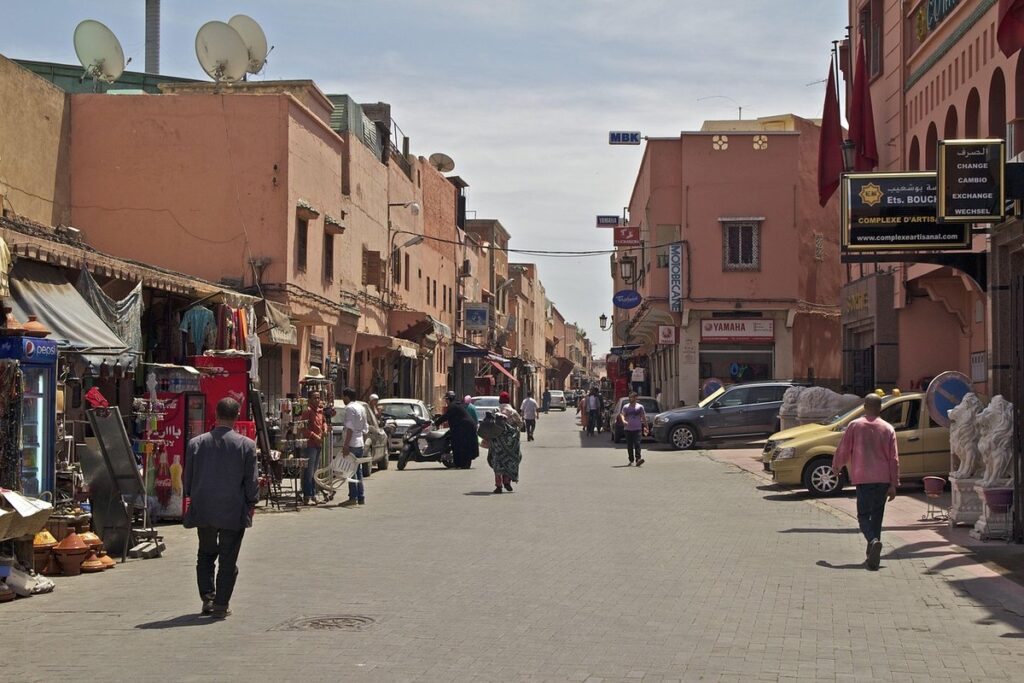
Overview of Moroccan Language Landscape
Morocco is home to a rich tapestry of languages, with numerous dialects and tongues spoken across its diverse regions. Let’s take a closer look at the linguistic landscape that makes up this vibrant country.
Official Language: Arabic and Berber Recognition
Arabic and Berber are the official languages recognized by the Moroccan government. Arabic is an official language at the national level, while Tamazight (also known as Berber) has been recognized as a second official language since 2011. This recognition acknowledges the significant contribution of Berber languages to Morocco’s linguistic identity.
The importance of recognizing Berber languages lies in their historical and cultural significance. Berber languages have been spoken in Morocco for thousands of years, with some dialects still being used by millions of people across the country. The official recognition of Tamazight has also led to increased efforts to promote its use in education, media, and government institutions.
In practical terms, recognizing Arabic and Berber as official languages has several implications. For instance, it has led to the development of bilingual education programs that cater to both languages. Additionally, public services such as signs, road directions, and announcements are now provided in both Arabic and Tamazight. This dual recognition reflects Morocco’s commitment to preserving its linguistic diversity and promoting a more inclusive national identity.
Language Classification Systems
Morocco’s language landscape encompasses a diverse array of languages, which are often classified using standardized systems. The most widely recognized classification system is ISO 639-1, developed by the International Organization for Standardization (ISO). This two-letter code provides a unique identifier for each language, facilitating international communication and documentation.
For example, Arabic is assigned the code “ar”, while Berber languages have their own distinct codes: Tamazight (tzm) and Tarifit (tif). Similarly, French is identified by the code “fr”. These codes are essential for language preservation efforts, as they enable researchers to accurately document and compare linguistic data.
Beyond ISO 639-1, other classification systems, such as Ethnologue and Glottolog, also categorize Moroccan languages. While these systems may differ slightly in their categorization, they share the common goal of providing a standardized framework for language documentation and preservation. This is crucial for Morocco’s rich linguistic heritage, allowing researchers to better understand and appreciate its diverse languages.
Indigenous Languages of Morocco
Morocco boasts a remarkable linguistic diversity, with over 40 languages spoken across its territories, each belonging to various language families. We’ll explore one such group: the indigenous languages that have been an integral part of Morocco’s rich cultural heritage for centuries.
Berber Languages: A Regional Perspective
Berber languages are a crucial part of Morocco’s linguistic diversity, with several distinct varieties spoken across different regions. Riffian Berber, for instance, is primarily spoken in the north, particularly in the Rif Mountains and surrounding areas. This dialect has been influenced by its geographical location near the Mediterranean coast, resulting in unique vocabulary and grammatical structures that reflect this historical contact.
Shilha Berber, on the other hand, is predominantly found in the south-central region of Morocco. Its distinctive sound system and phonetic features set it apart from Riffian and other Berber languages. Tamazight, which has gained official recognition as a national language, is spoken by communities throughout Morocco but particularly in the Atlas Mountains.
Each of these Berber languages boasts its own regional flavor, shaped by local customs, history, and geography. A key aspect of understanding these dialects lies in appreciating their variations, rather than treating them as a uniform entity. By acknowledging these differences, we can better comprehend the rich tapestry of Berber linguistic diversity within Morocco’s broader language landscape.
Atlas and Tashawit Dialects
In central and eastern Morocco, two distinct Berber dialects are spoken: Atlas and Tashawit. The Atlas dialect is primarily spoken in the High Atlas region, where it has been influenced by Arabic and French. This linguistic blend is reflected in the Atlas dialect’s vocabulary, which includes loanwords from these languages.
Historically, the Atlas dialect emerged as a result of centuries-long interactions between Berber tribes and Arab invaders. Today, it remains an essential part of the local identity, particularly among older generations who continue to use it in everyday conversations. In contrast, the Tashawit dialect is spoken primarily in the eastern regions of Morocco, where it has maintained its distinct linguistic features despite influences from Arabic.
While both dialects have undergone significant changes over time, they remain important cultural markers for their respective regions. Efforts are being made to preserve and promote these dialects, including language documentation projects and cultural festivals that celebrate Berber heritage. For instance, the annual Imilchil Festival in Morocco celebrates Berber traditions, including music, dance, and language.
The Atlas and Tashawit dialects demonstrate the rich linguistic diversity within Moroccan communities.
African Influence: languages of West Africa origins
Morocco is home to a diverse array of languages, many of which have their roots in West Africa. We’ll examine the influence of these languages on Morocco’s linguistic landscape.
Wolof and Pulaar Influences
Wolof and Pulaar languages have had a significant impact on the linguistic landscape of Morocco’s northwestern regions, particularly near the border with Western Sahara. These two West African languages are spoken in Senegal and Mauritania, but their influence can be seen in various dialects within Morocco. The Wolof language has introduced words related to trade and commerce, reflecting the historical exchange between Moroccan merchants and traders from the region.
For instance, some Arabic-Berber dialects in the northwestern regions have borrowed words for goods such as “boul” (Wolof for ‘cloth’) or “kaaw” (Pulaar for ‘cotton’). This linguistic exchange not only enriched the vocabulary of Moroccan languages but also facilitated cultural and economic exchanges between Morocco, Senegal, and Mauritania. The Pulaar language has had a similar impact on regional dialects, particularly in terms of its influence on Berber languages spoken near the border.
In some areas, you can still hear Wolof and Pulaar phrases being used in everyday conversations. This is especially true among older generations who have maintained strong cultural ties with their West African counterparts. By acknowledging these linguistic influences, we can better understand the complexities of Morocco’s language landscape and appreciate its unique blend of African, Arab, and Berber heritage.
Soninke and Serer Contributions
Soninke and Serer languages from Mali and The Gambia have had a significant historical influence on Moroccan languages. These West African languages have shaped regional dialects and contributed to Morocco’s linguistic diversity. The Soninke language, for instance, has left its mark on the Wolof spoken in the north of the country. Its vocabulary and grammatical structures can be seen in certain Wolof expressions and idioms.
Similarly, Serer has influenced the Pulaar spoken in the eastern part of Morocco. Serer’s complex system of suffixes to indicate grammatical cases has been incorporated into Pulaar, enriching its linguistic repertoire. The Soninke and Serer contributions are also evident in the regional dialects of Moroccan Arabic. Words such as “kora” (a type of instrument) from Soninke have become part of everyday conversation in certain areas.
The legacy of these West African languages can be seen in Morocco’s rich cultural heritage, particularly in its music, dance, and oral traditions. This blend of linguistic influences has created a unique cultural identity that is distinct from other North African countries.
European Influence: Romance Languages
Morocco is home to a rich linguistic tapestry, and Romance languages play a significant role in this diversity. We’ll take a closer look at how French, Spanish, and Arabic interact in everyday life.
French and Spanish Legacy
French colonialism left an indelible mark on Morocco’s language landscape, with French loanwords integrated into Arabic and Berber dialects. The legacy of Spanish colonialism also persisted, particularly in the north, where Moroccan Arabic contains many Spanish-derived words. In urban centers like Rabat and Marrakech, you’ll hear a mix of modern standard Arabic, Moroccan Arabic, and French being used in everyday conversation. This linguistic blend is a testament to the country’s complex history.
In Moroccan Arabic, for example, you might hear expressions like “bent” (daughter) or “fekra” (idea), which are direct borrowings from French. Similarly, Spanish loanwords like “taza” (cup) and “calzone” (folded pizza) have become part of the local vocabulary in northern cities like Tangier and Tetouan.
The presence of French and Spanish loanwords has also influenced the Berber languages spoken in Morocco. In Tamazight, the standard Berber language, you’ll find words like “ifrane” (high place), which is derived from the French word “altitude.” This linguistic exchange reflects the historical ties between Morocco and its European colonizers, as well as the ongoing cultural exchange that continues to shape the country’s language landscape.
Portuguese and Italian Presence
Morocco’s coastal regions have been a melting pot for languages and cultures, with Portuguese and Italian presence being an often-overlooked yet significant aspect of the country’s linguistic diversity. The historical trade and cultural exchange between Morocco and European nations, particularly during the period of colonialism, left a lasting impact on the languages spoken in these areas.
In the northern coastal cities like Tangier and Ceuta, you can still hear remnants of Portuguese influence in the local dialects. This is due to the fact that Portugal controlled these regions for several centuries, and as a result, the local population adopted many Portuguese words and expressions into their daily language. Similarly, Italian presence can be seen in the southern coastal cities like Tangier’s neighboring town, Larache, which was once an important trading post with Italy.
Today, while it’s rare to find native speakers of these languages, many Moroccans still learn them as a second language or incorporate them into their regional dialects. This linguistic diversity is a testament to the country’s rich cultural heritage and its ability to absorb and adapt languages from various sources.
Language Contact and Code-Switching
Morocco is home to a staggering number of languages, with Arabic being just one of the many tongues spoken across the country. In this section, we’ll explore how language contact and code-switching shape Morocco’s linguistic landscape.
Arabic-Berber Diglossia
In Moroccan Arabic, also known as Darija, you’ll often hear Berber words and phrases interwoven with Arabic vocabulary. This phenomenon is a result of language contact between the two groups, which has led to code-switching practices among bilingual speakers. For instance, in everyday conversations, Moroccans might use Arabic roots to describe Berber-specific concepts, such as “ikli” (bread) or “timaght” (morning). Conversely, they might employ Berber words for Arabic-derived terms like “masjid” (mosque).
This code-switching is particularly evident in urban areas, where younger generations are more likely to mix languages in their speech. For example, a young Moroccan from Marrakech might say “ikli masjid” when referring to the mosque’s bread-serving traditions. This blending of languages not only reflects the country’s linguistic diversity but also highlights the complex relationships between Arabic and Berber.
While some argue that code-switching erodes the identity of these languages, others see it as a natural response to the multilingual reality in Morocco. In fact, this linguistic eclecticism is an important aspect of Moroccan culture, allowing speakers to convey nuanced meanings and cultural references through language choice.
Berber-Arabic vs. French: A Comparative Analysis
Arabic-Berber diglossia is a widespread phenomenon in Morocco, with a significant number of Moroccans using both languages in their daily lives. However, French remains an important language in various contexts. In education, for example, many students learn French as a foreign language and use it to communicate with teachers or read textbooks. The media also plays a crucial role, with several TV channels and newspapers broadcasting or publishing content in French.
While Arabic-Berber diglossia is more prevalent, especially among older generations, French language use is gaining ground, particularly among the younger population. A study found that 60% of university students prefer to communicate in French, even with their Berber-speaking peers. This shift towards French can be attributed to its widespread use in education and media, as well as Morocco’s historical ties with France.
In everyday conversation, Arabic-Berber diglossia is still dominant, but French is becoming increasingly common, especially among urban dwellers. To illustrate this trend, consider a typical conversation between two friends: one speaking Berber and the other responding in Arabic, with occasional interjections of French words or phrases. This code-switching phenomenon highlights the complex linguistic landscape of Morocco, where multiple languages coexist and influence one another.
Conclusion: Preserving Linguistic Diversity
As we conclude our exploration of Morocco’s linguistic landscape, it’s clear that language diversity is a vital aspect of the country’s rich cultural heritage. Let’s take a closer look at what this means for the preservation of these languages.
Language Revitalization Efforts
Efforts to revitalize endangered languages in Morocco are underway, driven by a recognition of their cultural significance and importance for linguistic diversity. The Moroccan Ministry of Culture has launched several initiatives aimed at documenting and promoting Berber languages, including the creation of language learning materials and the establishment of language documentation centers.
Community-based revitalization programs, such as the Tamazight Language Revitalization Project, are also gaining momentum. These projects bring together local communities, linguists, and educators to develop language education programs, create language resources, and promote the use of Berber languages in everyday life. For instance, the project has developed a comprehensive dictionary of Tamazight, the standardized Berber language, which is now widely used in schools and community centers.
Language documentation efforts are also crucial for language revitalization. Researchers have been working with local communities to document Berber dialects and create audio and video recordings of speakers. This rich linguistic data will help preserve the languages for future generations and provide a foundation for language education programs. By supporting these initiatives, Morocco can take significant steps towards preserving its linguistic diversity and promoting the cultural heritage of its indigenous communities.
Recommendations for Sustainable Language Practices
To support the continued use and preservation of Morocco’s rich linguistic diversity, it is crucial to adopt sustainable language practices. One key strategy is to promote cultural exchange among communities through language documentation and revitalization efforts. This can be achieved by establishing language immersion programs that bring together speakers of different languages to share their knowledge and experiences.
Language education institutions should also prioritize the inclusion of indigenous languages in curricula, alongside standard Arabic and French. This will not only help maintain linguistic diversity but also equip students with essential communication skills for navigating Morocco’s multilingual society.
Communities can also play a vital role by recognizing and valuing the importance of their local languages. This can be done through language preservation initiatives, such as establishing language documentation centers or organizing cultural events that celebrate linguistic heritage. By working together to protect and promote linguistic diversity, communities can ensure the continued vitality of Morocco’s rich linguistic landscape.
Language planners should also prioritize inclusive language policies that recognize the country’s multilingual context.
Frequently Asked Questions
Can I learn all the languages spoken in Morocco?
Yes, it’s possible to learn multiple languages, but it requires dedication and a well-structured approach. Start by focusing on one or two regional languages, such as Berber dialects like Riffian or Shilha, and then gradually expand your language skills.
How can I support language revitalization efforts in Morocco?
Language revitalization is an ongoing process that involves community-based initiatives, education programs, and documentation projects. You can contribute by volunteering with organizations working on these efforts, spreading awareness about the importance of linguistic diversity, or supporting local language schools and cultural centers.
What are some common challenges faced by speakers of minority languages in Morocco?
Speakers of minority languages often face stigmatization, limited access to education and job opportunities, and pressure to adopt dominant languages like Arabic or French. To overcome these challenges, it’s essential to promote language rights, support inclusive education policies, and foster a culture of linguistic diversity.
Can I use online resources to learn Moroccan languages?
Yes, there are various online platforms, language learning apps, and digital resources that can help you learn Moroccan languages, including Arabic, Berber, Wolof, and French. However, be aware that these tools may not replace the need for face-to-face interaction with native speakers or immersion in local communities.
Is it true that many Moroccans are bilingual or multilingual?
Yes, language contact is a common phenomenon in Morocco, where individuals often speak two or more languages fluently, including Arabic-Berber diglossia and French as a second language. This linguistic diversity enriches the country’s cultural identity and contributes to its economic growth through tourism and trade.

