Learning Hangul can be a daunting task for beginners, but with a clear understanding of its basics and grammar, you’ll be able to read and write Korean in no time. Mastering Hangul is essential for anyone interested in learning the Korean language, as it’s an integral part of everyday life in South Korea. The writing system may seem complex at first, but once you break down each character and understand how they’re formed, it becomes more manageable. This comprehensive guide will take you through step-by-step tutorials and practice sheets to help you learn Hangul effectively. You’ll discover the unique combination of consonants and vowels that make up each character and how to read and write them correctly. By the end of this article, you’ll be able to confidently approach reading and writing Korean with ease.
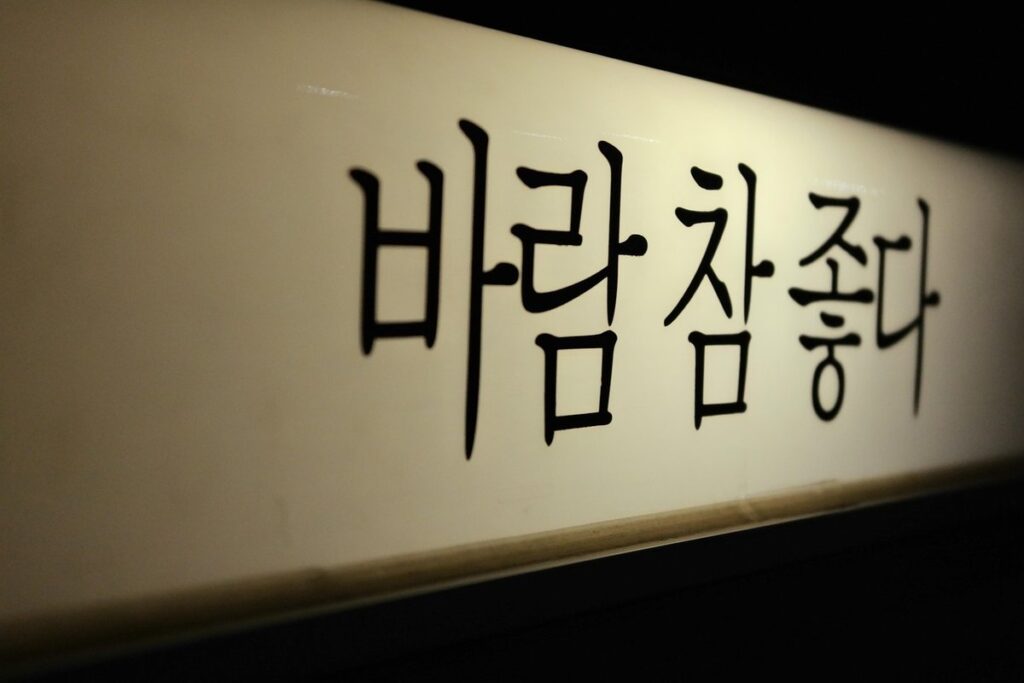
Understanding Hangul Basics
To master Hangul, you first need to understand its building blocks: consonant-vowel pairs and basic syllable structures. Let’s break down these fundamentals together.
What is Hangul?
Hangul is the native alphabet of Korea, a unique writing system created during the Joseon Dynasty in the 15th century. It’s an essential part of Korean language and culture, and its significance extends beyond mere communication. Hangul consists of 14 consonant letters and 10 vowel letters that come together to form a vast array of words.
One of the most striking aspects of Hangul is its design. Each letter has a distinct shape and sound, making it easier to read and write for native Korean speakers. The system’s founder, King Sejong, aimed to create an alphabet that was phonetic, intuitive, and accessible to everyone, regardless of social class or background.
In the context of learning Hangul, understanding its significance is crucial. By grasping the history and principles behind this writing system, you’ll appreciate its unique characteristics and nuances. This, in turn, will help you develop a more efficient and effective learning strategy. For instance, you can start by focusing on mastering the consonant letters, which are often combined with vowel letters to form syllables.
Note: Mastering Hangul’s consonants is often considered the foundation of reading Korean.
Hangul History and Development
Hangul was created by King Sejong, the fourth king of the Joseon Dynasty, in 1443. The primary purpose behind its development was to create a writing system accessible to the common people, particularly those from rural areas who didn’t have access to education or knowledge of classical Chinese characters. Before Hangul’s introduction, many Koreans used Chinese characters with phonetic modifications and added diacritical marks, but this proved cumbersome.
King Sejong assembled a team of scholars, known as the “Hall of Worthies,” to create a new writing system that was easier to learn and use. After years of research and experimentation, they developed Hangul’s unique characteristics: an alphabet consisting of 14 consonants and 10 vowels that can be combined in various ways to form syllabic blocks. This innovative approach enabled people to write with greater ease and accuracy.
Hangul’s design is considered a masterpiece of linguistic engineering because it accurately represents the sounds and pronunciation of the Korean language. Its simplicity and phonetic consistency have made it an attractive system for learning, especially compared to other writing systems like Chinese characters or alphabets that require memorization of countless combinations.
Hangul vs. Hanja: Understanding the Differences
Hangul and Hanja are two distinct writing systems used to write Korean. While they coexist in written Korean, understanding their differences is essential for effective communication. Hangul is an alphabetic script consisting of 14 consonants and 10 vowels, designed to be phonetic and easy to read.
Hanja, on the other hand, are Chinese characters borrowed from the Chinese writing system. They were introduced to Korea during the Three Kingdoms period and continue to be used today in various contexts. Hanja are primarily used for words that have no direct Korean equivalent, such as scientific or technical terms, and often appear alongside Hangul characters.
A significant limitation of using only Hanja is the difficulty it poses for non-native speakers and even native Koreans learning them. The sheer number of Hanja required to read and write proficiently can be overwhelming, leading many learners to focus solely on mastering Hangul.
Mastering Hangul Alphabet
Now that you’ve learned the basics of Hangul, it’s time to master its intricacies. This section will walk you through techniques for improving your reading and writing skills in Hangul.
Learning the 14 Consonants
Start by familiarizing yourself with the 14 basic consonants in Hangul, which are represented by distinct symbols. Each consonant has its unique sound and shape, so take note of how they appear on their own and when combined with vowels. Begin by practicing writing each consonant from top to bottom, paying attention to the direction of strokes.
Notice that some consonants share similar shapes or components, such as the ‘n’ and ‘m’ sounds, which are distinguished only by a subtle difference in their strokes. Focus on developing muscle memory for these distinct features. You can also try creating flashcards with individual consonant symbols on one side and their names on the other.
To aid memorization, link each consonant to its corresponding sound or a personal association. For instance, ‘k’ might remind you of “king” in English. Use flashcard apps or create your own set with meaningful words starting with each consonant. Practice writing these symbols multiple times a day, gradually increasing the speed and accuracy as you become more comfortable with them.
Vowel Sounds and Symbols
Hangul’s vowel system is quite distinct from those of European languages. It consists of 11 basic vowels and several combined forms to represent different sounds. The vowels are grouped into three categories: simple, combined, and complex.
The simple vowels are the most straightforward: a (, ae (, e (, i (, o (, u (, and ye (). These letters are used alone or in combination with consonants to form syllables. For example, the word “ma” is formed by combining the consonant “m” with the vowel “a”.
The combined vowels, on the other hand, are made up of two simple vowels combined as one letter. The most common ones are wa (, ya (, yo (, yu (, and eo (). These letters can be challenging for beginners to distinguish between, but with practice, you’ll become more familiar with their sounds.
Pay close attention to the direction and placement of the vowel symbols when learning Hangul. This will help you recognize the correct combination of vowels in a word and improve your pronunciation.
Combining Consonants and Vowels
When combining consonant-vowel pairs to form valid Hangul words, there are a few essential rules to keep in mind. The first consonant of the pair must be a jamo (a simple consonant), and it should not be one of the three consonants that can’t appear at the beginning: s, y, or r. The vowel then attaches directly to this consonant.
For example, when combining the consonant j and the vowel a, you get ja, which is pronounced like “jah”. When combining the consonant h and the vowel o, you get ho, which sounds like “ho”.
It’s also crucial to remember that some consonants change form or disappear altogether when combined with certain vowels. For instance, when the consonant s combines with any of the vowels i, u, e, or y, it disappears completely.
To build your skills in combining consonant-vowel pairs, try practicing with flashcards or writing exercises. Write down a series of consonants and then pair them with different vowels to see which combinations form valid words. Focus on mastering the most common consonant-vowel pairs first, as these will give you the greatest flexibility when building Hangul words.
Practicing Hangul Reading and Writing
To become proficient in reading and writing Hangul, you’ll need to practice regularly, starting with simple words and gradually increasing your vocabulary. Begin by practicing Hangul characters every day to build muscle memory.
Basic Reading Exercises
Begin by practicing the recognition of common patterns and combinations within Hangul. One way to do this is through basic reading exercises that focus on individual syllables, such as the consonant-vowel pairings or consonant clusters. Start with simple combinations like the “ng” or “k” sounds, which are often used in Korean words.
Look for examples of these patterns in your textbook or language learning materials. For instance, try to recognize how the consonant cluster “ch-” is used in words like “chanyeo” (meaning “orange”) or “chae” (a type of dessert). As you become more familiar with these combinations, move on to more complex ones.
It’s also essential to practice reading Hangul in a sentence-by-sentence manner. Begin by reading short sentences that only contain one or two syllables, then gradually increase the length as your skills improve. Focus on identifying and sounding out each individual word before moving on to the next one. This exercise will help you develop muscle memory for recognizing patterns within Hangul characters.
Writing Hangul Practice Sheets
When creating practice sheets for writing Hangul, consider including space for common diacritical marks and strokes. This will help you develop muscle memory for these essential components of the script. For example, a sheet might have designated areas for the vowel markers (such as ies or ye) or the horizontal stroke that connects syllables.
Practice sheets can be designed to focus on specific areas of improvement, such as writing individual letters or words with different initial consonants. You can also include exercises where you write Hangul text in various styles, like cursive or boldface. Aiming for at least one sheet per day will help you build consistency and reinforce new skills.
In addition to space for writing, consider including a key on your practice sheets that lists the strokes and diacritical marks used. This reference can be especially helpful when you’re first starting out. By regularly reviewing these fundamentals and practicing with consistent materials, you’ll see noticeable improvement in your Hangul writing abilities over time.
Tips for Improving Handwriting Skills
Developing proper hand-eye coordination and muscle memory when writing Hangul characters is crucial for accurate and efficient handwriting. Start by practicing basic strokes, such as vertical lines, horizontal lines, and curves. These fundamental movements will help you develop the fine motor skills necessary for creating Hangul’s distinctive shapes.
Use a pen or pencil with good grip and balance to ensure smooth movement. Avoid using excessive pressure, which can lead to fatigue and poor handwriting quality. Instead, focus on making deliberate, controlled strokes. You can also try practicing writing in different directions, such as from top to bottom or left to right, to improve your dexterity.
Another helpful technique is to practice writing Hangul characters in isolation before combining them into words. This will help you develop muscle memory for individual character shapes and prevent mistakes when joining them together. For example, start by practicing the basic stroke patterns of each consonant and vowel separately before moving on to full characters. By focusing on proper hand-eye coordination and muscle memory, you’ll be able to write Hangul characters with confidence and accuracy.
Understanding Hangul Grammar and Syntax
Now that you have a solid grasp of Hangul basics, let’s move on to understanding how words are constructed and grammatically structured in Korean. This involves mastering key concepts like verb conjugation and sentence endings.
Basic Sentence Structure
In Hangul, the basic sentence structure is subject-verb-object (SVO). This means that the subject of the sentence, typically a noun, comes first, followed by the verb, and then the object. For example, the sentence “” (nal-su iss-neun) translates to “I eat rice.” In this sentence, “nal” (I) is the subject, “su” (rice) is the object, and “iss-neun” (eat) is the verb.
Understanding SVO word order can be challenging for learners of Hangul because it differs from the typical Subject-Object-Verb (SOV) pattern found in many other languages. To build a strong foundation, practice rearranging words to match the SVO structure. Start with simple sentences and gradually move on to more complex ones.
Notice how the verb “iss-neun” comes after the subject “nal.” This is a key feature of Hangul’s SVO word order. When constructing your own sentences, remember that the verb usually appears in a suffix form, such as “-neun,” “-ess-da,” or “-ass-da.” By paying attention to this pattern, you’ll be able to build more accurate and grammatically correct sentences in Hangul.
Verb Conjugation and Tenses
Hangul’s verb conjugation system is relatively straightforward and consistent. In general, verbs change their form depending on the subject pronoun. However, there are some irregularities to be aware of.
Present tense verbs typically follow a simple pattern: the base form of the verb is used with the subject pronouns “I” (eu) or “you” (eul). For example, the verb for “to eat” in the present tense is simply “ssikha.” However, when using the third person (he or she), the verb changes to “ssikeo.”
Past tense verbs are formed by adding the suffix “-haseyo” or “-haesseumnida” after the base form. For instance, “ssikeo” becomes “ssikhaseyo” for the past tense.
Future tense verbs use the auxiliary verb “hayeo” in combination with the present tense form of the verb. So, to express “will eat,” you would say “eunyeyo ssikha.” The most common irregularity is with the verb “to be,” which has different forms for each subject pronoun.
Understanding these basic conjugations and tenses will allow you to build more complex sentences in Hangul.
Case Markers and Particles
In Hangul sentences, case markers and particles play a crucial role in indicating grammatical relationships between words. These small markers are essential for conveying meaning and avoiding ambiguity.
To understand how they work, let’s consider the subject-object relationship. In Korean, the subject is typically marked with a topic marker (“-i” or “-ka”), while the object is preceded by an accusative particle (“-l” or “-e”). For example, in the sentence “” (Neom-eun saek-i chakha-ss-ta), “the book” is the subject and is marked with the topic marker “-i”, while “read” is the verb and “me” is the object, preceded by the accusative particle “-l”.
Understanding the different case markers and particles can help you construct more accurate and idiomatic sentences. For instance, using a nominative-accusative particle combination like “” (neom-eun saek-i chakha-l-ta) changes the sentence’s meaning entirely.
When reading or writing in Hangul, pay attention to these small but vital markers. They can make all the difference in conveying your intended message and expressing yourself effectively in the language.
Advanced Hangul Topics
Now that you’ve mastered the basics of Hangul, it’s time to explore some more advanced concepts and nuances that will help you become a fluent reader. This includes topics like consonant combinations and unique character variations.
Idioms and Colloquial Expressions
Mastering idioms and colloquial expressions is crucial for effective communication in Korean. As you become more proficient in Hangul, you’ll encounter a variety of phrases that add flavor to everyday conversations.
Start with basic phrases like “annyeonghaseyo” (hello) and “gamsahamnida” (thank you). However, it’s essential to learn idiomatic expressions that convey nuanced emotions and thoughts. For instance, “jaseo jaseo” means “slowly” or “patiently,” while “moraereul gadeukha” is used to express “I’ll take care of it.”
When discussing food, you can say “jeolppangyeo kkeutida” (the rice cake is delicious). When expressing regret, use “eobsneunde” (it was not possible) or “sipeoyo” (it’s done). Common idioms often rely on context and tone of voice. Pay attention to how native speakers combine these expressions with Hangul words.
Memorize a few key phrases at first, then gradually add more as you become more confident in your usage. Focus on the most frequently used idioms and practice incorporating them into conversations. As you build your vocabulary, remember that idiomatic language is not a separate entity from regular Korean; rather, it’s an extension of everyday expressions with added flavor.
Reading Sino-Korean Words
When learning to read Sino-Korean words, it’s essential to understand their structure and components. Unlike pure Hangul words, which are composed solely of consonant-vowel-consonant (CVC) patterns, Sino-Korean words are derived from Chinese characters, known as Hanja. This means that they often consist of multiple syllables and contain combinations of consonants and vowels.
To read a Sino-Korean word, you need to recognize the individual Hanja components and understand their meanings. Typically, each component represents a concept or an object, such as (seo) meaning “king” or (hae) meaning “sea”. When combined with other characters, these components form new words with distinct meanings.
For example, (wangseong) is composed of the Hanja for “royal” and “castle”, indicating a king’s castle. To read Sino-Korean words accurately, it’s crucial to familiarize yourself with common Hanja combinations and their corresponding meanings. Start by learning basic vocabulary and practicing reading exercises that incorporate Sino-Korean words. This will help you develop your skills in recognizing and interpreting these complex characters.
Hangul Usage in Special Contexts
Hangul’s usage varies across different contexts. In formal writing, for instance, hangul is often used to convey a sense of gravity and importance. This can be achieved by adopting specific stylistic features such as avoiding contractions or using more elaborate vocabulary. A good example would be the use of honorific suffixes, which are essential in expressing respect towards the subject matter.
In contrast, poetry and song lyrics frequently employ hangul’s expressive qualities to convey emotions and create vivid imagery. Poets like Ko Un have experimented with free-verse forms, leveraging hangul’s syllabic structure to create powerful and evocative poems. In music, singers like Lee Sae-rom often use hangul in song titles and lyrics to evoke a sense of nostalgia or longing.
When learning hangul for these specialized contexts, it’s crucial to focus on mastering the nuances of pronunciation and vocabulary usage specific to each genre. This may involve studying examples from renowned writers and poets or listening to songs that effectively incorporate hangul elements. By exploring these different applications, learners can develop a deeper appreciation for hangul’s versatility and expressive capabilities.
Final Tips and Resources for Learning Hangul
Now that you’ve learned the basics of Hangul, here are some final tips to help you practice and improve your reading skills. Take a look at these additional resources to solidify your understanding.
Additional Study Materials
If you’re serious about mastering Hangul, it’s essential to supplement your learning with additional study materials. While this guide has provided a comprehensive introduction to the writing system, there are many resources available online that can help reinforce your understanding and speed up your progress.
Start by exploring language learning apps like Tae Kim’s TalkToMeInKorean and Duolingo, which offer interactive lessons and exercises to practice reading and writing Hangul. You can also find a wealth of study materials on websites like the Korean government’s official website for learning Hangul, Hangeul.naver.com, or the online course platform Coursera, which offers courses on Korean language and culture.
Additionally, consider consulting textbooks such as “Hangeul: A Complete Course” by the Korea Foundation, which provides a thorough introduction to the writing system. You can also find numerous YouTube channels dedicated to teaching Hangul, such as 90 Day Korean and KoreanClass101, offering video lessons and explanations that cater to different learning styles.
By combining these resources with regular practice and review, you’ll be well on your way to becoming proficient in reading and writing Hangul.
Common Challenges and Solutions
As learners progress through the Hangul alphabet, they often encounter challenges such as difficulties with pronunciation, remembering the correct stroke order, and distinguishing between similar-looking characters. One common hurdle is mastering the nuances of consonant-vowel combinations, which can be confusing due to the unique blend of consonantal and vocalic sounds.
A practical solution is to focus on one set of consonants or vowels at a time, practicing their pronunciation until it becomes muscle memory. For example, learners can start with the simple consonants like ‘ㄱ’ (g) or ‘ㅅ’ (s), gradually moving on to more complex combinations as they build confidence.
Experienced instructors recommend breaking down practice into manageable sessions, dedicating specific times for writing and reading exercises. They also emphasize the importance of reviewing common mistakes and identifying areas that require improvement. This targeted approach enables learners to address their individual challenges and make steady progress in mastering Hangul. By acknowledging these common obstacles and implementing tailored strategies, learners can overcome these hurdles and achieve a deeper understanding of the Korean alphabet.
Frequently Asked Questions
How long does it take to become proficient in reading and writing Hangul?
Yes, with consistent practice, you can develop basic proficiency within 1-3 months. However, mastering advanced grammar and syntax may require 6-12 months or more of regular study.
What if I struggle to remember the consonant-vowel pairs? Are there any memory aids or techniques that can help?
You can use mnemonics, such as creating associations with words or images, or even singing songs that incorporate Hangul characters. Additionally, breaking down practice into shorter sessions and using spaced repetition can also aid in retention.
Can I still learn Hangul if I don’t have a Korean language exchange partner or tutor?
Yes, you can use online resources, language learning apps, and self-study materials to support your learning. Many websites offer interactive lessons, quizzes, and practice exercises that can help supplement your study routine.
How do I know when I’m ready to move on from the basics and start tackling more advanced topics in Hangul?
You’ll know it’s time to progress when you feel confident reading and writing simple sentences, have a good grasp of basic grammar rules, and can recognize common patterns and combinations. Don’t be afraid to review and practice regularly before moving forward.
What if I’m struggling with Hangul handwriting – is there a way to improve my hand-eye coordination and muscle memory?
Yes, regular practice using a pen or brush is essential for developing proper hand-eye coordination and muscle memory. You can also try practicing writing on a tablet or using apps that provide interactive writing exercises and feedback.