Marriage customs around the world are a fascinating reflection of a society’s values, history, and cultural identity. From the vibrant Hindu weddings of India to the elegant weddings of European aristocracy, each tradition is a unique blend of ritual, romance, and community celebration. Yet, in today’s interconnected world, cultural exchange is reshaping the way we think about marriage. As technology bridges geographical divides, modern couples are incorporating diverse customs into their own wedding ceremonies. This article will take you on a journey from Asia to the West, exploring the rich history and anthropology behind these traditions, as well as the impact of technology on modern marriage customs. By the end of this journey, you’ll gain a deeper understanding of the complexities and beauty of marriage customs worldwide.
Traditional Wedding Practices in Asia
From elaborate tea ceremonies in Japan to intricate henna designs in India, traditional wedding practices in Asia are steeped in history and cultural significance. Let’s take a closer look at some of these unique customs.
Japan: Tea Ceremonies and Shinto Rituals
In Japan, traditional weddings often blend ancient customs with modern romance. Tea ceremonies, for example, are an integral part of Japanese wedding traditions. The traditional Japanese tea ceremony, also known as Chanoyu, Sado or Ocha, is a highly ritualized and symbolic ceremony in which green tea is prepared and served to guests in a specially designed room. This ceremony is not only a way to bond with nature but also to strengthen the spiritual bond between the couple and their families.
Shinto rituals, another significant aspect of traditional Japanese weddings, often take place at the altar or in the presence of a Shinto priest. These rituals are meant to purify and consecrate the couple, and to invoke the blessings of the gods. The rituals typically involve a series of prayers, offerings, and sacred dances to ensure the couple’s happiness and prosperity.
In practice, many modern Japanese couples combine traditional tea ceremonies with more contemporary wedding elements, such as exchanging vows or sharing a first dance. When incorporating Shinto rituals, couples often work with a Shinto priest to create a personalized ceremony that reflects their unique connection to Japanese culture. By embracing these ancient customs, couples can add depth, meaning, and cultural significance to their special day.
India: Vibrant Celebrations and Family Ties
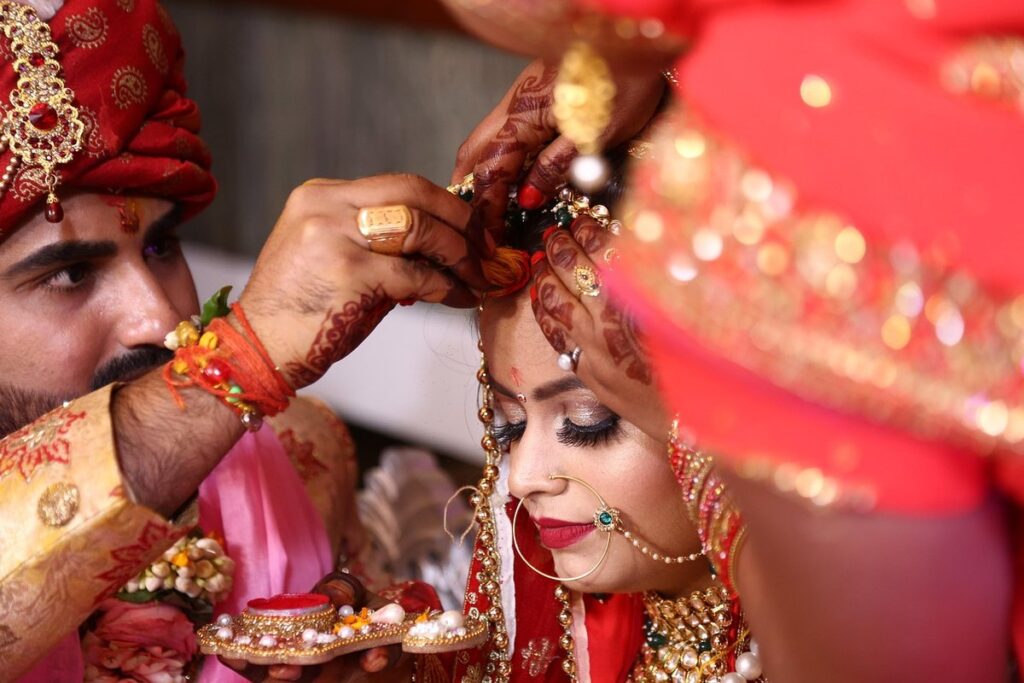
In India, the wedding celebration is a sprawling, multi-day affair that weaves together family ties, cultural customs, and spiritual practices. The festivities begin with the engagement ceremony, where the couple exchanges rings and vows, often accompanied by a traditional ritual of applying a sacred paste called “mehndi” to the bride’s hands. This ceremony is significant, as it’s believed to bring good luck and happiness to the couple.
The actual wedding day is a kaleidoscope of colors, sounds, and aromas. The bride and groom are dressed in intricately designed attire, often with gold and silver embroidery, and are showered with flowers, petals, and rosewater. The ceremony itself involves the exchange of vows, the tying of a sacred thread called the “sindoor,” and the lighting of the wedding fire. The reception that follows is a grand affair, with music, dance, and feasting that often lasts well into the night.
Throughout the celebration, family ties are paramount. The bride and groom’s families come together to share in the joy and to strengthen their bond. The wedding is also an opportunity for the couple to honor their ancestors and seek their blessings.
China: Red Decorations and Lion Dances
In Chinese wedding customs, the use of red decorations is a prominent feature. Red is a symbol of good luck, prosperity, and happiness, and is often used extensively in wedding decorations, including lanterns, ribbons, and tablecloths. The color red is believed to ward off evil spirits and bring good fortune to the newlyweds.
Lion dances are another integral part of traditional Chinese wedding celebrations. The lion dance is a lively performance where a team of dancers wear elaborate lion costumes and perform acrobatic moves to the rhythm of drums and cymbals. The dance is believed to bring good luck, prosperity, and blessings to the newlyweds.
In addition to red decorations and lion dances, other cultural symbols are also used in Chinese weddings. For example, the couple may be presented with a pair of gold or silver rings, which symbolize their commitment to each other. The bride may also wear a red cheongsam, a traditional Chinese dress, which represents her new status as a married woman.
Unconventional Wedding Traditions in the West
As you’ve explored the unique wedding customs from around the globe, let’s take a closer look at some unconventional Western traditions that are shaking up the norm. From bizarre rituals to quirky celebrations, we’re about to get weird.
Sweden: Surprising the Groom with a “Handfasting” Ceremony
In Sweden, a unique and romantic twist on traditional wedding ceremonies is gaining popularity: the “handfasting” ceremony. Unlike other wedding traditions, handfasting involves tying the bride’s and groom’s hands together with a cord or ribbon, symbolizing their commitment to each other. This ancient Celtic ritual is making a comeback in some parts of Sweden, where couples are seeking a more intimate and meaningful way to exchange their vows.
During a handfasting ceremony, the bride and groom typically face each other, with their hands tied together. They then exchange vows, promising to love and support each other through life’s ups and downs. The act of physically tying their hands together serves as a powerful reminder of their commitment to each other, and the bond they are forming.
If you’re considering a handfasting ceremony for your own wedding, it’s essential to research and choose a reputable officiant who is familiar with the tradition. You’ll also want to choose a beautiful and meaningful cord or ribbon to tie your hands together with. Some couples opt for a simple, handmade cord, while others choose a more elaborate design that reflects their personal style. Whatever your choice, a handfasting ceremony is sure to be a unique and memorable way to celebrate your love and commitment to each other.
United States: Non-Traditional Wedding Vows and Ceremonies
In the United States, couples are increasingly opting for non-traditional wedding vows and ceremonies that reflect their unique personalities and relationship. One popular trend is the use of personalized vows, where couples write their own promises to each other. This can be a meaningful way to make the ceremony feel more intimate and special.
Another creative expression is the unity candle lighting, where two candles are lit from a single flame, symbolizing the joining of two families. This can be a beautiful way to involve both families in the ceremony.
Some couples are also choosing to incorporate cultural or personal traditions into their ceremony. For example, a couple may choose to exchange vows in a non-traditional location, such as a beach or a mountaintop, or they may incorporate cultural customs, such as a Jewish Ketubah ceremony or a Native American handfasting.
To incorporate non-traditional vows and ceremonies into your own wedding, consider what makes your relationship unique and how you can reflect that in your ceremony. Think about what personal traditions or customs you want to include and how you can weave them into the ceremony in a way that feels authentic and meaningful.
United Kingdom: Unique Wedding Traditions and Superstitions
In the United Kingdom, wedding traditions and superstitions are a delightful mix of quirky and humorous. One popular custom is carrying a lucky charm, often a small token or trinket, to ward off bad luck and ensure a smooth marriage. For instance, some brides carry a silver sixpence in their shoe, while others opt for a four-leaf clover or a horseshoe. Another unique tradition is the “first dance” as a couple, but with a twist: the bride and groom often dance to a popular song from their childhood or a special song that holds meaning for them.
Some couples also participate in a “something old, something new, something borrowed, something blue” ritual, but with a British twist. For example, the “something old” might be a piece of antique lace or a family heirloom, while the “something borrowed” could be a decorative item borrowed from a friend or family member. The “something blue” is often a blue ribbon or a sapphire ring. These customs may seem old-fashioned, but they add a touch of whimsy and romance to the wedding celebration. By incorporating these unique traditions, couples can make their wedding day even more memorable and special.
Cultural Exchange and Fusion of Wedding Traditions
As you travel the globe, you’ll discover that wedding traditions are not only unique to each culture but also influenced by the exchange of customs and ideas between different communities. From blended ceremonies to fusion of rituals, the result is a beautiful tapestry of traditions.
Modern-Day Intercultural Marriages
Intercultural marriages have become increasingly common in today’s globalized world, presenting a unique set of challenges and opportunities for couples to blend their cultural traditions. When two people from different cultural backgrounds get married, they often face the dilemma of choosing which customs to incorporate into their wedding ceremony and daily life. For instance, a couple may struggle to decide whether to have a traditional Indian henna ceremony or a Western-style wedding cake.
To navigate this complex situation, couples can start by discussing their individual cultural backgrounds and traditions with each other. By openly communicating their values, customs, and expectations, they can begin to identify common ground and find ways to merge their differences. Some couples choose to incorporate elements from both cultures, while others may decide to create entirely new customs that reflect their shared values and lifestyle.
Ultimately, intercultural marriages offer a chance for couples to create something unique and meaningful, blending the best of both worlds. By being open-minded, flexible, and respectful of each other’s traditions, couples can build a strong foundation for their relationship and create a truly unforgettable wedding celebration.
The Role of Social Media in Shaping Wedding Trends
Social media has revolutionized the way couples plan and celebrate their weddings. Online platforms have become a significant influence on modern wedding trends, with many couples turning to social media for inspiration, planning advice, and ideas for decor and entertainment. Instagram, in particular, has become a go-to resource for wedding planning, with couples scrolling through feeds to gather ideas for their big day.
Wedding planners and vendors are also leveraging social media to showcase their work and connect with potential clients. Couples can now browse through profiles and portfolios to find inspiration and book their dream vendors. This has led to a rise in destination weddings, as couples can now easily find and book vendors in exotic locations.
Social media has also facilitated cultural exchange and fusion in wedding traditions. Couples from different cultural backgrounds are now able to incorporate elements from each other’s traditions into their own celebrations. For example, a couple may choose to have a traditional Indian henna ceremony, followed by a Western-style reception. By incorporating elements from different cultures, couples can create a unique and personalized celebration that reflects their individuality.
The Evolution of Wedding Traditions in a Globalized World
As the world becomes increasingly interconnected, traditional wedding customs are evolving to reflect the diverse cultural backgrounds and values of couples. In a globalized world, cultural exchange and fusion are no longer a rare occurrence, but a norm. Couples are now drawing inspiration from various traditions to create unique and meaningful celebrations that reflect their individual identities. For instance, a Chinese couple might incorporate a traditional Indian henna ceremony into their wedding, while a British couple might include a Japanese tea ceremony to symbolize their love and commitment. This blending of traditions not only adds a personal touch to the wedding but also fosters a deeper understanding and appreciation of the diverse cultures involved. As couples navigate this cultural melting pot, they must consider what elements of each tradition resonate with them and how to adapt these customs to their own unique story. By embracing this fusion, couples can create a truly unforgettable and meaningful wedding celebration that honors their love and heritage.
Historical and Anthropological Perspectives on Marriage Customs
Marriage customs have been shaped by the cultural, social, and historical contexts of various societies, reflecting unique values and traditions. Let’s take a closer look at how historical and anthropological perspectives have influenced these customs.
Ancient Civilizations and Their Wedding Practices
In ancient civilizations, wedding practices were often deeply rooted in mythology, social hierarchy, and spiritual beliefs. For instance, in ancient Greece, weddings were considered a time for celebration and merriment, but also a moment of solemn duty. The bride would wear a veil to symbolize her transition from maiden to wife, and the groom would give her a ring as a token of his commitment. The ceremony would often be accompanied by music, dancing, and feasting. In contrast, ancient Rome’s wedding practices were more formal and ritualistic, with a strong emphasis on the bride’s family ties and her role as a future wife and mother. Roman brides, for example, would often wear a distinctive hairstyle and carry a small basket of fruits and grains, symbolizing their new domestic duties. Meanwhile, in ancient Egypt, weddings were considered a time for spiritual renewal and rejuvenation. The couple would often exchange vows in front of a sacred altar, and the bride would receive a sacred ankh, or symbol of life, from her husband. These ancient civilizations demonstrate the diverse and often complex ways in which marriage customs have evolved over time, reflecting the unique cultural, social, and spiritual contexts in which they developed.
Anthropological Insights into Marriage Customs and Rites of Passage
Anthropologists study marriage customs and rites of passage to understand how culture, society, and history shape these practices. In many cultures, marriage is seen as a rite of passage that marks the transition from childhood to adulthood. For example, in some African cultures, marriage is a symbol of a young woman’s transition to womanhood, marked by a ceremony that celebrates her new status as a wife and mother.
The anthropological theory of cultural relativism suggests that marriage customs should be understood within their cultural context, rather than being judged against Western standards. This means that what may seem unusual or even problematic to outsiders, may be a deeply meaningful and culturally significant practice to those within the culture. For instance, the practice of bride kidnapping in some Eastern European cultures, where a man abducts his bride and then marries her, may be seen as a romantic gesture by some, but is also a complex issue that involves issues of consent and coercion.
By studying marriage customs through an anthropological lens, we can gain a deeper understanding of the cultural significance and historical context of these practices, and appreciate the diversity of human experience.
The Impact of Colonialism and Imperialism on Marriage Customs
Colonialism and imperialism have left a lasting impact on the marriage customs of colonized cultures. European powers imposed their own wedding traditions on colonized peoples, often suppressing indigenous practices in the process. For example, in many African cultures, the traditional practice of polygamy was outlawed by European colonizers, who instead introduced the concept of monogamy. This imposed change had significant consequences for the social and economic structures of these communities.
In India, the British colonial government introduced the Special Marriage Act of 1872, which allowed for the registration of interfaith marriages. While this law was intended to promote social cohesion, it also eroded traditional Hindu and Muslim marriage customs. Similarly, in the Caribbean, the British colonial authorities imposed a strict marriage code on enslaved Africans, prohibiting them from practicing their own traditional wedding rituals.
The legacy of colonialism and imperialism can still be seen in the marriage customs of many colonized cultures today. For instance, in many African countries, the traditional practice of polygamy has been revived in recent years, as a way of resisting the imposed monogamy of colonialism.
Modern-Day Challenges and Controversies in Marriage Customs
Marriage customs are evolving to meet the changing needs of modern couples, but with this evolution comes a host of new challenges and controversies. From debates over dowry to discussions on same-sex marriage, we’ll examine the complexities that are shaping the future of marriage.
The Role of Technology in Shaping Modern Marriage Customs
Technology has become an integral part of modern marriage customs, transforming the way couples meet, plan, and celebrate their unions. Online dating platforms have made it easier for people to connect with others from different cultures and backgrounds, often leading to intercultural marriages. Social media has also played a significant role in shaping wedding trends, with couples sharing their experiences and inspirations online.
Virtual wedding planning tools have become increasingly popular, allowing couples to plan and manage their weddings remotely. This has made it easier for couples to coordinate their celebrations across different locations and time zones. However, the rise of technology has also raised concerns about the commodification of weddings, with couples feeling pressure to create elaborate and expensive celebrations.
The use of technology has also impacted traditional wedding customs, with some couples incorporating digital elements into their ceremonies. For example, virtual reality experiences have been used to recreate traditional wedding rituals, such as the Indian Sangeet ceremony. While technology has brought many benefits to modern marriage customs, it’s essential for couples to strike a balance between tradition and innovation to create meaningful and authentic celebrations.
The Debate Over Same-Sex Marriage and Its Cultural Significance
The debate over same-sex marriage has sparked intense cultural and social discussions worldwide. In many countries, same-sex marriage is still not recognized or celebrated, leading to controversy and debate. For instance, in some African countries, same-sex relationships are punishable by law, while in others, they are tolerated but not officially recognized. In contrast, countries like Canada and Australia have fully legalized same-sex marriage, allowing couples to adopt children and receive the same benefits as heterosexual couples.
The cultural significance of same-sex marriage is complex and multifaceted. Some argue that it is a fundamental human right, while others see it as a threat to traditional family values. The debate often revolves around the definition of marriage and the role of the state in regulating personal relationships. As the world becomes increasingly globalized, the issue of same-sex marriage is becoming more pressing, with many countries struggling to balance individual freedoms with traditional cultural norms. A key challenge is finding a balance between respecting cultural diversity and promoting human rights.
The Future of Marriage Customs in a Changing World
As the world becomes increasingly interconnected, traditional marriage customs are evolving to reflect the changing values and preferences of couples. In the future, we can expect to see a proliferation of new and innovative wedding traditions that blend cultural influences and personal expressions. For instance, couples may choose to incorporate elements from their ancestors’ customs, such as traditional attire or rituals, alongside modern twists like personalized vows or interfaith ceremonies.
The rise of destination weddings has already led to the creation of unique and exotic wedding traditions, as couples seek to infuse their special day with the local culture and scenery. As the world becomes more globalized, we can expect to see even more diverse and eclectic wedding customs emerge. For example, a couple might choose to have a traditional Japanese tea ceremony in a picturesque Italian villa or a fusion of Indian and Mexican cuisine for their reception.
Ultimately, the future of marriage customs will be shaped by individual preferences and values, rather than rigid cultural or societal expectations. As couples become more empowered to create their own unique traditions, we can expect to see a vibrant and ever-changing landscape of wedding customs that reflect the diversity and creativity of modern love.
Frequently Asked Questions
How do I incorporate cultural exchange into my own wedding ceremony?
Incorporating cultural exchange into your wedding ceremony can be as simple as choosing a venue that reflects your cultural heritage or incorporating a meaningful tradition from your partner’s culture. For example, if you’re marrying a Japanese person, you could include a traditional Japanese tea ceremony in your reception. Remember to communicate with your partner and involve them in the planning process to ensure that everyone feels comfortable and included.
What if my partner and I come from very different cultural backgrounds? How do we merge our traditions into one wedding?
Merging your cultural traditions can be a beautiful way to celebrate your love and diversity. Start by identifying the most meaningful and important customs from each of your backgrounds. Then, discuss how you can combine or incorporate these traditions into your wedding ceremony or reception. Be open-minded and willing to compromise, and remember that it’s okay to leave some traditions behind if they don’t feel authentic or meaningful to you both.
Can I still have a traditional wedding if I’m getting married in a non-traditional location, like a beach or a mountaintop?
Yes, you can still have a traditional wedding even if you’re getting married in a non-traditional location. What’s most important is the meaning and significance behind your wedding customs, not the location itself. For example, if you’re getting married on a beach, you could still incorporate traditional wedding rituals like an exchange of vows, a unity candle lighting, or a first dance. Just be sure to communicate with your partner and your officiant to ensure that your customs and traditions are respected and honored.
How do I navigate the complexities of intercultural marriage when it comes to financial planning and property division?
Navigating the complexities of intercultural marriage can be challenging when it comes to financial planning and property division. Start by discussing and agreeing on your financial goals and priorities with your partner. Consider seeking the advice of a financial advisor or attorney who is experienced in handling intercultural marriages. Be open and honest about your financial needs and expectations, and remember that compromise and flexibility are key in navigating any complex financial situation.
Can I still have a culturally significant item, like a traditional dress or headdress, even if it’s not practical for the wedding venue or climate?
Yes, you can still incorporate culturally significant items into your wedding ceremony or reception, even if they’re not practical for the venue or climate. Consider renting or borrowing the item for the day, or incorporating a meaningful aspect of the item into your wedding attire or accessories. For example, if you’re getting married in a hot climate, you could wear a traditional headscarf or shawl in a lighter, more breathable material. Remember to prioritize your cultural heritage and traditions, and find creative solutions to make them work within your wedding plans.