Medieval villages were the heart of medieval society, where social hierarchy, economic systems, and cultural practices converged. In these small communities, you can see the roots of modern institutions like local government and trade networks. At their core, medieval villages were self-sufficient units, relying on agriculture, crafts, and commerce to sustain themselves. The villagers’ social structure was often rigidly stratified, with lords holding power over peasants and serfs. Governance in these villages was typically feudal, with the lord responsible for maintaining law and order. As you explore the daily lives of medieval villagers, you’ll see how their culture influenced the development of modern society. This article will take a closer look at the social structure, economy, governance, and culture of medieval villages, shedding light on what made them tick and how they shaped the world we live in today.
Understanding the Medieval Village Ecosystem
To truly grasp life in medieval villages, it’s essential to understand how different roles and relationships interacted within a single community. From lords to laborers, each played a vital part in village survival.
The Social Structure of a Medieval Village
A medieval village was a complex social entity, comprising various classes with distinct roles and relationships. At the top of the hierarchy were the nobles, who owned the land and wielded significant power. Below them were the clergy, who managed the spiritual affairs of the community.
Freemen made up the next layer, consisting of small landowners, artisans, and traders. They enjoyed a degree of autonomy and could participate in local governance. At the bottom of the hierarchy were the serfs, who worked the land in exchange for protection and shelter from their lords.
In practice, this meant that nobles and clergy held significant influence over daily life, while freemen and serfs had more limited agency. The relationships between these classes were often fluid, with individuals moving up or down the social ladder based on circumstances such as inheritance, marriage, or personal achievement.
For example, a skilled craftsman might rise to become a freeman by gaining ownership of land or establishing a successful business. Conversely, a serf who failed to meet their obligations could be reduced in status or even sold into bondage. Understanding these dynamics is essential for grasping the social dynamics of medieval villages and how they affected daily life.
Economic Activities in a Medieval Village
Agriculture was a vital economic activity in medieval villages, with most residents engaged in farming or related tasks. Villagers cultivated crops such as wheat, barley, and rye, which were used to produce bread, beer, and other staples. Livestock like cattle, pigs, and chickens provided meat, dairy products, and eggs for consumption.
Craftsmen played a significant role in the village economy, producing goods such as textiles, metalwork, and woodcarvings. Weavers, blacksmiths, and carpenters worked together to create essential items like clothing, tools, and building materials. These crafts were often passed down through generations, with apprentices learning from experienced masters.
Trade was also an important aspect of medieval village life, with merchants traveling between villages to exchange goods. Markets were held regularly, where villagers could buy and sell produce, livestock, and manufactured items. The village’s location near a river or trade route facilitated commerce, allowing for the exchange of goods with neighboring towns and cities.
In addition to these activities, some villagers engaged in small-scale commerce, such as running a bakery or an inn. These entrepreneurs catered to the needs of travelers and locals alike, providing essential services like food, lodging, and entertainment.
Life in a Medieval Village: Housing, Food, and Health
When living in a medieval village, daily life revolved around basic needs like housing, food, and health, which were often challenging to meet. Let’s take a closer look at how villagers managed these essential aspects of their lives.
Housing and Architecture in a Medieval Village
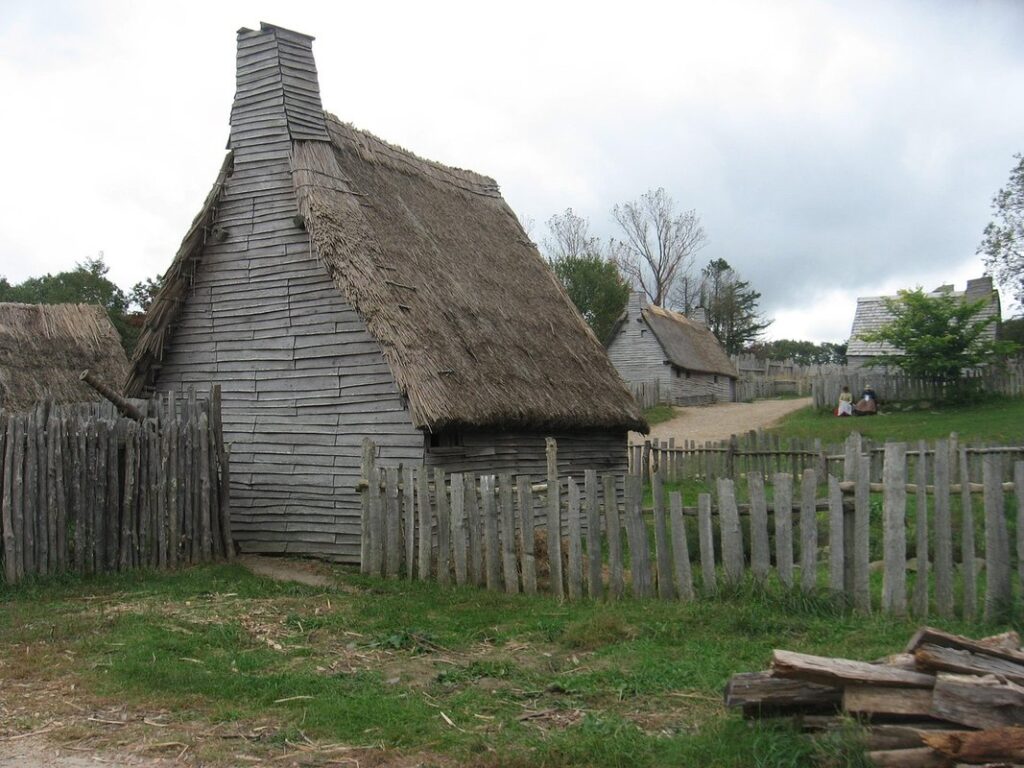
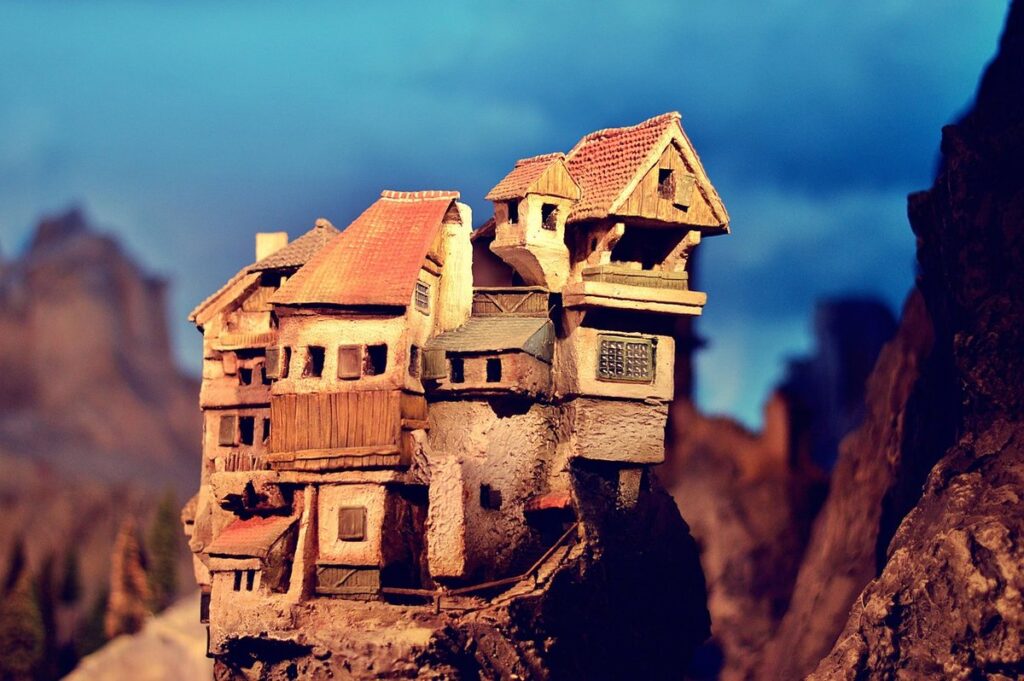
Medieval villages were comprised of a mix of one-room huts and more substantial timber-framed houses. The former, often made from wattle and daub, were typical of peasant dwellings. These simple homes featured a central hearth for cooking and heating, with the living area extending outwards in a series of increasingly cramped rooms. In contrast, wealthier households lived in larger, better-constructed timber-framed houses. These buildings boasted multiple stories, with the ground floor serving as storage space or workshop and the upper floors reserved for the family’s residence.
The design of these homes was shaped by the materials available to builders. Roofing consisted of thatch or wooden shingles, which provided minimal protection against fire. Walls were constructed using a combination of wood, mud, and straw, with some buildings featuring ornate half-timbered facades. Despite their relatively simple construction, many medieval houses stood for centuries, testifying to the resourcefulness of village builders.
In terms of living conditions, homes in medieval villages were often poorly ventilated and prone to dampness. This was particularly true for one-room huts, where smoke from cooking fires frequently filled the air. In contrast, larger timber-framed houses tended to be more spacious and better-ventilated, albeit still subject to the challenges posed by limited sanitation and hygiene practices.
Daily Routines and Meals in a Medieval Village
Villagers typically rose before dawn to start their day. They would have had a simple breakfast of bread, cheese, and ale, washed down with water from a nearby well. Cooking methods were often labor-intensive, involving open fires or hearths fueled by wood or charcoal. Meat was a luxury reserved for special occasions, while vegetables, fruits, and grains made up the bulk of their diet.
Most villagers would have spent their days working in the fields, tending to crops such as wheat, barley, and oats. They might also have worked in nearby forests gathering firewood or hunting small game. After a long day’s work, they would return home to a simple meal of stew made from vegetables and grains, sometimes accompanied by bread.
Food sources were limited, and villagers had to rely on what was available locally. In the summer months, they might enjoy fresh fruits and vegetables, while in winter, they relied on stored produce and dried meats. Social interactions played an important role in daily routines, with mealtimes often being a communal affair where families and neighbors would gather together. Villagers also took time to pray and attend church services, which were held at the local parish church.
Governance and Politics in a Medieval Village
In a medieval village, governance and politics were deeply intertwined with daily life, shaping everything from who held power to how disputes were settled. Let’s take a closer look at this complex system.
The Role of Local Government and Administration
Medieval villages were governed by a complex system of local officials and councils. At the core of village administration was the manor court, presided over by the lord of the manor or his appointed steward. This court handled matters such as dispute resolution, taxation, and law enforcement. Below the manor court lay the village council, composed of local leaders elected by their peers. The council oversaw the day-to-day management of village affairs, including road maintenance, water supply, and communal activities.
The relationship between the village and the central government was also crucial. Medieval villages were subject to the authority of a higher lord or king, who could impose taxes, laws, and regulations on the village. In return, villagers provided military service, labor, and other forms of support. Effective governance in medieval villages often relied on the ability of local officials to balance the interests of their lords with the needs of their communities.
In practice, this meant that villagers had a degree of autonomy to manage their own affairs while still being accountable to higher authorities.
Conflict Resolution and Law Enforcement in a Medieval Village
In a medieval village, disputes and conflicts were often resolved through a combination of community mediation, law enforcement, and formal courts. The village’s local government, typically made up of wealthy landowners or members of the clergy, played a significant role in maintaining order and resolving disputes.
When a conflict arose, villagers would often attempt to resolve it through negotiation and mediation, with the assistance of respected elders or community leaders. If negotiations failed, the case might be referred to the village’s court system, which was typically made up of local judges or magistrates.
The role of law enforcement in medieval villages was relatively limited, as there were no professional police forces as we know them today. Instead, village constables or watchmen were responsible for maintaining order and responding to minor crimes such as theft or vandalism. More serious crimes, like assault or homicide, would be dealt with by the formal court system.
In cases of serious crime, punishments could range from fines to imprisonment, although these were relatively rare. For example, a person convicted of theft might be required to pay a fine or perform community service, while someone guilty of a more serious offense might face corporal punishment or even banishment from the village.
Culture and Entertainment in a Medieval Village
Life in a medieval village wasn’t just about hard work, it was also about communal celebrations and entertainment. We’ll look at how villagers passed their leisure time through music, dance, and storytelling.
Arts and Crafts in a Medieval Village
In a medieval village, arts and crafts were an integral part of daily life. Music played a significant role, with minstrels traveling from village to village sharing stories and entertaining crowds through song and dance. Local musicians would often accompany them on instruments such as the lute or harp.
Literature was also highly valued, with many villagers being literate and able to read and write in Latin. This was largely due to the influence of monasteries, which served as centers of learning and cultural development. Many famous works of medieval literature were born in these villages, including epic poems like Beowulf.
Visual arts thrived in medieval villages, with skilled artisans creating intricate stone carvings, stained glass windows, and illuminated manuscripts. These artworks often depicted scenes from the Bible or Christian mythology, reflecting the dominant faith of the time. Local artists also produced pottery, weaving, and other crafts that adorned village homes and churches.
Festivals, Celebrations, and Social Events in a Medieval Village
Medieval villagers marked important life events and seasonal changes with festivals, celebrations, and social gatherings. For instance, May Day (May 1st) was a time for spring festivities, while midsummer (St. John’s Eve) celebrated the longest day of the year. Harvest festivals like Lammas were opportunities to give thanks for the season’s bounty.
The village calendar also featured saints’ days, which honored local patron saints and often included feasting, music, and games. These events fostered community spirit and reinforced social bonds. The village church played a central role in planning and hosting these celebrations, with priests leading processions, delivering sermons, and blessing the festivities.
Some festivals were tied to agricultural cycles, while others commemorated significant historical events or mythological figures. For example, the festival of St. George (April 23rd) honored England’s patron saint and featured dragon-themed decorations, music, and dancing. Medieval villagers also observed Christmas with a mix of local traditions and Christian practices.
These celebrations often had practical purposes as well, such as bringing in harvests or warding off evil spirits. By participating in these events, villagers contributed to the communal well-being and strengthened social ties within their community.
The Impact of Medieval Villages on Modern Society
Medieval villages played a significant role in shaping modern society, and understanding their impact can help us appreciate our own communities today. Their influence is still felt in architecture, governance, and social structures that we take for granted.
Legacy of Medieval Villages in Contemporary Times
Medieval villages have left an indelible mark on modern society. One of the most striking legacies is their architectural influence. Many contemporary towns and cities still boast buildings with half-timbered facades, steeply pitched roofs, and winding streets reminiscent of medieval village designs. The use of local materials such as stone, brick, and thatch, which was prevalent in medieval villages, continues to shape modern architecture.
In addition to their physical presence, medieval villages have also contributed to the development of community structures that remain relevant today. The concept of a village green or common area, where residents gather for social events and celebrations, is still practiced in many towns and cities worldwide. Similarly, the emphasis on local governance and self-sufficiency that characterized medieval villages has inspired modern urban planning initiatives focused on community engagement and participatory democracy.
Cultural traditions also continue to draw from medieval village influences. Folk festivals and celebrations, such as Renaissance fairs and harvest festivals, often incorporate elements of medieval culture, including music, dance, and artisanal crafts. By acknowledging and honoring these legacies, we can appreciate the ongoing impact of medieval villages on modern society and continue to build on their rich cultural heritage.
Conclusion: Preserving the History of Medieval Villages
Preserving the history and culture of medieval villages is crucial for understanding our shared heritage. As we’ve explored the intricacies of life in these ancient settlements, it’s clear that their legacy extends far beyond their physical remains. The traditions, social structures, and economic systems developed in medieval villages continue to influence contemporary society.
Efforts to preserve medieval villages often focus on tangible aspects like architecture and artifacts. However, preserving the intangible aspects – such as oral histories, myths, and legends – is equally important for a comprehensive understanding of village life. This can be achieved through community-led initiatives, collaborations with local historians and archaeologists, or even digitization projects.
To ensure the long-term preservation of medieval villages, it’s essential to involve local communities in the process. This not only helps to maintain cultural sensitivity but also fosters a sense of ownership and responsibility among residents. By empowering local stakeholders to take an active role in preserving their heritage, we can guarantee that these historic sites remain relevant and meaningful for generations to come.
By prioritizing preservation efforts, we can safeguard the history and culture of medieval villages for future generations, allowing us to continue learning from and appreciating the intricacies of life in these ancient communities.
Frequently Asked Questions
How to Apply Medieval Village Principles to Modern Community Development
When trying to replicate the sense of community and cooperation found in medieval villages, what specific strategies can be implemented in modern urban planning? Answer: By incorporating elements such as public spaces, shared resources, and participatory governance, communities can foster a stronger sense of connection among residents. This approach encourages collaboration and mutual support, similar to the social structures of medieval villages.
What if My Medieval Village Reconstruction Project Fails to Attract Visitors?
If a reconstruction project aiming to recreate a medieval village fails to attract visitors, what are some potential reasons for this lack of interest? Answer: There could be several factors at play, including poor marketing strategies, inadequate historical accuracy, or insufficient amenities. To rectify the situation, it’s essential to engage with local historians and experts to ensure authenticity and offer engaging experiences that cater to diverse interests.
Can I Use Medieval Village Architecture as Inspiration for Modern Buildings?
Yes, medieval village architecture can be a rich source of inspiration for modern buildings, particularly in terms of sustainable design and community-focused layouts. Answer: By incorporating elements such as natural materials, passive solar design, and open spaces, architects can create structures that not only pay homage to the past but also meet contemporary needs for energy efficiency and social interaction.
How Do I Balance Historical Accuracy with Modern Safety Standards in a Medieval Village Setting?
When recreating a medieval village environment while adhering to modern safety standards, what compromises are necessary or possible? Answer: By prioritizing education and awareness, visitors can understand the historical context of hazardous conditions and appreciate the sacrifices made by villagers. This approach enables both authenticity and protection from harm.
What if I’m Not an Historian; Can I Still Contribute to Preserving Medieval Village History?
Absolutely, there are many ways to contribute to preserving medieval village history beyond academic expertise. Answer: Volunteers can participate in archaeological digs, assist with museum curation, or help with educational programs that share the significance of these villages with a broader audience.