Greek cuisine is often synonymous with warm hospitality and vibrant flavors. Traditional Greek food has been a cornerstone of Mediterranean culture for centuries, reflecting the country’s rich history and regional diversity. From the meze-style appetizers that fill tavernas across Greece to the beloved main course favorites like moussaka and souvlaki, there’s no denying the allure of authentic Greek cuisine. But what makes traditional Greek food so special? For one, it’s deeply rooted in the country’s cultural heritage, with each region boasting its own unique specialties and twists on classic dishes. In this article, we’ll take a closer look at the history, regional specialties, and modern twists of traditional Greek cuisine, including expert tips and recipes to help you bring these flavors home. By the time you finish reading, you’ll be able to create delicious, authentic Greek meals that showcase the country’s culinary spirit.
History and Cultural Significance
Greek cuisine has a rich history that spans thousands of years, shaped by the country’s strategic location at the crossroads of Europe, Asia, and Africa. Let’s take a closer look at how this heritage influences traditional Greek dishes today.
The Origins of Greek Cuisine
Greek cuisine’s roots are deeply intertwined with the Mediterranean diet and the influence of ancient civilizations. The country’s unique geography, with its lush mountains and fertile valleys, has long made it an ideal place for growing a wide variety of fresh produce, including olives, grapes, and citrus fruits. These ingredients have been staples in Greek cooking since antiquity.
The ancient Greeks’ love for simplicity and freshness is evident in their approach to food. They believed in eating seasonal, locally sourced ingredients, which not only made sense from an economic standpoint but also ensured that the food was at its best flavor and nutritional value. This emphasis on fresh produce and whole foods has continued to shape Greek cuisine over the centuries.
The Romans, who conquered Greece in 146 BCE, had a significant impact on the country’s culinary traditions as well. They introduced new ingredients, such as garlic and oregano, which became integral components of Greek cooking. The Roman influence can still be seen in many traditional Greek dishes, including stews and braises that were popularized by the Romans. By understanding the historical roots of Greek cuisine, you can gain a deeper appreciation for the country’s culinary traditions and make informed decisions when exploring its rich gastronomic heritage.
Regional Variations and Traditions
Greece’s culinary landscape is rich and diverse, reflecting the country’s regional variations and traditions. While traditional Greek cuisine has its core elements, each region boasts its own unique specialties and twists on classic dishes. For instance, Cretan cuisine stands out for its use of olive oil, herbs, and wild greens, which are staples in the island’s traditional recipes.
In contrast, Aegean cuisine is known for its seafood-based dishes, such as grilled octopus and fresh fish stews. The Ionian islands, located on the west coast, offer a blend of Greek and Italian influences in their culinary traditions. Their dishes often feature pasta, tomato sauce, and local vegetables like eggplant and zucchini.
When exploring traditional Greek cuisine, it’s essential to acknowledge these regional differences. By doing so, you can gain a deeper understanding of the country’s rich gastronomic heritage. For example, if you’re visiting Crete, try indulging in their famous sweet dishes like galaktoboureko or karidopita. Alternatively, when dining on an island in the Aegean, don’t miss out on the opportunity to taste fresh seafood at a local taverna.
To truly experience the diversity of traditional Greek cuisine, venture beyond Athens and explore the various regional specialties. Each region offers a unique flavor profile that reflects its history, geography, and cultural influences.
Staples and Ingredients
When cooking traditional Greek cuisine, you’ll need to stock up on essential ingredients that are staples in most Greek kitchens. These include staple items like extra virgin olive oil, lemons, garlic, and fresh herbs.
Fresh Produce and Herbs
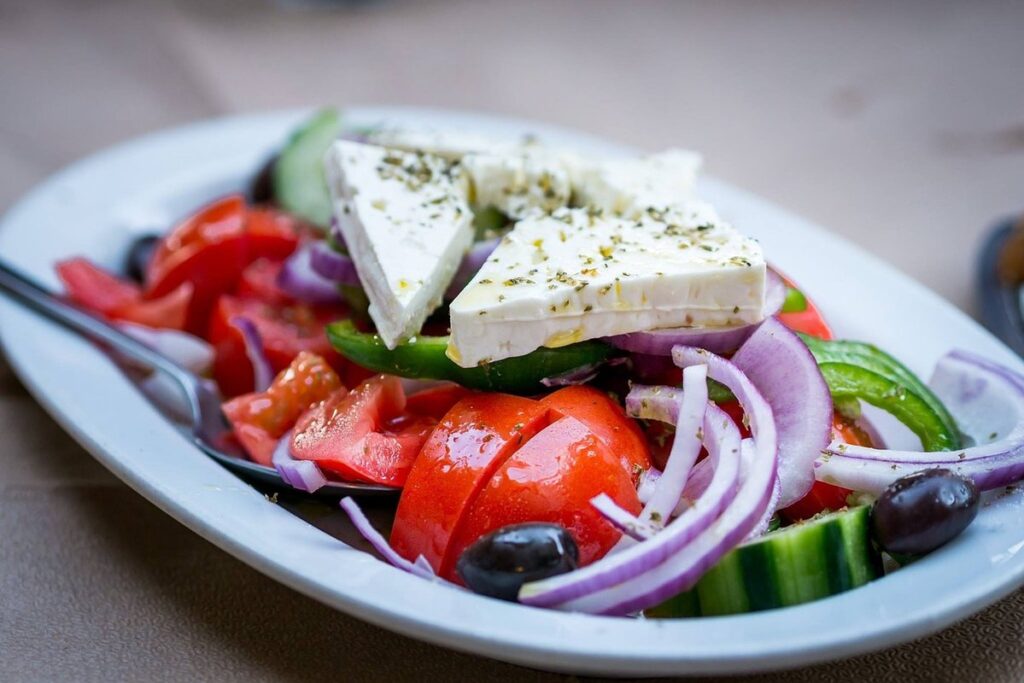
Tomatoes are a staple ingredient in traditional Greek cuisine. They’re often used in salads like the classic Greek salad, which typically includes tomatoes, cucumbers, red onion, feta cheese, olives, and oregano. Cucumbers are another essential component of Greek cooking, frequently sliced or diced and added to salads, sandwiches, and dips.
Fresh herbs like oregano, parsley, and dill are also widely used in Greek recipes. Oregano is particularly iconic in Greek cuisine, often sprinkled on top of tomato-based dishes like moussaka and stefado (beef stew). Feta cheese pairs well with these herbs and is commonly crumbled over salads or served as a topping for bread.
Olives are another fundamental ingredient in traditional Greek cooking. Green and black olives are both used, often served as an appetizer or added to salads. In addition to their flavor, olives also provide a source of healthy fats and antioxidants. These ingredients can be found year-round at most Greek markets or supermarkets, but peak season for many produce items is typically between April and October.
Some popular ways to use these ingredients include:
• Adding fresh tomatoes to a simple salad with feta cheese, oregano, and olives
• Using cucumbers in refreshing tzatziki sauce made with yogurt, garlic, and dill
• Sprinkling oregano over grilled meats or vegetables for added flavor
Grains and Legumes
Whole grains like wheat, barley, and rice are staples in traditional Greek cuisine. They provide a rich source of fiber, vitamins, and minerals, making them an essential component of a balanced diet. In Greece, bread is not just a side dish but often the main staple, with whole grain varieties like barley bread and rye bread being particularly popular. These grains are also used to make traditional dishes such as pastitsio, a pasta bake made with ground beef and topped with a béchamel sauce and a layer of grated kefalograviera cheese.
Legumes like chickpeas, lentils, and fava beans are also widely consumed in Greece. They’re rich in protein, fiber, and other essential nutrients, making them an excellent source of plant-based protein. Fava beans, for example, are often served as a dip or puree, while chickpeas are commonly used in salads like the classic Greek salad. Lentils are used to make traditional dishes such as lentil soup and stews.
When shopping for whole grains and legumes, look for products that are labeled as “stone-ground” or “unprocessed,” as these will retain more of their nutritional value. You can also try substituting refined grains with whole grain varieties in your favorite recipes.
Traditional Dishes and Recipes
Get ready to indulge in classic Greek cuisine, as we explore some of the country’s most beloved traditional dishes, such as moussaka and souvlaki. These hearty recipes have been passed down through generations.
Meze-Style Appetizers
Meze-style appetizers are an integral part of traditional Greek cuisine, often served before main courses to whet the appetite and set the tone for a leisurely meal. Among the most popular options is grilled octopus, typically prepared with a squeeze of lemon juice and a sprinkle of oregano to bring out its tender texture.
Dolmades, stuffed grape leaves filled with a mixture of rice, herbs, and spices, are another classic meze choice. Their delicate flavor and crunchy texture make them an ideal accompaniment to a refreshing ouzo or retsina. Spanakopita, spinach and feta pastry triangles, offer a rich and savory contrast to the lighter dolmades.
Hummus, while not exclusively Greek in origin, is often served as a meze-style dip in traditional Greek tavernas. Made from chickpeas, tahini, garlic, and lemon juice, it provides a creamy and nutritious base for pita bread or crudités. For those looking to create their own meze platter at home, consider combining these options with a selection of olives, feta cheese, and sun-dried tomatoes for a taste of authentic Greece.
Main Course Favorites
Moussaka, a layered dish of eggplant, minced meat, and béchamel sauce, is a quintessential Greek main course. Its origins date back to the Ottoman Empire, where a similar dish called “musakka” was popularized. In Greece, moussaka has become an iconic representation of traditional cuisine. Another beloved dish is souvlaki, skewers of marinated meat (usually pork or chicken) grilled to perfection.
Gyro, a classic street food, consists of thinly sliced meat stacked on a vertical spit and served in a warm pita with tomato, onion, cucumber, and tzatziki sauce. The Greek salad, a staple at tavernas and restaurants alike, is a simple yet flavorful combination of tomatoes, cucumbers, red onions, feta cheese, olives, and capers, dressed with olive oil and lemon juice.
Lemon chicken, stifado (a hearty beef stew), and baked lamb with potatoes are also popular main courses. The key to preparing these dishes lies in balancing the rich flavors of meat, herbs, and spices with the brightness of citrus and the acidity of tomatoes. By following traditional recipes and using high-quality ingredients, home cooks can create authentic Greek meals that transport their taste buds to the Mediterranean coast.
Regional Specialties
From souvlaki to moussaka, each region of Greece has its own unique twist on traditional dishes. We’ll take a culinary tour through the country’s diverse specialties.
Cretan Cuisine
Crete’s rich culinary heritage is a testament to the island’s strategic location and cultural exchange throughout history. The unique blend of Mediterranean flavors, Greek traditions, and foreign influences can be seen in popular dishes such as kalitsounia (Cretan pastries), typically enjoyed as a sweet treat or dessert. These flaky pastry pockets are often filled with honey, nuts, or cheese, offering a delicious glimpse into Crete’s sweet tooth.
Another notable example of Cretan cuisine is snails cooked in a rich white sauce, which showcases the island’s affinity for seafood and local produce. This comforting dish is a staple on many taverna menus, particularly during peak season. For a taste of something truly authentic, try making atherinopita (fish pie) at home – this classic Cretan recipe combines flaky phyllo with tender fish, onions, and herbs.
To fully appreciate Crete’s culinary traditions, it’s essential to incorporate local ingredients into your cooking. Fresh vegetables like eggplant and tomatoes are staples in many Cretan recipes, while the island’s renowned olive oil adds depth and richness to various dishes. By experimenting with these ingredients and traditional recipes, you can experience the genuine flavors of Crete’s cuisine firsthand.
Aegean Islands’ Dishes
The Aegean Islands, a treasure trove of traditional Greek cuisine, boast an array of mouth-watering specialties. Mykonos is famous for its crispy fried calamari, typically served as a meze to accompany ouzo or other spirits. The island’s seafood-rich waters provide the perfect catch for this popular appetizer.
On Santorini, the caper salad takes center stage. This refreshing dish combines the pungent flavor of capers with juicy tomatoes and crunchy red onion, all tied together with a drizzle of extra-virgin olive oil. A true taste of the Aegean, it’s often served as an accompaniment to grilled meats or fish.
In Paros, fava bean puree is a beloved specialty. Made from split broad beans, this creamy spread is typically served as a starter or side dish. Rich in protein and fiber, it provides sustenance for island workers and visitors alike. A small minority of recipes also include a splash of lemon juice to enhance the flavor.
Fried calamari, caper salad, and fava bean puree showcase the diversity and richness of Aegean cuisine. These dishes can be easily recreated at home by using fresh ingredients and following traditional techniques.
Modern Twists and Fusion Cuisine
As we explore traditional Greek cuisine, it’s fascinating to see how modern chefs are experimenting with innovative twists on classic dishes. From souvlaki tacos to moussaka-stuffed eggplant parmesan, fusion cuisine is adding a fresh spin to timeless favorites.
Innovative Greek Chefs and Restaurants
Greek cuisine has long been associated with rich flavors and aromas, but some innovative chefs are now experimenting with new ingredients and techniques to create unique fusion dishes. Restaurants like Varoulko Seaside in Athens and Ouzeri tou Laki in Mykonos have made a name for themselves by incorporating international flavors into traditional Greek recipes.
One notable example is the use of Japanese-inspired elements in Greek cuisine, as seen at restaurants such as Matsuhisa Athens. Chefs are combining sushi-grade tuna with classic Greek ingredients like feta and olives to create dishes like “sushi souvlaki.” Other chefs are experimenting with Korean chili flakes, known as gochugaru, to add a bold kick to traditional Greek stews.
Some examples of innovative Greek chefs include Giorgos Stylianoudakis, who has created modern twists on classic meze dishes at his restaurant in Athens. Others, like Christina Mouratoglou, have introduced international flavors into their recipes while still maintaining the essence of traditional Greek cuisine. These chefs are not only pushing the boundaries of what is considered “traditional” but also contributing to the evolution of Greek cuisine.
Experimenting with Traditional Ingredients
Greek cooks are pushing the boundaries of traditional cuisine by reimagining classic ingredients in creative ways. For instance, some chefs have started using ingredients like honey and walnuts in desserts, such as galaktoboureko-inspired cheesecakes or walnut-honey baklava. Others are experimenting with international spices to add new depth to familiar dishes.
Consider the humble eggplant, a staple in Greek cuisine. By adding Middle Eastern-style sumac or Indian garam masala, cooks can transform moussaka into a global fusion dish. Similarly, traditional Greek herbs like oregano and thyme can be blended with Asian ginger or lemongrass to create unique marinades for grilled meats.
When experimenting with traditional ingredients in new ways, it’s essential to balance flavors and textures carefully. A small amount of international spice can elevate a dish without overpowering its Greek heritage. To get started, try substituting one or two key ingredients in your favorite recipes with alternative spices or herbs from around the world. You might be surprised at how these global influences enhance the authentic taste of traditional Greek food.
Conclusion
As we come to the end of our journey through traditional Greek cuisine, let’s summarize the key takeaways from your exploration. You’ve learned about the rich flavors and ingredients that make Greek food so unique.
Recap of Key Takeaways
Greek cuisine’s rich history and cultural significance are rooted in its ability to adapt and evolve over time. Traditional Greek food is characterized by a focus on fresh produce and herbs, with a emphasis on simplicity and letting ingredients shine.
Regional variations have created unique dishes and traditions across the country. Cretan cuisine, for example, features a higher proportion of dairy products due to the island’s extensive cattle-raising industry. Meanwhile, the Aegean Islands are known for their seafood-rich diet and Mediterranean staples like feta cheese.
Meze-style appetizers often take center stage in traditional Greek meals. Favorites include melitzanosalata (eggplant salad), tomato keftedes (tomato fritters), and grilled octopus. Main course favorites include moussaka, souvlaki, and stews made with tougher cuts of meat like lamb or beef.
When experimenting with traditional ingredients, consider incorporating fresh produce, herbs, and cheeses into your dishes. For example, combine feta with juicy tomatoes and a drizzle of olive oil for a simple yet satisfying salad. Alternatively, try using Greek spices like oregano and thyme to add depth to soups, stews, or roasted meats.
Innovative chefs have found ways to update traditional Greek cuisine without compromising its essence. Look for restaurants that incorporate locally sourced ingredients into their menus. Some popular techniques include pickling vegetables, smoking meats, or using traditional cooking methods like grilling and roasting.
Some of the most important takeaways from this comprehensive guide are the importance of simplicity in traditional Greek cuisine, the role of regional variations in shaping unique dishes and traditions, and the value of incorporating fresh produce, herbs, and cheeses into your meals. By embracing these core principles, you can create delicious and authentic Greek dishes that showcase the country’s rich culinary heritage.
Frequently Asked Questions
How Can I Apply Traditional Greek Cuisine to My Modern Diet?
Traditional Greek food is renowned for its emphasis on fresh produce, whole grains, and healthy fats. To incorporate these elements into your modern diet, start by substituting refined sugars with naturally sweet ingredients like honey or fruit, and opt for olive oil as your primary cooking medium. Experiment with traditional Greek recipes that feature vegetables as the main ingredient, such as stews and braises.
What If I’m New to Cooking and Want to Start With Simple Traditional Greek Dishes?
Begin by mastering basic techniques like grilling octopus, which is a fundamental skill in any Greek kitchen. Practice making simple meze-style appetizers like hummus or tabbouleh, and gradually work your way up to more complex dishes like moussaka or souvlaki. Don’t be afraid to experiment with different ingredients and flavor combinations to make the recipes your own.
Can I Make Traditional Greek Food Without Access to Specialized Ingredients Like Feta Cheese?
While feta is a staple in many traditional Greek dishes, it’s not essential for all of them. Feel free to substitute feta with other cheeses like ricotta or goat cheese if you can’t find it in stores. Additionally, consider using vegan alternatives to cheese, such as tofu or nutritional yeast, to create plant-based versions of your favorite Greek recipes.
How Can I Adapt Traditional Greek Recipes to Suit My Family’s Dietary Restrictions?
Greek cuisine offers a wide range of options for those with dietary restrictions. To accommodate gluten-free diets, try substituting traditional wheat pasta with rice or quinoa alternatives in dishes like pastitsio or spanakopita. For vegetarian or vegan families, experiment with plant-based versions of classic Greek recipes by swapping out meat for tofu, tempeh, or seitan.
What If I Want to Learn More About Traditional Greek Food but Don’t Know Where to Start?
Start by exploring the various regions of Greece and their unique culinary traditions. Experiment with cooking techniques like grilling and roasting, which are fundamental in traditional Greek cuisine. Watch cooking videos and attend workshops or classes to learn from experienced chefs and home cooks who specialize in traditional Greek food.