Swiss cuisine is a treasure trove of delicious and hearty dishes that have been passed down through generations. One of the most iconic Swiss traditions is fondue, a dish made from melted cheese served with bread for dipping. But there’s more to Swiss food than just fondue – regional specialties like raclette, which originated in the Valais region, offer a glimpse into the country’s rich culinary heritage. As you explore the world of traditional Swiss dishes, you’ll also discover that there are plenty of vegetarian options and classic desserts to satisfy any sweet tooth. In this comprehensive guide to Swiss cuisine, we’ll take you on a journey through the different regions and show you how to make some of these beloved dishes at home. By the end of this article, you’ll be well-versed in the art of preparing authentic Swiss meals and ready to impress your friends with new recipes.
Introduction to Swiss Cuisine
Swiss cuisine is a unique blend of French, German, and Italian flavors, shaped by the country’s mountainous terrain and rich cultural heritage. Let’s start with the basics of this delicious culinary landscape.
The Influence of Geography and Culture on Swiss Food
Switzerland’s unique geography has played a significant role in shaping its cuisine. The country’s mountainous terrain and varying climate have led to a focus on local ingredients and self-sufficiency. Traditional farming practices, such as Alpine-style cheese production, are still employed today. European influences can be seen in Swiss cuisine, particularly from neighboring France and Italy.
The country’s cultural heritage has also had an impact on its food. Switzerland’s history of being a crossroads for various cultures has led to the incorporation of international flavors and techniques. This blend of European traditions is evident in dishes like fondue, which combines French and German influences with local ingredients. The Swiss emphasis on quality over quantity is reflected in their cuisine, where rich flavors and hearty portions are prioritized.
In practical terms, this means that many traditional Swiss dishes make use of locally sourced ingredients, such as fresh game meats, wild mushrooms, and herbs. The country’s dairy industry is also renowned for its high-quality cheese and milk products. Understanding the influence of geography and culture on Swiss food can help you appreciate the nuances and variety within this unique culinary tradition.
Key Ingredients in Swiss Cooking
Swiss cuisine relies heavily on a few staple ingredients that have become iconic to its cooking. Cheese, particularly Emmental and Gruyère, is a fundamental component of many Swiss dishes, including fondue, raclette, and croquettes. These rich, creamy cheeses add depth and flavor to both simple and complex recipes.
Meat also plays a significant role in Swiss cooking, with pork and beef being the most commonly used meats. Pork sausages, such as cervelat, are often served at social gatherings and celebrations. Beef is typically grilled or roasted and paired with vegetables like potatoes and cabbage.
Speaking of which, potatoes and cabbage are two of the most widely used vegetables in Swiss cuisine. Mashed potatoes (Kartoffeln) are a staple side dish, while sauerkraut (Sauerkraut) is often served alongside meat dishes for its tangy flavor. The combination of cheese, meat, and root vegetables creates hearty, comforting meals that reflect the country’s Alpine heritage.
In Swiss cooking, these ingredients are not just limited to specific dishes; they’re often combined in various ways to create new recipes. For example, potatoes and cabbage can be used to make a creamy potato and sauerkraut soup (Topfensalat).
Classic Swiss Dishes for Beginners
Whether you’re a seasoned chef or just starting out, getting familiar with classic Swiss dishes is easier than you think. This guide introduces you to some of Switzerland’s most beloved recipes, perfect for beginners.
Fondue: A Symbol of Swiss Hospitality
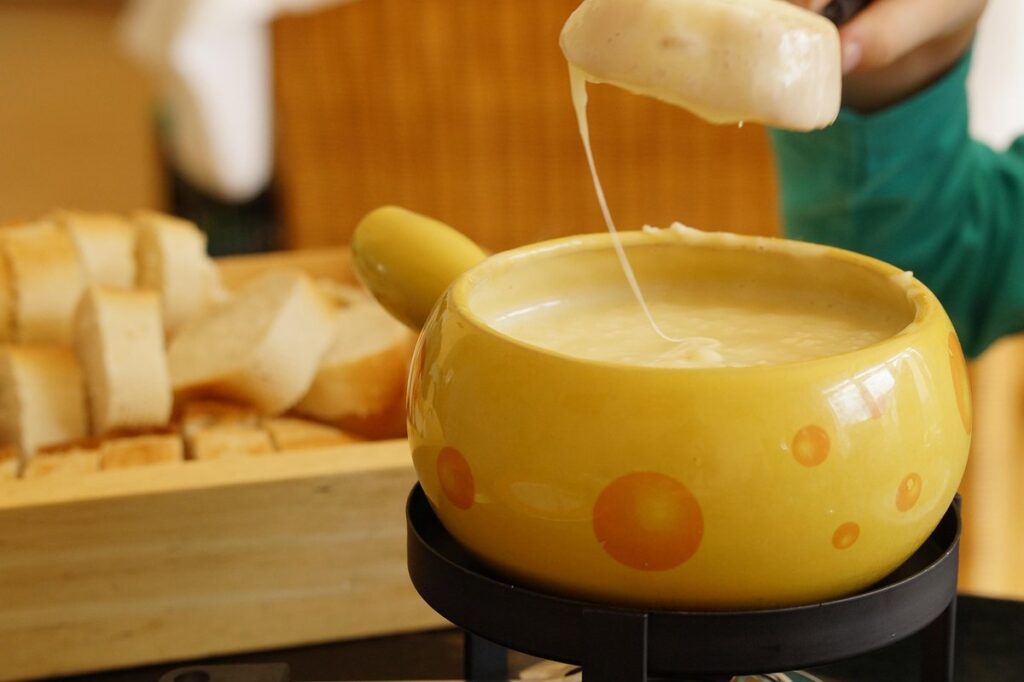
Fondue has a long history in Switzerland, dating back to the 13th century when it was served as a peasant dish made from melted cheese and bread. Over time, fondue evolved into a staple of Swiss cuisine, particularly during the winter months when people would gather around a pot of warm, cheesy goodness. The traditional recipe involves heating wine and Käse Fondue mix (a blend of Emmental and Gruyère cheese) in a ceramic or enameled cast-iron pot called a fondue set.
To prepare fondue, you’ll need to carefully heat the mixture over low heat, stirring constantly, until it reaches a smooth, creamy consistency. Once ready, diners typically dip small pieces of bread (such as baguette slices) into the pot and enjoy the melted cheese. In Switzerland, fondue is often served with accompaniments like cherry tomatoes, charcuterie, or pickled onions to add flavor and texture.
When enjoying fondue in Switzerland, you’ll notice that it’s typically a social affair – people gather around the table, share stories, and savor the experience of dipping bread into the warm cheese. This communal aspect is an integral part of Swiss hospitality, making fondue a beloved tradition throughout the country.
Raclette: A Melting Pot of Flavors
Raclette is a beloved Swiss dish that has been melting hearts and taste buds for centuries. This popular culinary delight involves heating a wheel of raclette cheese until it’s molten, then scraping the melted goodness onto boiled potatoes, crusty bread, and cured meats like ham or sausage. The rich, creamy texture and nutty flavor of raclette are perfectly complemented by its accompaniments.
There are several types of raclette to try, each with its own regional twist. Classic raclette is a staple in most Swiss restaurants, while raclette avec jambon (with ham) is a specialty from the Jura region. For a more indulgent experience, look for raclette avec saucisson (with sausage), which adds an extra layer of flavor to this already-rich dish.
When enjoying raclette, be sure to try it with some boiled potatoes and a crusty bread roll on the side. This allows you to create the perfect balance of flavors in each bite. Some restaurants also offer additional toppings, such as pickled onions or fresh herbs, which can add an extra layer of depth to your raclette experience.
For those looking to try raclette at home, many supermarkets now carry pre-wrapped raclette cheese wheels that are easy to find and reheat. With a few simple ingredients and some basic cooking skills, you can create this delicious Swiss dish in the comfort of your own kitchen.
Regional Specialties: Dishes from Different Parts of Switzerland
From Basel to Bern, and from Zurich to Zermatt, each region in Switzerland boasts its own unique culinary identity, shaped by local ingredients and traditions.
We’ll take a closer look at some of these regional specialties, highlighting the flavors and dishes that make each area truly special.
Bernese Cuisine: Hearty Dishes from the Heartland
Bernese Cuisine is a true reflection of the region’s rich history and agricultural heritage. Traditional dishes like Zürigeschnätzlets showcase the influence of Swiss-German cuisine on Bernese cooking. This iconic veal dish is typically served with a creamy mushroom sauce, which highlights the abundance of fresh mushrooms found in the surrounding mountains.
Another classic dish from the heartland is Älplermagronen, a hearty alpine macaroni made with apples and onions. This comforting bowl of goodness warms the soul on chilly mountain evenings. The combination of sweet and savory flavors is quintessential Bernese cuisine.
Birchermüesli, a cold cereal dish made from rolled oats, fruit, and nuts, may seem like an unlikely candidate for this list. However, its origins date back to Dr. Maximilian Oskar Bircher-Benner’s health-focused culinary approach in the late 19th century. This wholesome breakfast dish is still popular among locals today.
These iconic dishes are a testament to the region’s love for hearty, comforting food made with local ingredients. Bernese cuisine may not be as well-known internationally as some of Switzerland’s other specialties, but it has a unique charm that’s definitely worth exploring.
Swiss-German Cuisine: Hearty Meat Dishes
In Switzerland’s German-speaking regions, you’ll find a rich culinary heritage centered around hearty meat dishes. Zürigeschnätzlets is one such iconic dish, originating from Zurich and consisting of thinly sliced veal sautéed in a creamy mushroom sauce and served with a side of potatoes or noodles. Älplermagronen, a traditional Bernese dish, is another example of Switzerland’s love for comforting meat-based meals. This hearty pasta bake combines macaroni, cheese, onions, and cured beef.
Birchermüesli, a more unusual name in the context of Swiss-German cuisine, is actually a popular breakfast or snack option made from rolled oats, fruit, and nuts. While not strictly a meat dish, its presence highlights the country’s emphasis on using local ingredients to create satisfying meals. When exploring Swiss-German cuisine, look for dishes that combine locally sourced meats with creative sauces and accompaniments. For example, try pairing Zürigeschnätzlets with a side of braised red cabbage or boiled potatoes to experience the full flavor profile of this beloved dish.
Vegetarian and Vegan Options in Swiss Cuisine
Switzerland may be a meat-lover’s paradise, but it also offers a surprisingly rich selection of vegetarian and vegan dishes that showcase its culinary diversity. From hearty vegetable stews to innovative plant-based interpretations of Swiss classics.
Plant-Based Alternatives to Classic Dishes
Swiss cuisine is not limited to its rich meat-based dishes. Many classic recipes can be adapted to suit vegetarian and vegan tastes without sacrificing flavor. For instance, a traditional fondue can be made cheese-free by replacing the melted Emmental with a plant-based alternative such as soy or almond cheese. This adaptation still captures the essence of the original dish while catering to dietary restrictions.
In Zurich, you might find restaurants serving veggie burgers made from locally sourced ingredients like mushrooms and spinach. These creative interpretations not only showcase Swiss cuisine’s flexibility but also highlight the region’s commitment to sustainability. To replicate this at home, consider using traditional Swiss herbs like thyme and rosemary in your plant-based recipes for added authenticity.
Some popular meat dishes can be easily adapted by swapping out the protein source with a vegetarian or vegan option. For example, a Zürigeschnätzlets-inspired dish can feature marinated portobello mushrooms instead of veal cutlets. By embracing these creative substitutions, you can enjoy the rich flavors and cultural heritage of Swiss cuisine while adhering to your dietary preferences.
Seasonal Produce: Highlighting the Best of Swiss Ingredients
Swiss cuisine thrives on its seasonal produce, with each time of year bringing a unique selection of fresh ingredients to the table. Spring is renowned for its wild garlic and asparagus, while summer’s warmth brings an abundance of juicy berries, leafy greens, and sweet corn. Autumn’s harvest season delivers apples, pears, and squash, which are often used in hearty soups and stews.
Winter, though cooler, still offers a medley of root vegetables like carrots, parsnips, and turnips, as well as fragrant herbs like rosemary and thyme. These seasonal offerings have a profound impact on menu planning, with chefs carefully selecting the freshest ingredients to create menus that showcase the best of each season.
When cooking with seasonal produce, it’s essential to adapt your techniques to bring out the full flavor potential of these fresh ingredients. For example, roasting is an excellent way to coax sweetness from root vegetables in winter, while grilling brings out the natural sugars in summer’s stone fruits. By embracing the changing seasons and selecting the freshest ingredients available, you can create authentic Swiss dishes that are both delicious and deeply rooted in the country’s culinary traditions.
Desserts and Pastries in Swiss Cuisine
Switzerland is famous for its sweet treats, from creamy chocolate truffles to delicate pastry desserts that are as beautiful as they are delicious.
Traditional Swiss pastries like tirggel and krapfen showcase the country’s rich baking heritage.
Traditional Swiss Sweets: Tarts, Cakes, and Chocolate-Covered Treats
Swiss desserts are a delight to explore, with their rich flavors and traditional ingredients. One classic Swiss sweet is Tirggel, a Christmas cookie made from honey, spices, and almonds. Its unique texture and flavor profile make it a staple during the holiday season. Another popular dessert is Älplermüesli, an alpine oatmeal dish loaded with fresh fruit and nuts. The combination of crunchy oats, juicy berries, and sweet cream creates a satisfying treat that’s both comforting and revitalizing.
Chocolate-covered treats are also a beloved Swiss tradition. Luxemburgerli, for instance, are small chocolate truffles filled with hazelnut or coffee paste. Their rich, velvety texture and deep flavors make them a favorite among locals and visitors alike. When making your own Luxemburgerli, use high-quality dark chocolate and fillings to achieve the perfect balance of sweetness and depth. Experimenting with different flavor combinations will help you create unique variations that showcase Swiss confectionery skills. By indulging in these classic Swiss sweets, you’ll experience a taste of the country’s rich culinary heritage.
Regional Desserts: Specialties from Different Parts of Switzerland
Swiss cuisine is renowned for its rich and varied desserts, each region offering a unique take on traditional sweets. In the eastern cantons of Switzerland, you’ll find the famous Bündner Nusstorte, a nut tart that’s both sweet and savory. Made with honey, walnuts, and Swiss cream, this dense and flavorful pastry is often served at festivals and celebrations.
In the northwest, the Bernese region boasts its own specialty dessert: the Lüügu. This creamy custard tart is made with a flaky crust, topped with a layer of caramelized sugar, and typically served as a special occasion treat. For those who prefer something lighter, the canton of Ticino offers the Tirggel, a thin cookie-like pastry often flavored with vanilla or lemon.
Other regional desserts worth trying include the Basel-based Märtchügelbrot, a sweet bread filled with raisins and nuts, and the Lucerne-style Gugelhupf, a Bundt-shaped cake that’s both moist and fragrant. When exploring Swiss desserts, remember to try local specialties during your travels or look for traditional recipes online to bring a taste of Switzerland into your own kitchen.
Conclusion: Embracing the Flavors of Switzerland
As we conclude our culinary journey through Switzerland, it’s time to reflect on what makes Swiss cuisine so uniquely delicious and worth embracing. From hearty meats to rich cheeses, we’ll summarize our favorite flavors.
Recap of Swiss Cuisine’s Unique Characteristics
Swiss cuisine is characterized by its emphasis on local ingredients, traditional recipes, and hearty portions. This focus on regional specialties is reflected in the country’s many festivals and markets, where visitors can sample a wide range of local delicacies.
One key element defining Swiss cuisine is its reliance on fresh dairy products, particularly cheese and butter. These staples are often used to create rich sauces, creamy soups, and savory main courses. For example, the classic dish Fondue Bourguignonne relies heavily on high-quality Emmental and Gruyère cheeses for its signature flavor.
Another defining feature of Swiss cuisine is its use of traditional recipes passed down through generations. Many classic dishes, such as Raclette and Zürigeschnätzlets, remain largely unchanged from their origins in the 19th century. This commitment to preserving culinary heritage is a testament to the country’s strong cultural identity.
In practical terms, this emphasis on local ingredients and traditional recipes means that Swiss cuisine tends to be rich, comforting, and deeply rooted in its regional context. When exploring Swiss food at home, cooks can try incorporating more local and seasonal ingredients into their recipes to achieve similar results. By embracing these unique characteristics, anyone can experience the authentic flavors of Switzerland from the comfort of their own kitchen.
Suggestions for Exploring Swiss Food in Your Own Kitchen
If you want to bring a taste of Switzerland into your own kitchen, start by experimenting with classic Swiss cheese dishes like fondue and raclette. These rich and flavorful recipes are perfect for dipping bread or vegetables, but can be adapted to suit vegetarian or vegan diets by substituting dairy products with plant-based alternatives.
For a more authentic experience, try making your own Emmental or Gruyère using a traditional recipe that incorporates the country’s prized cow’s milk. This will give you a deeper appreciation for the quality and flavor of Swiss cheese.
Consider exploring regional specialties from different parts of Switzerland to add variety to your meals. For example, Bernese cuisine is known for its hearty meat stews and sausages, while Swiss-German cuisine favors thick-cut meat dishes. You can also try making traditional Swiss desserts like Birchermüesli or Älplermagronen, which typically feature local ingredients such as milk, cream, and fruit.
To truly capture the essence of Swiss cuisine, don’t be afraid to get creative with your recipes and experiment with different combinations of cheese, meat, and produce.
Frequently Asked Questions
Can I make fondue at home without it being too expensive?
Yes, you can make fondue at home without breaking the bank. Focus on using lower-cost alternatives like Vacherin or Sbrinz cheese instead of Emmental or Gruyère. You can also experiment with different wine and oil combinations to find a balance that suits your taste buds.
How do I know when my raclette is perfectly melted, not too runny or too thick?
The perfect raclette should have a smooth, creamy texture that coats the potatoes and bread evenly. To achieve this, aim for a temperature of around 160°F (71°C) and adjust the heat as needed to prevent it from becoming too runny or thick.
Can I adapt my favorite recipes to use Swiss ingredients instead of traditional ones?
Yes, you can definitely experiment with substituting Swiss ingredients in your favorite recipes. For example, try using Gruyère cheese in place of cheddar or Emmental in a fondue recipe. Be mindful of flavor profiles and adjust seasonings accordingly.
What if I’m cooking for a group with varying dietary needs – how do I accommodate their requests?
To cater to different dietary requirements, consider offering a variety of options alongside traditional dishes. For example, you could provide a cheese-free fondue alternative or offer gluten-free bread for those with dietary restrictions. Be open to feedback and willing to adjust your menu accordingly.
How often should I update my pantry with fresh Swiss ingredients to ensure the best flavor in my cooking?
It’s recommended to update your pantry with fresh Swiss ingredients seasonally, as different produce is available during different times of the year. For example, you might stock up on fresh potatoes and cabbage in spring or summer for raclette recipes, while using preserved meats like prosciutto in winter.