Goth subculture has always been shrouded in mystery, with its roots tracing back to the 19th century literary movements. From Edgar Allan Poe’s dark tales to Bram Stoker’s iconic vampire novels, the seeds of goth culture were sown long before it emerged as a distinct subculture in the late 1970s and early 1980s. As we delve into the history of goth, you’ll discover how this fascination with the darker side of life influenced fashion, music, and art, shaping it into what we know today. In this article, we’ll take an in-depth look at the evolution of goth subculture, from its early days as a literary movement to its modern-day online presence. We’ll explore the key figures, trends, and events that have shaped the goth aesthetic over time, examining how it continues to inspire and influence contemporary culture.
Origins and Influences
As we delve into the rich history of goth subculture, it’s essential to explore the pivotal moments that shaped its identity, from eerie 18th-century Romanticism to the post-punk explosion. Let’s examine these foundational influences.
Early Influences: 19th-Century Romanticism and Gothic Literature
In the 19th century, two literary movements laid the groundwork for the gothic subculture: Romanticism and Gothic literature. Romanticism, which emphasized emotion, nature, and the beauty of the darker aspects of life, resonated with those who would later identify as goths. Writers like John Keats and Percy Bysshe Shelley celebrated the mysteries and terrors of life, creating a sense of wonder and awe that would become a hallmark of the goth aesthetic.
Gothic literature, on the other hand, explored the darker corners of human nature, often using supernatural elements to explore themes of death, decay, and the unknown. Works like Mary Shelley’s Frankenstein (1818) and Bram Stoker’s Dracula (1897) not only captivated readers but also influenced the development of early goth fashion and art. The iconic imagery of crumbling castles, dark forests, and eerie landscapes found in these works continues to inspire goths today.
Edgar Allan Poe’s poems and stories, with their haunting atmospheres and exploration of mortality, also played a significant role in shaping the gothic subculture. His influence can be seen in the use of symbolism, particularly death and decay, which is still present in modern goth art and fashion.
Post-War Punks and the Emergence of Goth Rock
As we delve into the origins of goth subculture, it’s essential to examine the pivotal role post-punk bands played in shaping its sound and style. Joy Division, The Cure, and Siouxsie and the Banshees were among the most influential acts of this era, crafting a distinct atmosphere that would later become synonymous with gothic rock.
Joy Division’s bleak, introspective music and poetic lyrics laid the groundwork for the genre’s dark and moody tone. Their influence can be seen in bands like The Cure, who took Joy Division’s atmospheric soundscapes and infused them with more pop-oriented sensibilities. Siouxsie and the Banshees, meanwhile, brought a more avant-garde approach to post-punk, experimenting with dissonant guitar textures and haunting vocal melodies.
Fans of these bands began to adopt elements of goth fashion as well, often incorporating dark colors, fishnet stockings, and heavy eye makeup into their wardrobes. This emerging aesthetic was not only inspired by the music but also reflected a desire for self-expression and rebellion against mainstream culture. As you explore your own connection to goth subculture, consider how these early pioneers paved the way for the eclectic and creative community that exists today.
1970s-1980s Goth Subculture
As we delve into the rich history of goth subculture, let’s explore how it evolved in the late 1970s and 80s, marked by a growing fascination with dark aesthetics. This pivotal era saw the emergence of iconic bands and styles that still influence goths today.
The Birth of Goth Style: Fashion, Makeup, and Hair
As we explore the evolution of goth subculture during the 1970s and 1980s, it’s essential to examine the defining elements that set this era apart. One of the most distinctive aspects of goth style is its dramatic and often unsettling aesthetic.
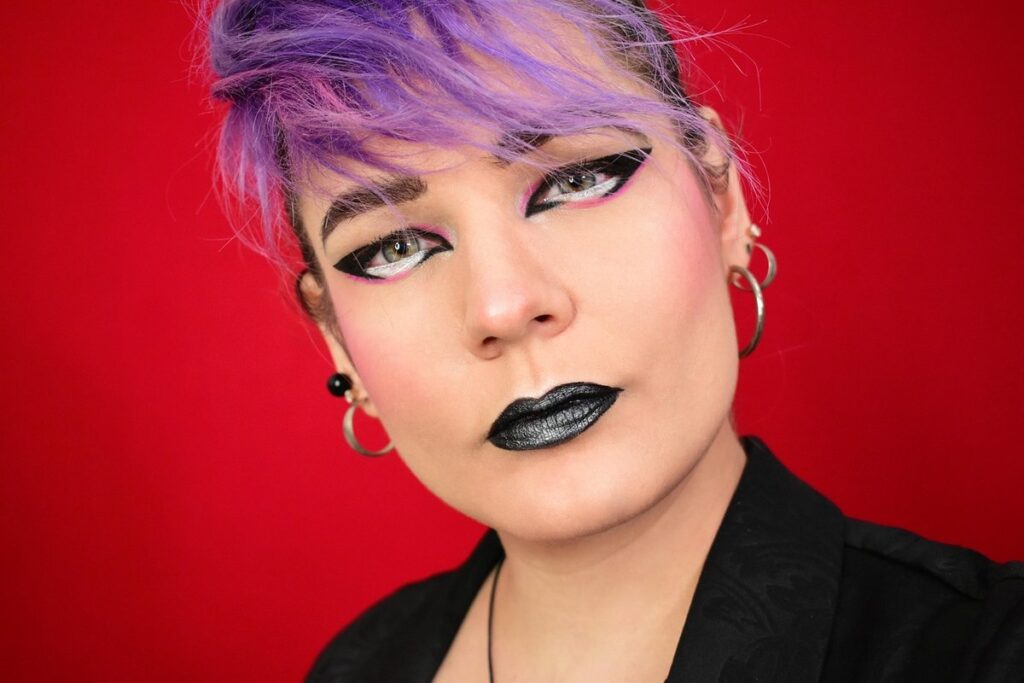
Influenced by Victorian mourning attire, Gothic architecture, and the works of Edgar Allan Poe, goths sought to create a sense of mystery and otherworldliness through their fashion choices. Iconic hairstyles of the time included the “Victorian look,” characterized by long, curly locks and elaborate updos. Makeup techniques also played a significant role in defining goth style, with heavy eyeliner, dark lipstick, and pale foundation being staples of the subculture.
Clothing styles were equally as striking, with fishnet stockings, leather jackets, and tight-fitting dresses dominating the goth wardrobe. These aesthetic choices were not only driven by fashion but also by music. Bands like The Cure, Siouxsie and the Banshees, and Joy Division inspired a generation of young people to express themselves through their appearance.
To create a goth-inspired look today, try experimenting with bold lip colors, statement accessories, and layering dark clothing. Don’t be afraid to mix high-end and thrift store pieces – the key to pulling off this style is confidence and individuality.
Clubs and Communities: The Rise of Goth Venues and Events
As goth subculture continued to grow and evolve in the 1970s and 1980s, its adherents began to crave spaces where they could freely express themselves without fear of judgment or persecution. This desire led to the establishment of iconic clubs like London’s Camden Palace, which became a hub for goths, punks, and other alternative crowds. These clubs provided a safe haven for self-expression, allowing individuals to showcase their unique styles and tastes.
The growth of underground festivals like Whitby Gothic Weekend further solidified this trend. Held in the seaside town of Whitby, this festival drew thousands of goths from across Europe, creating a temporary community where attendees could immerse themselves in music, fashion, and art. Events like these not only celebrated goth aesthetics but also provided a platform for socializing and networking among like-minded individuals.
These gatherings played a crucial role in fostering a sense of belonging among goths, who often felt isolated or marginalized within mainstream society. By creating their own spaces and events, goths could come together, share ideas, and reinforce their collective identity.
1990s-2000s Goth Subculture Evolution
As we delve into the latter half of the century, let’s explore how goth subculture continued to evolve in the 1990s and 2000s, embracing new sounds and aesthetics. Darkwave and industrial influences began to seep into the scene.
Grunge and Industrial Influences: The Blending of Styles
As goth subculture continued to evolve in the 1990s and early 2000s, it began to intersect with other musical genres like grunge and industrial. Bands such as Nine Inch Nails and Marilyn Manson emerged, incorporating elements of dark aesthetics and introspective lyrics into their sound. This blending of styles not only influenced the music itself but also had a profound impact on goth fashion and art.
Grunge’s emphasis on flannel shirts and ripped jeans made its way into goth circles, adding a new layer of casual, anti-fashion sensibility to the scene. Industrial’s focus on technology and mechanization also seeped in, inspiring goths to explore more futuristic and cyberpunk-inspired aesthetics. The internet, which had begun to gain traction around this time, further facilitated the blending of styles by connecting like-minded individuals across the globe.
Online forums and chat rooms became hubs for goth communities to connect, share ideas, and discuss the latest trends. These virtual spaces allowed individuals to experiment with new looks and sounds without fear of judgment, leading to a more inclusive and diverse subculture than ever before.
Goth Mainstream: Fashion and Music Crossover
As goth subculture continued to evolve, its influence began to seep into mainstream fashion. Designers like Alexander McQueen and Vivienne Westwood played a significant role in popularizing gothic elements in their designs. McQueen’s runway shows often featured intricate, lace-covered clothing that echoed the Victorian-era aesthetics of early goth style. Meanwhile, Westwood’s punk-infused collections included tartan prints and tartan-trimmed jackets that paid homage to Scotland’s historical connections with the occult.
This crossover from underground to high-fashion was also reflected in music. Bands like The Sisters of Mercy, Bauhaus, and Joy Division began achieving commercial success in the late 1980s and early 1990s. Their blend of post-punk and goth sounds resonated with a wider audience, paving the way for future generations of goth-influenced bands.
As goth fashion gained mainstream acceptance, it transformed into an eclectic mix of styles, incorporating elements from various cultures and historical periods. This democratization of gothic aesthetics led to new interpretations of the subculture, inspiring creative expression in both fashion and music.
Modern Goth Subculture
As we delve into the modern era of goth subculture, you’ll discover how it continued to evolve and incorporate new styles, influences, and themes that defined a new generation of goths. This period saw a significant shift towards a more eclectic and inclusive aesthetic.
Contemporary Aesthetics: Revival of Classic Looks and New Trends
In recent years, modern goths have been breathing new life into classic goth aesthetics while incorporating fresh influences from social media, technology, and other sources. Gone are the days of a strictly uniform look; today’s goths are embracing eclecticism and individuality.
One way to revive classic looks is by updating traditional pieces with modern twists. For instance, thrift stores and online marketplaces have become treasure troves for discovering unique, one-of-a-kind garments that can be repurposed or reimagined to fit a contemporary aesthetic. Additionally, some goths are experimenting with avant-garde makeup techniques, incorporating bold colors and patterns into their looks.
Social media has played a significant role in shaping contemporary goth aesthetics. Platforms like Instagram and Tumblr have created spaces for creatives to showcase their personal styles, experiment with new ideas, and share inspiration. Hashtags such as #gothfashion and #darkaesthetic have become rallying points for the community, allowing individuals to connect with like-minded individuals and discover fresh trends.
As a modern goth, embracing eclecticism and experimentation can help you stand out in the scene. Consider scouring local thrift stores or online marketplaces for unique pieces to incorporate into your wardrobe. Try pairing vintage finds with bold, statement-making accessories or statement pieces that reflect your personal style. Most importantly, don’t be afraid to take risks and try new things – it’s all part of the goth spirit!
Goth Identity: Challenges and Opportunities in a Changing World
Being a modern goth is not without its challenges. In an era where online presence is increasingly important, many goths face the daunting task of navigating the dark corners of the internet. Online harassment and cyberbullying are unfortunately common experiences for those who express their identities through the subculture. A simple Google search can yield a plethora of hate-filled comments and hurtful reviews from strangers who fail to understand or respect individual expressions.
Furthermore, identity politics have become increasingly prominent in modern goth discourse. The question of what it means to be “authentically” goth has sparked heated debates within the community. Some argue that certain practices or aesthetics are more representative of the subculture than others. While this debate can be divisive, it also presents an opportunity for growth and self-reflection.
In a world where physical gatherings have given way to digital meetups, finding community as a modern goth can be difficult. However, social media platforms have made it easier to connect with like-minded individuals across the globe. Joining online forums or groups dedicated to gothic culture can provide a sense of belonging and connection in an otherwise isolating environment.
Ultimately, embracing one’s goth identity requires resilience and adaptability. By being mindful of online harassment and actively seeking out supportive communities, modern goths can thrive despite the challenges they face.
Globalization and Diversification of Goth Culture
As we explore the evolution of goth culture, it’s time to delve into how globalization and diversification transformed the scene in new and exciting ways. From local scenes to international communities, this is where goth goes global.
Regional Variations: Goth Scenes in Europe, North America, and Beyond
As goth culture spread globally, it underwent significant transformations to suit local tastes and preferences. In Europe, particularly in the UK and Germany, the early 1980s saw a fusion of post-punk and industrial music, giving rise to a distinctive sound characterized by dark aesthetics and introspective lyrics.
In North America, the goth scene diverged from its European counterpart with influences from American avant-garde and noise rock. Bands like Bauhaus and The Sisters of Mercy gained popularity in the US, but they also inspired local acts that incorporated elements of post-hardcore and industrial music.
Beyond these regions, goth culture took on unique forms. In Australia, for instance, it blended with local punk and indie scenes to produce a distinct “Aussie goth” sound. Similarly, in Japan, gothic lolita fashion emerged as an offshoot of the global goth movement, emphasizing dark romanticism and Victorian-era aesthetics.
These regional variations not only demonstrate the adaptability of goth culture but also highlight its potential for creative evolution.
Goth Online: Virtual Communities and the Digital Divide
The rise of online platforms has revolutionized the way people connect with each other within the goth community. Social media and forums have made it easier than ever to share ideas, attend virtual events, and find like-minded individuals who appreciate the same music, fashion, and aesthetics. Websites like Last.fm and DeviantArt allow users to showcase their interests and interact with others who share similar passions.
However, this increased connectivity has also created challenges for maintaining a sense of community in a digital age. Online interactions can sometimes feel impersonal or shallow, making it difficult to form meaningful relationships. Moreover, the ease of anonymity online can lead to toxic behavior and harassment. To navigate these issues, it’s essential to be intentional about how you engage with others online.
To build strong virtual connections, focus on community-driven platforms that encourage interaction and discussion. Participate in online forums or social media groups where you can share your thoughts and listen to others. Be respectful and open-minded when engaging with people from different backgrounds and experiences. By doing so, you’ll be able to build a supportive network of like-minded individuals who share your love for goth culture.
Legacy and Impact of Goth Culture
As we delve into the heart of goth culture, let’s examine its lasting legacy and profound impact on music, fashion, and art that continues to influence new generations.
Influence on Fashion, Music, and Art
Goth culture has had a profound influence on fashion, music, and art beyond its own subculture. Many iconic figures have been inspired by goth aesthetics, including David Bowie, who was one of the first mainstream artists to incorporate goth elements into his music and visuals. His album “The Man Who Sold the World” (1970) is a classic example of this fusion. Kate Bush’s music also often explores gothic themes, with songs like “Wuthering Heights” showcasing her ability to tap into the emotional intensity of the genre.
In film and art, Tim Burton’s work has been particularly influential in popularizing goth aesthetics for a wider audience. His films, such as “Edward Scissorhands” (1990) and “Sleepy Hollow” (1999), often feature eerie, fantastical settings that draw on gothic traditions. The enduring appeal of goth culture can be seen in contemporary fashion trends, with designers like Alexander McQueen and Vivienne Westwood incorporating elements of gothic style into their designs.
This influence is not limited to the art world; music genres like post-punk and industrial have also drawn heavily from goth aesthetics. Even mainstream pop acts have incorporated elements of goth style, such as Lady Gaga’s use of dark makeup and clothing in her performances. As a result, goth culture continues to shape fashion, music, and art in ways both subtle and overt.
Conclusion: The Ever-Evolving Goth Subculture
As we conclude our journey through the evolution of goth subculture, it’s clear that this complex and multifaceted phenomenon is far from stagnant. Rather, it continues to adapt and transform, absorbing influences from various sources while remaining true to its core aesthetic and philosophical underpinnings.
One of the defining characteristics of goth culture is its capacity for reinvention and innovation. From its early days in 1980s post-punk London, the subculture has consistently pushed boundaries and explored new territories. Whether through music, fashion, or art, goths have always been drawn to the unknown and the unexplored.
This willingness to experiment and take risks is a key factor in the enduring appeal of goth culture. As we’ve seen throughout this history, even as trends come and go, the underlying spirit of the subculture remains intact. To stay engaged with the ever-evolving world of goth, it’s essential for fans to remain open-minded and receptive to new ideas. By embracing diversity and creativity, individuals can not only contribute to the subculture but also find their own unique place within it.
Frequently Asked Questions
What are some key differences between the Romanticism of the 19th century and modern goth culture?
The Romanticism of the 19th century, which heavily influenced goth subculture, focused on emotion, nature, and the beauty of the darker aspects of life. In contrast, modern goth culture is more diverse and eclectic, incorporating a wide range of influences from post-punk to industrial music. While both share an affinity for the mysterious and unknown, contemporary goth culture has evolved into a distinct aesthetic with its own unique fashion, style, and musical traditions.
Can I still identify as a goth if I don’t follow traditional goth fashion or aesthetics?
Yes, being part of the goth subculture is not solely defined by one’s appearance. Goth identity encompasses a wide range of interests, values, and lifestyles that go beyond fashion and aesthetics. As long as you’re drawn to the darker aspects of life, enjoy exploring the unknown, and identify with the overall ethos of the goth community, you can still consider yourself part of the culture.
How have online platforms changed the way goth subculture is experienced and expressed?
Online platforms have greatly expanded the reach and accessibility of goth subculture. Social media has created virtual communities where individuals from all over the world can connect with others who share similar interests. Online forums, blogs, and websites dedicated to goth culture provide a space for fans to discuss music, fashion, literature, and art, blurring geographical boundaries and promoting global exchange.
What’s the significance of post-punk bands in the evolution of goth rock?
Post-punk bands like Joy Division, Siouxsie and the Banshees, and Bauhaus played a crucial role in shaping the sound and aesthetic of early goth rock. Their dark, introspective lyrics, atmospheric soundscapes, and bold fashion statements influenced a generation of musicians who would later define the goth genre. By pushing the boundaries of traditional rock music, post-punk bands laid the groundwork for the gothic rock movement.
How can I contribute to or participate in local goth scenes?
If you’re interested in joining or contributing to your local goth scene, consider attending goth-themed events, concerts, and festivals. Connect with online communities or social media groups dedicated to goth culture to network with like-minded individuals. Many cities also have goth clubs, cafes, or stores that serve as hubs for the community. Don’t be afraid to reach out to local goths, ask questions, and express your interest in participating – they’ll likely welcome you with open arms!