
The Paris Opera is one of the most iconic cultural institutions in the world, with a rich history that spans over two centuries. From its humble beginnings in 1669 to its current status as a global benchmark for opera and ballet, the Paris Opera has consistently pushed the boundaries of artistic expression. Its stunning architecture, a blend of neoclassical and art nouveau styles, is a testament to the city’s commitment to beauty and elegance. But the Paris Opera is not just a relic of the past; it is also a vibrant and modern institution, constantly innovating and adapting to the changing tastes and needs of its audience. In this article, you’ll get an insider’s look at the Paris Opera’s past, present, and future, including its history, architecture, and modernization efforts.
The History of the Paris Opera
The Paris Opera has a rich and storied past that spans centuries, from its humble beginnings in the 17th century to its current status as one of the world’s most renowned institutions.
The Founding of the Paris Opera
In 1669, King Louis XIV took a bold step in establishing the Paris Opera, a national opera company that would rival the esteemed Italian opera houses of the time. The king’s vision was to create a theatrical institution that would showcase French culture and talent, and provide a platform for the development of a distinct French operatic style. To achieve this, Louis XIV drew upon the expertise of Italian opera composer Jean-Baptiste Lully, who had already made a name for himself in Paris. Lully was appointed as the opera’s composer-in-chief, and his innovative works helped shape the Paris Opera’s early repertoire.
Under Louis XIV’s patronage, the Paris Opera quickly gained popularity, with its productions featuring elaborate sets, costumes, and choreography. The opera’s early successes were largely due to the king’s support and involvement, who would often attend performances and offer feedback to the artists. This close collaboration between the monarch and the opera company helped foster a sense of community and artistic growth, laying the foundations for the Paris Opera’s enduring legacy. The opera’s early days set the stage for its future triumphs, including the Golden Age of the Paris Opera, which would see the company rise to international prominence under the leadership of composers like Gluck and Massenet.
The Golden Age of the Paris Opera
During the late 17th to early 19th century, the Paris Opera underwent a period of significant growth and artistic flourishing, known as the Golden Age. This era saw the emergence of some of the most influential composers in opera history, including Jean-Baptiste Lully, André Campra, and Christoph Willibald Gluck. Their works, such as Lully’s “Ballet Royal de la Nuit” and Campra’s “Les Fêtes Vénitiennes,” showcased the opéra-ballet style, a unique blend of music, dance, and drama that became a hallmark of the Paris Opera. The Golden Age also witnessed the establishment of the Académie Royale de Musique, which provided a framework for composers and performers to push the boundaries of their art. Composers of this era often drew upon classical mythology and French folklore, infusing their works with a sense of national pride and cultural identity. The Golden Age of the Paris Opera laid the groundwork for the institution’s continued success and innovation in the centuries that followed. The era’s emphasis on collaboration between composers, choreographers, and librettists remains an essential part of the Paris Opera’s artistic philosophy to this day.
The Modernization of the Paris Opera
Napoleon III’s ambitious modernization efforts transformed the Paris Opera into the grand institution it is today. In 1861, he appointed Charles Garnier, a young and talented architect, to design a new opera house that would surpass all others in Europe. Garnier’s vision was for a building that would be both a functional space for performances and a symbol of French culture and elegance. The result was the Palais Garnier, a majestic structure that has become an iconic landmark in Paris.
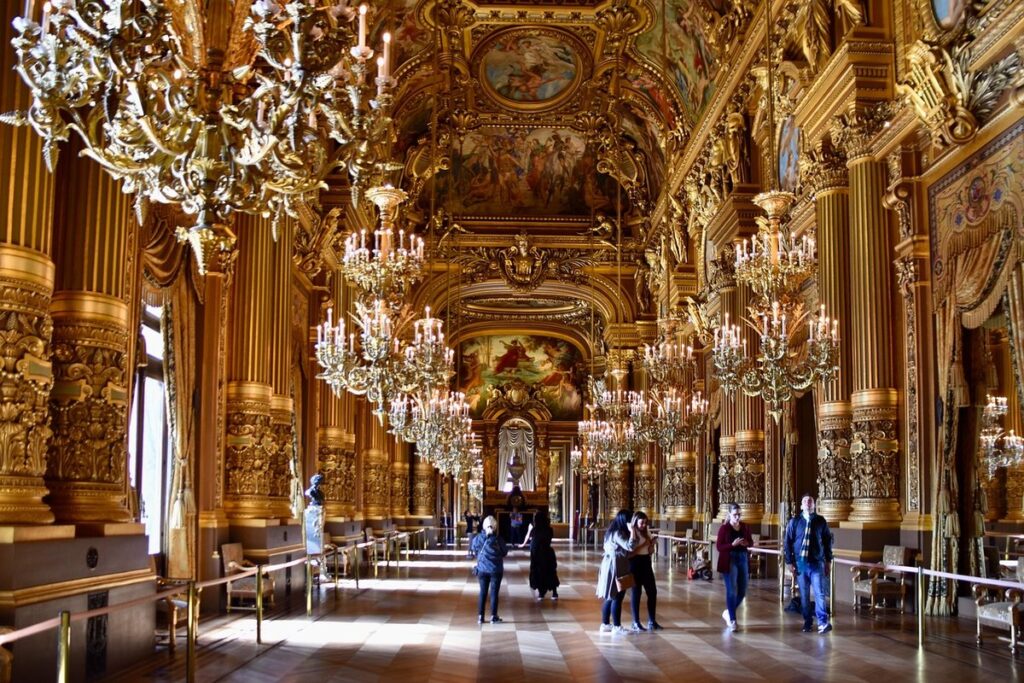
The Palais Garnier’s design was a radical departure from the opera houses of the time. Garnier incorporated a range of innovative features, including a grand auditorium, a stunning lobby, and a system of hidden passageways and stairways. The building’s opulent decor, which includes intricate carvings, gilded details, and a stunning glass roof, set a new standard for opera house design.
Renovations to the Palais Garnier continued in the 20th century, with a major restoration project completed in 1994. This effort aimed to preserve the building’s original features while bringing the facilities up to modern standards. Today, the Palais Garnier remains one of the world’s most renowned opera houses, hosting a range of performances and events throughout the year.
The Architecture of the Paris Opera
As you step into the majestic Paris Opera, take a moment to appreciate the stunning Beaux-Arts design that dominates the building’s exterior. The opulent architecture is a testament to the grandeur and sophistication of this renowned institution.
The Palais Garnier
The Palais Garnier, the iconic home of the Paris Opera Ballet, is a testament to the grandeur and opulence of 19th-century Paris. Designed by Charles Garnier, the Palais Garnier’s design was influenced by classical Greek and Roman architecture, as well as the ornate details of the Renaissance period. The building’s facade is a masterclass in symmetry, with a central archway flanked by two imposing columns. The sweeping curves of the roof and the intricate details of the stonework add to the building’s sense of grandeur.
Charles Garnier’s design was chosen from over 171 entries in a competition held by the Paris Opera in 1861. Garnier’s vision for the building was to create a space that was both functional and beautiful, with a large auditorium, a museum, and even a library. The Palais Garnier took over 15 years to complete, with construction beginning in 1862 and finishing in 1875. The building’s opulence and grandeur have made it one of the most recognizable landmarks in Paris, and it continues to be a popular tourist destination today.
Some of the key architectural features of the Palais Garnier include its grand staircase, its ornate chandeliers, and its intricate mosaics. The building’s design has been praised for its sense of drama and spectacle, and it has been the setting for countless performances and events over the years.
The Opéra Bastille
The Opéra Bastille is one of the two main venues of the Paris Opera, situated in the 12th arrondissement of Paris. Designed by the Uruguayan architect Carlos Ott, the building’s design was chosen from among over 1,700 entries in an international competition held in 1983. The Opéra Bastille has a distinctive, modernist design with a large glass roof that provides natural light to the auditorium.
The building’s design was influenced by the Beaubourg Centre, a nearby contemporary art museum, and its auditorium is notable for its large size and variable acoustics. With a seating capacity of over 2,700, the Opéra Bastille is the largest opera house in Europe. The building also features a large stage and technical facilities, making it an ideal venue for large-scale productions.
One of the key architectural features of the Opéra Bastille is its unique ventilation system, which uses a series of ducts and fans to circulate air throughout the building. This system helps to maintain a consistent temperature and humidity level, ensuring that the auditorium remains comfortable for audiences. The Opéra Bastille has become an iconic landmark in Paris and a popular venue for opera and dance performances.
The Future of the Paris Opera
The Paris Opera is undergoing a significant transformation with ongoing renovations and developments aimed at enhancing its facilities and offerings. One of the most notable projects is the construction of the new opera house at the Seine Musicale, a state-of-the-art venue that will provide a unique and intimate setting for performances. The new building is designed to be a flexible and adaptable space, with a modular stage and seating configuration that can accommodate a wide range of productions.
The Seine Musicale project is part of a broader effort to revitalize the Paris Opera’s operations and make its performances more accessible to a wider audience. Other key initiatives include the redevelopment of the Palais Garnier’s foyers and the installation of new sound and lighting systems throughout the building. These upgrades will enable the Paris Opera to showcase its productions in a more immersive and engaging way, with improved acoustics and visuals.
These developments will not only enhance the Paris Opera’s facilities but also contribute to its long-term sustainability. By investing in its infrastructure and technology, the Paris Opera can better compete in the global opera scene and continue to attract new audiences to its productions.
The Performances and Productions of the Paris Opera
The Paris Opera’s performances and productions are a true spectacle, showcasing the talents of world-class singers, dancers, and musicians in a stunning setting. From classic operas to modern ballets, every show is a unique experience.
Ballet and Opera Productions
The Paris Opera has a long tradition of producing exceptional ballet and opera productions, showcasing the talents of renowned artists and musicians. One notable example is the iconic ballet “Giselle”, first performed at the Paris Opera in 1841. This classic tale of love and loss has been revived numerous times, with each production offering a unique interpretation of the original score. Similarly, Giacomo Puccini’s “La Bohème” has been a staple of the Paris Opera’s repertoire since its premiere in 1894. This tragic love story has captivated audiences for generations, with its beautiful music and poignant storyline.
The Paris Opera has also commissioned new works, such as Benjamin Millepied’s “L’Ancêtre”, which premiered in 2015. This modern ballet tells the story of a family’s history and legacy, incorporating elements of folk dance and music. These productions demonstrate the Paris Opera’s commitment to innovation and artistic excellence. The opera’s productions have not only entertained audiences but also contributed to the development of the art form.
Contemporary Productions and Performances
The Paris Opera’s contemporary productions and performances showcase the company’s commitment to innovation and artistic excellence. Recent premieres have included works by modern composers such as Thomas Adès and Kaija Saariaho, demonstrating the company’s willingness to push the boundaries of traditional opera. The Paris Opera has also revived classic productions with fresh perspectives, like the 2019 staging of Berlioz’s “Benvenuto Cellini” directed by Pierre Audi, which updated the setting to a 19th-century industrial city.
The company’s programming has also highlighted the importance of diversity and representation. In 2020, the Paris Opera premiered “Akhnaten” by Philip Glass, a work that explores the life of an ancient Egyptian pharaoh. This production was notable for its innovative staging and its commitment to showcasing underrepresented voices.
The Paris Opera has also been at the forefront of digital innovation, partnering with streaming services to broadcast performances to a global audience. This move has allowed the company to reach new audiences and expand its artistic reach.
The Role of the Paris Opera in the International Opera Scene
The Paris Opera’s collaboration with other international opera houses has contributed significantly to its global reputation. Each year, the Paris Opera participates in several major opera festivals, including the Salzburg Festival in Austria and the Aix-en-Provence Festival in France. These partnerships allow the Paris Opera to showcase its productions to a wider audience and to learn from other companies.
Some notable collaborations include a joint production with the Royal Opera House in London, which was later performed in Paris, and a co-production with the Metropolitan Opera in New York, which toured to several cities in the United States. These collaborations have not only enhanced the Paris Opera’s international presence but also provided opportunities for artists to gain experience working with other companies.
Additionally, the Paris Opera has a membership in the European Opera League, which facilitates cooperation and knowledge-sharing among member companies. This membership has enabled the Paris Opera to participate in joint projects and to benefit from the expertise of other member companies. The Paris Opera’s commitment to international collaboration has helped to establish it as a leader in the global opera scene.
The Educational and Community Programs of the Paris Opera
The Paris Opera offers a range of educational and community programs designed to engage audiences of all ages, from children to seniors. These programs provide unique opportunities for learning and enrichment.
The Paris Opera Academy
The Paris Opera Academy provides a unique opportunity for young artists to hone their craft and gain professional experience. The academy offers a range of programs, including the prestigious Atelier Lyrique, which accepts only a handful of talented singers each year. These young artists are immersed in a comprehensive training program that covers singing, acting, and dance techniques, as well as language and musical theory.
The academy’s curriculum is designed to prepare students for the demands of professional opera performance, and includes rigorous training sessions, workshops, and masterclasses with renowned artists. Students also have the opportunity to participate in productions and concerts, gaining valuable stage experience and building their professional networks.
One of the key strengths of the Paris Opera Academy is its focus on developing the whole artist, rather than just their technical skills. The academy’s faculty includes not only vocal coaches and choreographers, but also acting coaches and mental performance specialists, who help students develop the confidence and stage presence needed to succeed in the competitive world of opera.
Community Outreach and Engagement
The Paris Opera has made significant efforts to make opera more accessible to a wider audience through its community outreach and engagement programs. One notable initiative is the “Opéra pour Tous” (Opera for All) project, which offers free or discounted tickets to students, seniors, and people with disabilities. This program has helped to increase diversity in the opera’s audience and has been praised for its commitment to social inclusion.
The Paris Opera has also partnered with local organizations to develop new programming and events that cater to diverse interests and communities. For example, the opera has collaborated with the city’s youth centers to create interactive workshops and performances that introduce young people to the world of opera. Additionally, the opera has established a network of community ambassadors who help to promote the opera’s activities and events in their neighborhoods.
These initiatives have not only helped to increase the opera’s community engagement but have also contributed to the opera’s artistic growth and innovation. By partnering with local organizations and engaging with diverse audiences, the Paris Opera has been able to develop new programming and events that are more relevant and responsive to the needs of its community.
The Role of the Paris Opera in Promoting Opera in France
The Paris Opera has long been a driving force in promoting opera in France, both through innovative productions and targeted outreach efforts. To foster the development of new operas, the Paris Opera has established partnerships with emerging composers and librettists. These collaborations have led to the premiere of several critically acclaimed works, such as “Iolanta” by Pyotr Ilyich Tchaikovsky and “L’Enfant Prodigieux” by Henri Tomasi. The opera also hosts workshops and masterclasses to nurture the next generation of opera creators.
In addition to showcasing new operas, the Paris Opera has implemented initiatives to attract younger audiences to the opera house. The “Opéra en Fête” program offers discounted tickets and interactive experiences designed specifically for families and students. This approach has proven successful, with attendance among under-30s increasing significantly over the past decade. By embracing innovation and inclusivity, the Paris Opera has not only promoted opera in France but has also helped to revitalize the art form as a whole.
The Economic and Social Impact of the Paris Opera
The Paris Opera has long been a cultural and economic driver for the city, generating significant revenue and supporting numerous social programs. From job creation to community engagement, its impact is multifaceted.
The Economic Impact of the Paris Opera
The Paris Opera is a significant economic driver for the city of Paris, generating substantial revenue through ticket sales, merchandise, and tourism. According to a study by the Paris Convention and Visitors Bureau, the opera attracts over 400,000 visitors annually, contributing an estimated €150 million to the local economy. This figure is not insignificant, considering that the average tourist spends around €1,000 per day in Paris. The opera’s economic impact extends beyond ticket sales, with local businesses benefiting from the influx of visitors. Restaurants, hotels, and souvenir shops near the opera house experience a surge in sales during peak performance seasons.
The Paris Opera also supports the local economy through its extensive supply chain. The opera works with over 1,000 local suppliers, from costume designers to set builders, creating jobs and stimulating economic growth. In fact, a survey by the opera found that 75% of its suppliers are small and medium-sized enterprises, highlighting the institution’s commitment to supporting the local business community.
The Social Impact of the Paris Opera
The Paris Opera has long been a beacon of cultural unity in Paris, bringing together people from all walks of life through its performances and events. One notable example is the annual Opera en Plein Air, a free outdoor concert that takes place in the summer months. This event has become a beloved tradition, attracting hundreds of thousands of attendees who gather to enjoy classical music under the stars.
The Paris Opera has also been at the forefront of promoting cultural understanding through its productions and collaborations. In recent years, the opera has partnered with other cultural institutions to present innovative productions that blend music, dance, and visual arts. For instance, the opera’s production of “La Bohème” was co-produced with the Paris Museum of Modern Art, bringing together opera and contemporary art in a unique and captivating way.
Through its outreach programs and community engagement initiatives, the Paris Opera has also made a significant impact on the local community. The opera’s educational programs, such as the Paris Opera Academy, provide training and mentorship opportunities for young artists, while its community outreach initiatives bring opera performances to underserved neighborhoods.
The Challenges Facing the Paris Opera
The Paris Opera faces significant challenges in the coming years. Funding remains a persistent issue, with the institution relying heavily on government subsidies and donations. The opera’s annual budget of over €400 million is stretched thin, making it difficult to invest in new productions and maintain its artistic standards. Additionally, the Paris Opera competes with other cultural institutions in the city, such as the Palais des Congrès and the Théâtre du Châtelet, for audience attention and resources.
To adapt to changing audience preferences, the Paris Opera must balance its commitment to traditional opera and ballet with the demand for more contemporary and innovative productions. This requires a delicate balance between artistic vision and commercial viability. Furthermore, the opera must also address the issue of accessibility, making its performances and programs more inclusive and appealing to a broader range of audiences. This may involve partnering with local schools and community groups, or offering discounted tickets and special events to attract new patrons. Ultimately, the Paris Opera’s ability to navigate these challenges will determine its long-term success and relevance in the cultural landscape of Paris.
Frequently Asked Questions
What are the best ways to experience the Paris Opera on a budget?
The Paris Opera offers various ways to experience the opera on a budget, including discounted tickets for students, seniors, and groups. Look for special promotions and packages on the opera’s website, such as the “Jeune Public” program, which offers discounted tickets for young people under 26. You can also consider attending performances during the off-season or on weekdays.
How can I get involved in the Paris Opera’s community outreach and engagement programs?
The Paris Opera has a range of community outreach and engagement programs, including educational workshops, internships, and volunteer opportunities. Visit the opera’s website to learn more about these programs and how to get involved. You can also contact the opera’s education department directly to inquire about specific opportunities.
What is the process for getting tickets to a sold-out performance at the Paris Opera?
If a performance is sold out, you can try checking the opera’s website for returns or cancelled tickets. You can also contact the opera’s box office directly to see if any tickets become available. In some cases, the opera may also offer a waiting list or a lottery system for sold-out performances.
Can I take a guided tour of the Paris Opera’s Palais Garnier?
Yes, the Paris Opera offers guided tours of the Palais Garnier, including its opulent auditorium, grand staircase, and other notable features. These tours are available in multiple languages and can be booked in advance through the opera’s website or at the Palais Garnier’s box office.
What is the typical rehearsal process like for a Paris Opera production?
The rehearsal process for a Paris Opera production typically involves a series of intense rehearsals with the cast, orchestra, and crew. This can include multiple dress rehearsals, technical rehearsals, and final dress rehearsals before the premiere. The exact process can vary depending on the specific production and the creative team involved.

