Traditional German homes have been shaped by centuries of history, with roots in medieval architecture that can still be seen today. The country’s diverse regions each have their own unique styles and traditions when it comes to home building, from the ornate timber-framed houses of Bavaria to the simple yet elegant half-timbering of the north. The use of local materials like stone, brick, and wood has always been a hallmark of German architecture, with skilled craftsmen passing down their expertise through generations. In this article, we’ll explore the rich history and regional diversity of traditional German homes, examining the craftsmanship, materials, and styles that have made these buildings so iconic. By the end of this journey, you’ll gain a deeper understanding of what makes a true traditional German home.
History and Evolution of Traditional German Architecture
Traditional German architecture has a rich history that spans centuries, influenced by various cultures and periods. From medieval castles to modern interpretations, we’ll explore its evolution over time.
Medieval Roots and Influences
Traditional German architecture has its roots in medieval times, influenced by various European styles such as Romanesque and Gothic. During this period, German builders adopted techniques from neighboring regions, incorporating elements like ribbed vaults and flying buttresses into their designs. The influence of these architectural styles can be seen in the use of sturdy stone walls, imposing towers, and ornate stonework.
The Romanesque style, prevalent in southern Germany, is characterized by its square shapes and rounded arches. In contrast, Gothic architecture, which gained popularity in northern Germany, features pointed arches, ribbed vaults, and soaring ceilings. The fusion of these styles resulted in a unique blend that defined traditional German architecture.
The legacy of medieval influences can be seen in many historical German buildings, such as the famous Neuschwanstein Castle. Designed by King Ludwig II in the 19th century, this iconic castle was inspired by medieval Romanesque and Gothic elements, featuring intricate stonework, towers, and battlements. While it’s not possible to replicate these grand structures exactly today, understanding their historical context can help homeowners appreciate the craftsmanship and attention to detail that goes into building a traditional German home.
Regional Variations and Characteristics
The traditional architecture of Germany is a rich tapestry of regional styles and characteristics. Bavaria, for example, is known for its ornate Baroque facades and grandiose mansions, while Swabia boasts more subdued, half-timbered houses with steeply pitched roofs. The Saxons, meanwhile, favored sturdy brick construction and tall spires.
One of the most striking regional variations can be seen in the use of local materials. Bavarian homes often feature stone or stucco exteriors, while Swabian houses are more likely to have exposed timber frames. In contrast, Saxon architecture frequently incorporates brick and limestone. These differences not only reflect the unique environmental conditions and cultural traditions of each region but also demonstrate a deep understanding of local building practices.
To appreciate these regional variations, consider visiting some of Germany’s most iconic towns and villages. Rothenburg ob der Tauber in Bavaria, for instance, is renowned for its colorful half-timbered houses, while the Saxon city of Dresden boasts an impressive array of Baroque palaces and churches. By exploring these diverse architectural styles, you can gain a deeper understanding of Germany’s rich cultural heritage and appreciate the nuances that set each region apart.
Typical Features of Traditional German Homes
One of the most distinctive aspects of traditional German homes is their unique architectural style, which often features steeply pitched roofs and half-timbered facades. These characteristics add to the charm and character of these classic abodes.
Roofing and Exterior Finishing
Traditional German homes are known for their distinctive and durable roofing materials. Slate is a popular choice, prized for its waterproof properties and long lifespan of up to 100 years. In fact, slate roofs can last for centuries with proper maintenance, earning them a reputation as one of the most enduring roofing options.
Another common material used in traditional German homes is terra cotta tiles. These tiles are often glazed to enhance their appearance and improve durability. When properly installed, they provide excellent protection against the elements while also adding visual appeal to the exterior of the home.
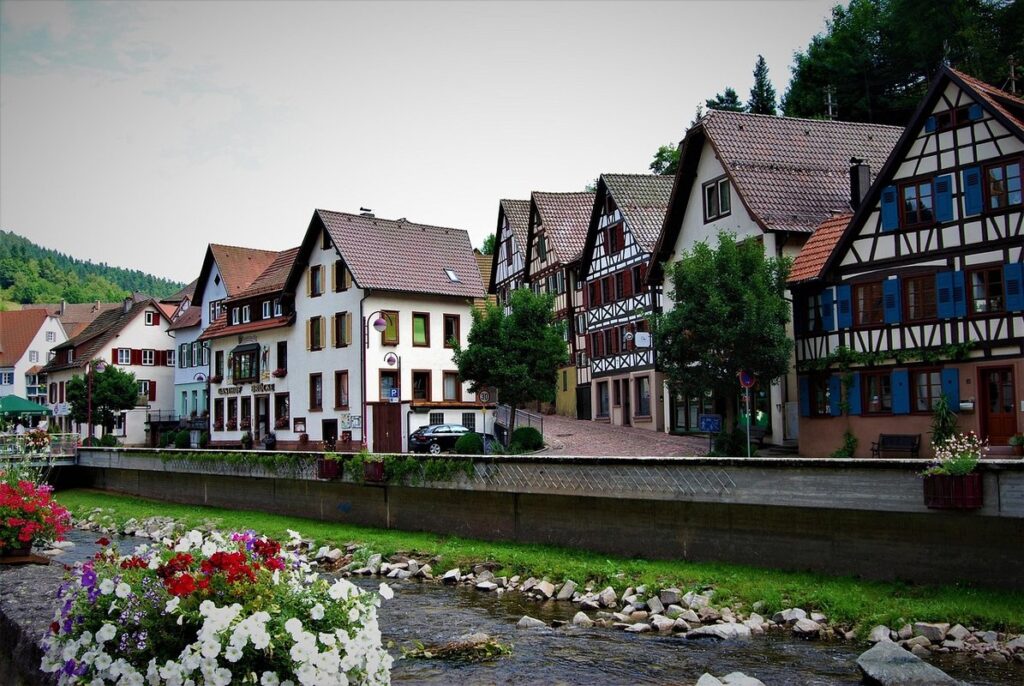
Half-timbered exteriors (Fachwerk) are a characteristic feature of many traditional German homes. This technique involves exposing the wooden framework of the building, often filling in the gaps with brick or stucco. Fachwerk not only provides excellent insulation but also creates a unique and charming visual effect. The exposed wood adds a touch of warmth and character to the exterior design.
In addition to these features, many traditional German homes feature decorative trusses and ornate wooden trim. These details add an extra layer of beauty and craftsmanship to the home’s exterior finish.
Windows and Doors
Traditional windows and doors are an integral part of a traditional German home’s charm. One common feature is wooden shutters, known as ” Fensterläden” in German, which provide shade from the sun while also protecting against harsh weather conditions. These shutters can be fully or partially opened to control the amount of light entering the room.
Decorative hinges are another notable characteristic of traditional German doors and windows. These ornate metal fixtures add a touch of elegance and sophistication to the overall design. Some doors even feature intricate carvings, such as roses or acanthus leaves, which further emphasize their handmade craftsmanship.
In terms of window types, you’ll often find casement windows with hinges on one side, allowing for easy opening and ventilation. Double-hung sash windows are also common, featuring two operable panels that slide up and down within the frame. These classic designs not only provide natural light but also serve as a testament to the region’s rich architectural heritage.
When restoring or replicating traditional German homes, pay attention to these details. Replace modern doors and windows with their historical counterparts to maintain the authenticity of the design. Consider consulting local authorities or experts in traditional German architecture for guidance on selecting the right materials and designs to achieve an authentic look.
Interior Design and Layout
Traditional German homes often feature cozy living spaces, so let’s take a closer look at how interior design and layout contribute to their inviting atmosphere.
Traditional Floor Plans
Traditional German homes often feature compact floor plans, which are designed to make the most of available space. These layouts typically prioritize functionality over grandeur, with a focus on efficiency and practicality. One common configuration is the “Eckzimmer” or corner room layout, where a living area is situated in a corner of the house, often with built-in furniture and storage.
Another typical floor plan features multiple living areas, including a separate dining room and a cozy sitting room or “Stube”. This setup allows family members to have their own spaces for relaxation and socializing. For example, the living room might be used for formal gatherings, while the sitting room is a more informal space for reading or watching TV.
To maximize space in compact floor plans, traditional German homes often make use of built-in storage and clever layout design. For instance, kitchen cabinets may be designed to double as display cases for decorative items, while windowsills are used for plants or other ornaments. By incorporating these thoughtful details, homeowners can create a sense of openness and flow, even in smaller spaces.
Decorative Elements and Finishing Touches
Carved wood accents are a staple of traditional German interior design. Look for intricate details like curved moldings, ornate pilasters, and hand-carved wall panels. These decorative elements not only add visual interest but also highlight the craftsmanship that goes into building a traditional German home.
Ornate plasterwork is another distinctive feature of traditional German interiors. You’ll often find ceilings adorned with frescoes or ornate molding, while walls are decorated with intricate patterns created using stucco techniques. To replicate this look in your own home, consider hiring a skilled craftsman to create custom plasterwork or use pre-made molds for a more DIY-friendly approach.
Antique furnishings also play a significant role in traditional German interior design. Think plush velvet sofas, intricately carved wooden chairs, and ornate mirrors framed with gilded accents. When selecting antique pieces, look for those with a clear provenance to ensure their authenticity and value. Consider mixing these vintage finds with more modern pieces to create a balanced, eclectic space that still honors traditional German aesthetics.
Materials and Construction Techniques
To build a traditional German home, you’ll need to understand the various materials and techniques used by master craftsmen for centuries. Let’s take a closer look at the regionally specific building methods that still prevail today.
Local Building Materials and Their Use
Timber framing, known as Fachwerk in German, is a cornerstone of traditional German construction. The use of wood and brickwork dates back to the Middle Ages, with timber framing often employed for load-bearing walls. This technique allows for the creation of large windows and doors while maintaining structural integrity. Fachwerk homes typically feature exposed wooden beams, which not only provide aesthetic appeal but also serve as a testament to the craftsmanship involved in their construction.
Brickwork, on the other hand, is commonly used for exterior cladding and load-bearing walls. The distinctive red hue of traditional German bricks is a result of the iron oxide-rich clay used in their production. Brick-faced homes often feature ornate detailing, such as decorative corbelling above doorways and windows.
In addition to these materials, traditional German construction also incorporates other local resources, including stone and thatched roofing. While not as common as Fachwerk or brickwork, these elements add unique character to specific regional styles, such as the Bavarian chalet and the Swabian half-timbered house.
Traditional Craftsmanship and Attention to Detail
Craftsmanship and attention to detail are hallmarks of traditional German homebuilding. Skilled craftsmen, often apprenticeships passed down through generations, are responsible for constructing these homes. The result is a level of quality that can be seen in the intricate joinery, precise mitering, and careful selection of materials.
Traditional carpenters work with locally sourced wood, such as larch or spruce, to create sturdy and long-lasting structures. Notable examples include half-timbered houses, where exposed beams are framed by brick or stonework. The interplay between natural wood and masonry creates a sense of warmth and history.
Attention to detail extends beyond the visible elements. Traditional craftsmen pay close attention to unseen aspects like insulation, ventilation, and structural integrity. For instance, some homes feature carefully designed passive solar systems that optimize natural light and heat.
A key aspect of traditional craftsmanship is the emphasis on durability rather than speed. Builders take pride in creating structures that will stand the test of time, often investing more time and effort into each component to ensure its longevity.
Modern Interpretations and Revivals
As you explore traditional German homes, you’ll notice how modern architects are breathing new life into classic designs, blending old with new to create unique spaces. Contemporary revivals of traditional styles are particularly popular among homeowners seeking a fresh take on heritage architecture.
Contemporary Architects and Designers Inspired by Tradition
Many modern architects and designers are drawing inspiration from traditional German homes, breathing new life into classic designs. Take, for instance, the work of architect Andreas Heller, who has reinterpreted traditional German half-timbered facades with sleek, minimalist lines and large windows. His innovative approach to heritage architecture has resulted in striking buildings that not only honor their predecessors but also offer a unique twist on modern living.
Another notable example is the design studio, Hertl Architekten, which specializes in contemporary reinterpretations of traditional German homes. Their projects often incorporate sustainable building materials and cutting-edge energy-efficient systems while maintaining the characteristic charm of old-world architecture. For instance, their “Green Roof” project features a beautiful, moss-covered roof garden on top of a renovated half-timbered house.
Innovative architects like these are pushing the boundaries of traditional German design, creating homes that blend seamlessly into their surroundings while showcasing the region’s rich architectural heritage. Whether you’re an architecture enthusiast or simply looking for inspiration for your own renovation project, exploring these modern interpretations can be both a source of fascination and practical guidance.
Challenges and Opportunities for Preserving Traditional Techniques
Preservationists and builders seeking to incorporate traditional techniques into modern construction projects face a unique set of challenges. One major hurdle is the availability of skilled craftsmen who have mastered the intricacies of traditional German building methods. Many of these trades have been passed down through generations, and finding individuals with the necessary expertise can be difficult.
Another challenge lies in sourcing authentic materials. Traditional German homes often feature locally sourced woods, such as larch or spruce, which are no longer widely available due to deforestation and changing forestry practices. Builders must seek out alternative suppliers or consider using sustainable alternatives that mimic the appearance of traditional timbers.
Despite these challenges, there are opportunities for preservationists and builders to innovate while staying true to traditional techniques. For instance, using modern materials like reclaimed wood or FSC-certified lumber can help reduce environmental impact while maintaining the aesthetic of a traditional German home. By combining old methods with new materials, builders can create structures that honor the past while meeting modern building codes and sustainability standards.
Frequently Asked Questions
Can I Build a Traditional German Home in the US or Other Non-German Countries?
Yes, it’s possible to build a traditional German home outside of Germany, but you may need to adapt the design and materials to local building codes and climate conditions. Research local regulations and consider consulting with an architect or builder familiar with traditional German construction.
What if I Want to Incorporate Modern Amenities into My Traditional German Home?
You can incorporate modern amenities while still maintaining the integrity of a traditional German home by using sustainable, locally-sourced materials and incorporating innovative design elements that complement the original structure. Consider working with an architect who specializes in adaptive reuse projects.
How Do I Preserve the Original Charm of a Historic German Home While Making Renovations?
When renovating a historic German home, prioritize preserving original features such as ornate plasterwork, carved wood accents, and traditional window types. Work with a preservationist or restoration expert to ensure that any changes align with local preservation guidelines and respect the home’s cultural heritage.
What if I Can’t Afford Traditional Materials Like Slate or Fachwerk? Are There Affordable Alternatives?
While traditional materials like slate and Fachwerk can be expensive, there are more affordable alternatives available. Consider using locally-sourced materials or opting for modern interpretations of traditional designs that incorporate more budget-friendly options without sacrificing the character of the home.
Can I Adapt Traditional German Home Plans to Suit a Non-Traditional Family Structure or Lifestyle?
Yes, you can adapt traditional German home plans to suit non-traditional family structures or lifestyles by incorporating flexible design elements such as open floor plans, multi-functional spaces, and creative storage solutions. Consider working with an architect who specializes in custom residential design.