
Walking into the Palais Garnier, Paris’s iconic opera house, is like stepping into a world of opulence and grandeur. As one of the most renowned cultural institutions in the world, the Paris Opera House has a rich history that spans over a century, with a stunning architecture that’s as breathtaking as its world-class performances. Whether you’re a seasoned opera buff or just visiting the City of Light, experiencing the Paris Opera House is a must-do. But what makes this magnificent building truly unforgettable? From its intricate details and ornate decor to its storied past and behind-the-scenes secrets, this article will take you on a journey through the Paris Opera House’s fascinating history, stunning architecture, and top insider tips for an unforgettable experience. By the end of this guide, you’ll be able to plan an unforgettable visit to the Paris Opera House and discover its secrets for yourself.
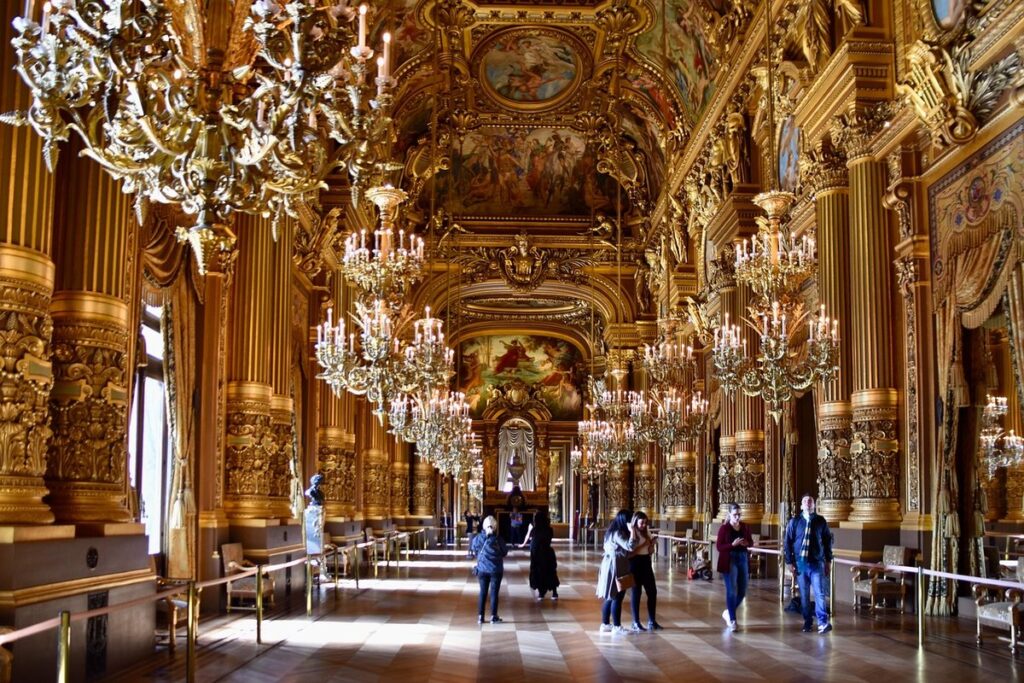
History of the Paris Opera House
The Paris Opera House has a rich and storied past, from its humble beginnings in 1669 to the grand opening of its current home in 1875, a testament to the city’s enduring love of the arts. Let’s take a journey through the key events that shaped this iconic institution.
The Birth of an Iconic Building
The Paris Opera House was a monumental undertaking in the mid-19th century, and its construction marked a significant milestone in the city’s history. Groundbreaking began in 1862, and the project was led by architect Charles Garnier, who envisioned a building that would surpass the grandeur of any existing opera house. The result was a structure that embodied both French culture and engineering prowess, boasting an imposing facade, a majestic interior, and a sophisticated ventilation system.
When the opera house finally opened in 1875, it was an instant sensation, attracting the city’s elite and cementing its status as a symbol of French culture. The Paris Opera House’s design was a masterful blend of Greek and Renaissance elements, with its imposing columns, ornate decorations, and grand staircase. The building’s sheer scale and opulence made it a marvel of the time, and it quickly became a cultural icon. The Paris Opera House’s construction and opening marked a new era in the world of opera and performance, and its influence can still be seen in the design of opera houses around the world today.
Architectural Innovations and Design
The Paris Opera House’s grand staircase, a masterpiece of Baroque design, sets the tone for the building’s opulent interior. This sweeping stairway, with its intricately carved balustrades and gilded details, was a daring innovation at the time of its construction. The staircase’s design allows for a grand procession of performers and patrons, underscoring the Opera’s status as a revered institution.
The auditorium itself is a marvel of acoustic engineering. The Opera’s designers employed the clever use of vaulted ceilings and strategically placed acoustic panels to create an intimate, immersive experience for the audience. This was a major departure from earlier opera houses, which often suffered from poor acoustics and uncomfortable seating. The result is a space where the music and drama seem to envelop the listener, drawing them into the performance.
The facade of the Opera House is a stunning example of 19th-century Beaux-Arts architecture. The building’s imposing facade, with its grand colonnade and ornate details, is a testament to the era’s love of grandeur and spectacle. The Opera’s architects, Charles Garnier and Jean-Louis Pascal, drew inspiration from the ancient Greeks and Romans, incorporating classic motifs and elements into the design. The result is a building that is at once a tribute to the past and a beacon of modernity.
The Opera House’s Early Years
The opera house’s early years were marked by a series of groundbreaking productions that showcased the talents of some of the world’s most renowned performers. The house’s inaugural performance, a production of Mozart’s “Don Giovanni,” took place on August 5, 1669, with Louis XIV himself in attendance. This marked the beginning of a new era in Parisian arts, as the opera house quickly became a hub for innovation and experimentation.
In the early years, the opera house featured a range of notable productions, including the premiere of Rameau’s “Hippolyte et Aricie” in 1733. This production was notable for its use of elaborate sets and costumes, setting a new standard for opera production in Paris. Another notable production was the premiere of Gluck’s “Orfeo ed Euridice” in 1774, which featured a libretto by Ranieri de’ Calzabigi and was a major influence on the development of opera in the late 18th century.
The impact of the opera house’s opening on the Parisian arts scene was significant, as it helped to establish Paris as a major cultural center. The opera house’s influence can be seen in the works of many notable artists, including Jean-Philippe Rameau, who was a key figure in the development of the French opera tradition.
Exploring the Paris Opera House Today
As you walk through the grand halls of the Paris Opera House, you’ll notice subtle nods to its rich history and the art of performance. Let’s take a closer look at how the opera house has evolved over time.
Guided Tours and Behind-the-Scenes Access
Take a guided tour of the Paris Opera House to uncover its hidden secrets and gain a deeper understanding of its rich history and culture. The Paris Opera House offers a range of guided tours that cater to different interests and preferences.
Behind-the-scenes tours provide access to restricted areas, including the stage, dressing rooms, and scenic workshops. These tours offer a unique glimpse into the world of opera and ballet, allowing visitors to see the intricate details and craftsmanship that go into creating a performance. The 75-minute tour of the Palais Garnier, for example, takes visitors through the majestic foyer, the royal box, and the stage, providing a comprehensive overview of the opera house’s architecture and history.
Some guided tours also focus on specific aspects of the opera house’s operations, such as the costume department or the orchestra pit. Others may highlight the opera house’s stunning architecture, including its grand staircase, majestic chandeliers, and intricate moldings. By choosing the right guided tour, visitors can tailor their experience to their interests and gain a more immersive understanding of this iconic institution.
The Opéra National de Paris: A World-Class Company
The Opéra National de Paris is one of the world’s leading opera companies, with a rich history dating back to 1669. Its repertoire spans centuries, from Baroque to contemporary works, and its current artists include some of the most renowned singers, conductors, and directors in the industry. The company’s performance schedule is a testament to its commitment to excellence, with productions ranging from classic operas like Verdi’s La Traviata to modern works by composers such as Thomas Adès and Kaija Saariaho.
The Opéra National de Paris also has a significant international touring schedule, performing in major opera houses and festivals around the world. This not only showcases the company’s artistic prowess but also helps to promote French culture and artistic exchange. Some notable international collaborations include the company’s recent performances at the Royal Opera House in London and the Metropolitan Opera in New York. If you’re interested in catching a performance by the Opéra National de Paris, be sure to check their website for upcoming tours and schedule.
Dining and Shopping at the Opera House
Within the Paris Opera House, you’ll find a range of dining and shopping options to suit various tastes and budgets. The opera house’s grand cafes, such as the Brasserie L’Opéra, offer elegant settings for a pre- or post-performance meal. These establishments serve classic French cuisine, often with a modern twist, and provide a refined atmosphere for a leisurely lunch or dinner.
For a more upscale dining experience, the opera house is home to several Michelin-starred restaurants, including L’Atelier de Joël Robuchon. These establishments offer exceptional service and exquisite cuisine, often with a focus on seasonal ingredients. Reservations are usually essential for these popular restaurants.
In addition to dining options, the opera house features a variety of upscale boutiques and shops. These stores offer a range of luxury items, from high-end fashion to fine jewelry and perfumes. Brands such as Hermès and Louis Vuitton have a presence within the opera house, making it an ideal destination for those seeking to indulge in some retail therapy.
When visiting the opera house, consider taking a break from the performance to explore these amenities. This will allow you to recharge and appreciate the opera house’s grandeur from a different perspective.
The Paris Opera House’s Cultural Significance
The Paris Opera House is not just a stunning example of 19th-century architecture, but also a cultural institution that has been at the heart of French artistic life for over a century. Its rich history is reflected in its iconic performances.
Symbol of French Culture and Identity
The Paris Opera House is an integral part of French cultural heritage, embodying the country’s rich history, artistic values, and national identity. As a symbol of French culture and identity, the opera house reflects the nation’s commitment to the arts, particularly music and dance. Its grand architecture, opulent interior, and world-class performances have made it a revered institution, attracting visitors from around the globe.
The opera house’s role in preserving French cultural traditions is evident in its annual programming, which often features works by renowned French composers, such as Claude Debussy and Maurice Ravel. The company’s commitment to showcasing French talent is also reflected in its support of emerging artists and its partnership with local music schools. By celebrating French culture through its performances, the opera house plays a vital role in promoting national pride and unity.
The opera house’s impact on French national identity extends beyond its programming. Its stunning architecture and beautiful gardens have become iconic representations of French grandeur and elegance, inspiring countless works of art and literature. Visitors to the opera house can experience this cultural significance firsthand by attending a performance or exploring the building’s ornate details, such as the majestic chandeliers and intricate frescoes.
Iconic Status in Popular Culture
The Paris Opera House has become a cultural touchstone, its grandeur and beauty inspiring countless artists and writers. In literature, the opera house has been immortalized in novels such as Victor Hugo’s Les Misérables and Colette’s Chéri, where it plays a pivotal role in the narrative. In film, the opera house has been a backdrop for iconic scenes in movies like Milos Forman’s Amadeus and Baz Luhrmann’s Moulin Rouge!.
The opera house has also been a muse for artists, from the Impressionist painters who captured its grandeur on canvas to the modern-day photographers who document its intricate details. Its facade has been the subject of numerous artworks, from sculptures to prints, solidifying its status as a cultural icon. The opera house’s enduring presence in popular culture can be attributed to its unique blend of beauty, history, and drama. Visitors can experience this cultural significance firsthand by attending a performance or taking a guided tour, which often includes access to areas not normally open to the public. This behind-the-scenes look offers a glimpse into the opera house’s inner workings and provides a deeper appreciation for its cultural significance.
Preservation and Restoration Efforts
The Paris Opera House has undergone several preservation and restoration projects to maintain its original beauty and functionality. One notable example is the 1990s renovation, which restored the grand staircase, revamped the auditorium, and upgraded the stage machinery. The project aimed to preserve the building’s 19th-century charm while ensuring it could continue to meet the demands of modern performances. The renovation was led by architect Pierre Colboc, who carefully balanced historical preservation with modern needs.
The opera house’s ongoing preservation efforts include regular maintenance of its intricate stonework and ornate plaster decorations. The building’s management also works to maintain its acoustics, which are considered among the best in the world. In recent years, the opera house has implemented energy-efficient systems and sustainable practices to reduce its environmental impact.
The Opéra National de Paris has also invested in digital technologies to enhance the visitor experience and preserve the building’s history. For example, the opera house offers interactive exhibits and guided tours that allow visitors to explore the building’s backstage areas, hidden passageways, and historic dressing rooms. These efforts demonstrate the opera house’s commitment to preserving its cultural heritage while embracing innovation and modernity.
Behind the Scenes: Opera Production and Performance
The Paris Opera House is a marvel of engineering and artistry, but what happens when the curtains are closed and the audience is gone? This section reveals the intricate processes behind the scenes of opera production and performance.
The Creation of a Performance
Creating an opera production is a labor-intensive process that requires the collaboration of artists, directors, and technicians. It begins with the selection of a work to be performed, which can be a new commission, a revival of a classic, or an adaptation of a novel or play. The artistic team, comprising the director, conductor, and set designer, convenes to discuss the vision for the production. They draw inspiration from the opera’s music, libretto, and historical context to develop a unified concept.
Rehearsals typically start several months before the premiere, with the cast and orchestra working together under the direction of the conductor. The singers, who have been selected through auditions and casting sessions, begin to develop their characters and refine their performances. Meanwhile, the set designer creates a backdrop that brings the opera’s world to life, while the lighting and sound technicians fine-tune their equipment to create an immersive atmosphere.
As the premiere approaches, the team puts the final touches on the production, from the costumes to the choreography. The result is a seamless fusion of music, drama, and visual artistry that showcases the Paris Opera House’s commitment to excellence in opera production.
The Art of Opera Singing
Opera singing is an art form that requires a unique combination of vocal technique, language skills, and dramatic interpretation. To perform on the Paris Opera House’s iconic stage, singers must possess a strong foundation in classical music theory, as well as the ability to convey complex emotions through their voice.
Vocal technique is a crucial aspect of opera singing, involving precise control over pitch, tone, and volume. Singers must also be able to switch between different languages and dialects seamlessly, as opera often features arias in multiple languages. The dramatic interpretation of a role is equally important, requiring singers to immerse themselves in the character’s backstory and motivations.
To succeed in opera singing, singers must also be able to convey complex emotions and nuances through their voice, often without the aid of dialogue. This requires a deep understanding of the opera’s score, as well as the ability to connect with the audience on an emotional level. While it may seem daunting, the art of opera singing can be mastered with dedication and practice.
The Orchestra and Chorus
The orchestra and chorus are integral components of an opera performance, working in tandem to create a rich and immersive musical experience. The orchestra provides the harmonic foundation, playing a range of instruments from strings to percussion to woodwinds, while the chorus adds depth and texture with their collective voices. In a typical opera, the chorus performs during ensemble scenes, singing in harmony with the soloists and orchestra to create a grand, sweeping sound.
The Paris Opera’s orchestra and chorus are renowned for their exceptional talent and technique. The orchestra is comprised of skilled musicians from around the world, while the chorus is made up of experienced singers who have honed their craft through extensive training and performance. When the orchestra and chorus come together, the result is a truly breathtaking sound that can be felt as much as it is heard.
One of the most iconic examples of the Paris Opera’s orchestra and chorus is their annual production of Verdi’s La Traviata. In this performance, the chorus sings the famous “Sempre Libera” aria, their voices soaring above the orchestra to create a sense of drama and tension. If you’re lucky enough to catch a performance, be sure to pay close attention to the orchestra and chorus – their contributions are essential to the opera’s emotional impact.
Planning a Visit to the Paris Opera House
Before you book your tickets, let’s get started on planning the perfect visit to the Paris Opera House, including tips on when to go and what to expect.
Tickets and Seating
When purchasing tickets to a performance at the Paris Opera House, it’s essential to consider the seating options and prices. The Opéra National de Paris offers a variety of seating categories, ranging from economy to luxury, with corresponding price points. The most affordable option is the “Stands” seating, which is located at the back of the auditorium. While it may not offer the best view, it’s a great option for those on a budget.
For those seeking a more immersive experience, the “Loges” seating offers a better view of the stage, but it’s also more expensive. The “Abonnés” seating, located in the front row, provides an unparalleled view of the performance, but it’s typically reserved for subscribers and season ticket holders.
Tickets for popular performances can be difficult to come by, especially for the prime seats. To increase your chances of securing a hard-to-get seat, consider purchasing tickets in advance or subscribing to the Opéra National de Paris’s season ticket program. You can also check the opera house’s website for last-minute availability or try your luck at the box office on the day of the performance.
Getting to the Opera House
To reach the Paris Opera House, you can use public transportation, walk, or take a taxi. The closest metro station is Opéra, which is served by lines 3, 7, and 8. From here, it’s a short walk to the opera house. Alternatively, you can take bus 21, 22, or 95, which stop near the opera house.
Walking from nearby hotels or attractions is also an option. From the Louvre Museum, it’s approximately a 10-minute walk, while from the Palais-Royal, it’s about 15 minutes. Keep in mind that walking in Paris can be challenging due to cobblestone streets and pedestrian traffic.
If you prefer to take a taxi, it’s readily available near the opera house. However, be aware that traffic in Paris can be heavy, and this may add to your travel time.
Some nearby hotels, such as the Hotel Le Walt or the Hotel Eiffel Seine, offer convenient walking distances to the opera house. When booking your accommodations, consider the proximity to the opera house to minimize travel time.
Tips for First-Time Attendees
As you step into the grand foyer of the Paris Opera House, you’re surrounded by opulence and history. To ensure you make the most of your visit, here are some practical tips for first-time attendees. First, be prepared for crowds and security checks, especially on performance nights. Arrive early to soak in the atmosphere and explore the stunning architecture, but be mindful of your belongings and avoid blocking the walkways.
When attending a performance, remember that silence is key. Avoid talking or using your phone during the show, and refrain from taking flash photography. Be respectful of the other patrons and the performers on stage. Consider purchasing a program or guide to learn more about the production and its history.
During intermissions, take advantage of the opportunity to grab a drink or snack from one of the bars or cafes. Be prepared for higher prices, but the experience is worth it. Don’t be afraid to ask staff for assistance or recommendations – they’re often happy to help. By being aware of these etiquette guidelines and taking the time to appreciate the surroundings, you’ll be able to fully immerse yourself in the magic of the Paris Opera House.
Frequently Asked Questions
Can I take photos inside the Paris Opera House?
Yes, non-flash photography is allowed in the auditorium, but please be respectful of other visitors and performers. However, videography and flash photography are strictly prohibited.
How long does it take to explore the opera house on a guided tour?
Typically, guided tours of the Paris Opera House last between 1-2 hours, depending on the type of tour and level of access. Be sure to plan your visit accordingly to make the most of your time.
What if I’m not familiar with opera music? Can I still enjoy the performance?
Absolutely! The Paris Opera House offers a variety of performances, including some that may be more accessible to first-time opera-goers. Additionally, many performances include English subtitles or translations to help non-French speakers follow the story.
Can I attend a performance without tickets? What are my options?
While it’s not guaranteed, there are sometimes last-minute ticket availability or standing room options. You can also try visiting the opera house during a free event or open house, but be sure to check the schedule in advance.
How do I get to the Paris Opera House from the airport?
The closest airport to the Paris Opera House is Charles de Gaulle, which offers a direct train to the city center. From there, you can take a taxi or ride-hailing service to the opera house, or use public transportation, such as the RER B line.

